
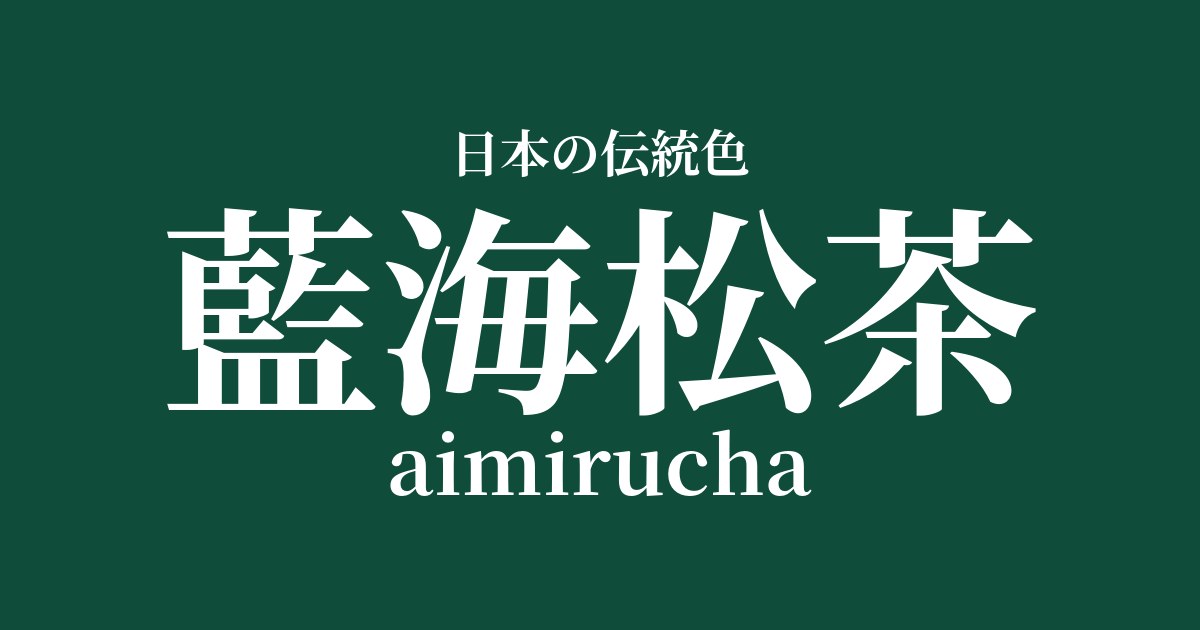
| Japanese color name | Indigo pine tea |
|---|---|
| reading | aimirucha |
| HEX | #0F4C3A |
| RGB | 15, 76, 58 |
What is Blue Sea Pine Tea? Origin and Etymology
Indigo seaweed tea is a color created by combining indigo blue with "mirucha," which is derived from the color of "miru," a type of seaweed. Miru has long been considered sacred and is a familiar seaweed to the Japanese people, even appearing in poems in the Manyoshu anthology. Mirucha, which is dyed with the color of this seaweed, refers to a dull yellowish-green color with an olive-green undertone. It is said that by adding indigo to this mirucha, a deeper, bluish-green color is created, giving rise to the color name "indigo seaweed tea."
This color is a testament to the dyeing techniques that developed during the Edo period. First, the fabric was dyed with a dark green undercoat, and then indigo was applied on top. This process created a complex and deep hue that could not be achieved with a single dye. Such complex color names reflect the culture of the time, where people could distinguish and appreciate subtle differences in color. In particular, it is one of the colors that symbolizes the Edo aesthetic of finding sophistication in understated hues.
Historical background of Blue Sea Pine Tea
The popularity of indigo and seaweed brown (aimai-cha) dates back to the mid-Edo period. At that time, the shogunate frequently issued sumptuary laws, restricting commoners from wearing extravagant clothing. As a result, people began to avoid bright primary colors and instead found enjoyment in finding subtle nuances in subdued shades such as brown and gray.
This trend was called "Forty-eight shades of brown and one hundred shades of gray," and it gave rise to a large number of brown and gray shades. Indigo seaweed brown was one of them, and its seemingly subdued yet deep and complex hue resonated with the aesthetic sensibilities of the people of Edo who valued "chic" and refined style. In particular, it is said that there was a culture of enjoying understated yet sophisticated fashion by using this color in parts that were not usually seen, such as the lining of kimonos and haori jackets.
Related literature, waka poetry, and seasonal words
It is difficult to pinpoint any famous waka poems or literary works that directly feature the color name "Ai-miru-cha" (blue seaweed tea). However, "miru" (seaweed), from which the color is derived, frequently appears in classical literature, including the Manyoshu anthology. Numerous poems remain that describe seaside scenes or feelings of love associated with miru, suggesting that it has been deeply rooted in the Japanese psyche since ancient times.
Edo period humorous books and ukiyo-e prints sometimes depict figures wearing kimonos in a deep green color like ai-miru-cha. These works are valuable visual resources that convey the fashionable colors and clothing of the time, offering a glimpse into how ai-miru-cha was accepted as a sophisticated, urban color. Although not established as a seasonal word, its origin from seaweed evokes images of summer.
Color scheme preview
This is to check the readability of the text when this color is used as the background.
A proposed color scheme of blue and sea pine.
Aphrodisiac tea (#715C1F)
The blue-green of Aimitsucha and the yellowish-brown of Kobuchicha are both "tea" colors that were favored during the Edo period. This combination, reminiscent of earth tones found in nature, gives a calm, deep, stylish, and sophisticated impression.
Persimmon color (#ED6D3D)
The deep indigo seaweed tea is accented by a vibrant persimmon orange, creating a color scheme where each color complements the others, resulting in a modern and lively impression. It's a combination that feels both traditional and fresh.
White Rat (#DCDEE0)
The richness of the deep blue-green tea is softened by the bright, pure white-gray. This creates a sense of cleanliness and elegance, resulting in a sophisticated, urban atmosphere. It's also a suitable color scheme for minimalist and contemporary designs.
Practical Scenes
In the world of traditional Japanese clothing, indigo seaweed brown is a color favored by connoisseurs and is used in haori jackets, obi sashes, and komon (small-patterned) garments. It is particularly popular in men's kimonos for its subdued and sophisticated hue, which gives a stylish impression. By combining it with other shades of brown or gray, one can recreate the chic and refined attire enjoyed by people in the Edo period.
In interior design, incorporating it into fabrics such as wallpaper, curtains, and sofas brings depth and tranquility to a space. It pairs exceptionally well with natural materials such as wood, Japanese paper, and bamboo, making it suitable for color schemes in Japanese modern spaces, studies, and other quiet places where concentration is desired.
In web and graphic design, using it as a background or accent color can create a sense of luxury and reliability. It is a highly versatile color; when combined with white or light gray, it creates a sophisticated impression, and when combined with warm colors, it creates a warm and inviting design.