
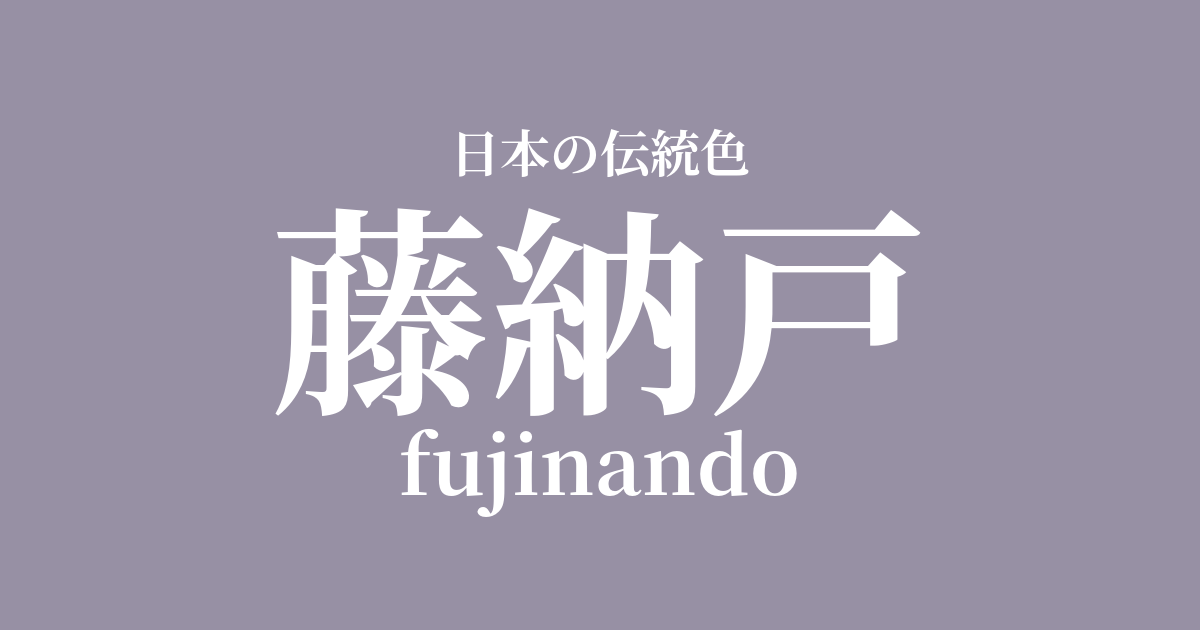
| Japanese color name | Fujinando |
|---|---|
| reading | fujinando |
| HEX | #9790A4 |
| RGB | 151, 144, 164 |
What is Fujinando? Origin and etymology
Fujinando, as the name suggests, is a color name that combines "fuji-iro" (wisteria color) and "nando-iro" (storage room color). Fuji-iro refers to a bright and elegant purple color derived from the wisteria flower and has been familiar in Japan since ancient times. Nando-iro, on the other hand, is a type of indigo dye and refers to a deep blue color with a slightly greenish tint. This name is said to originate from the fact that this color was used for the curtains of "nando," which were used as storage rooms in samurai residences and other places in the past.
By combining these two colors, the vibrancy of wisteria purple and the calming atmosphere of indo-colored clay are fused together, creating a unique, subdued, grayish purple.
This color name not only signifies the physical act of mixing two colors, but also symbolizes the refined sense of color of the people of the Edo period. Within the culture of "iki" (sophistication and elegance), which valued subtle differences in hue while avoiding ostentation, intermediate colors like Fujinando (wisteria navy) were particularly favored. Understanding the origins of this color offers a glimpse into the aesthetic sensibilities and lifestyles of the people of that time.
Historical background of Fujinando
The popularity of Fujinando (a type of brown) is believed to have begun in the mid-Edo period. During this time, the shogunate frequently issued sumptuary laws, which also restricted the colors of clothing worn by commoners. With the use of bright primary colors prohibited, people began to find endless variations in subdued colors such as brown and gray. A culture of enjoying subtle differences in color flourished, so much so that the phrase "forty-eight shades of brown and one hundred shades of gray" was coined.
Fujinando (wisteria-colored navy blue) is one of the "chic" colors that emerged amidst these trends. In particular, the color used by popular Kabuki actors in their stage costumes became extremely popular among the common people as "actor's color." Fujinando was one of these trendy colors, and it is said that it was favored by both men and women for use in kimonos and accessories. This color, possessing calmness, dignity, and a certain stylishness, became established as a color that symbolizes the townspeople's culture of Edo.
Related literature, waka poetry, and seasonal words
It is difficult to pinpoint any famous waka poems or classical literary works that directly use the color name "Fuji-nando." This color name only became common during the Edo period, and therefore does not appear in earlier classics such as "The Tale of Genji" or "Manyoshu." However, the constituent element, "fuji-iro" (wisteria color), is depicted as a symbol of nobility and elegance in many literary works, including the "Fuji no Uraha" chapter of "The Tale of Genji."
In Edo period novels such as sharebon and ninjobon, as well as in ukiyo-e prints depicting customs and manners, one can find figures wearing kimonos in colors reminiscent of Fujinando. These works are valuable resources that visually convey who loved Fujinando and how. Although not specifically designated as a seasonal word, the color is sometimes interpreted as evoking the season of wisteria blossoms or the tranquil scenery of autumn.
Color scheme preview
This is to check the readability of the text when this color is used as the background.
Color scheme proposal for Fujinando
White Rat (#BDC0BA)
The combination of the calm purple of Fujinando and the bright, soft gray of Shironezumi creates a very elegant and sophisticated impression. The colors complement each other, creating a quiet and intellectual atmosphere, making it suitable for formal occasions and minimalist designs.
Aphrodisiac tea (#715C1F)
The muted shades of Fujinando (wisteria navy) and Kobuchi (kobuchi tea) are a combination that symbolizes the "chic" aesthetic of the Edo period. Their near-complementary color relationship enhances each other, resulting in a unique yet harmonious color scheme. It is particularly effective when you want to strongly express a Japanese aesthetic.
Silver vermilion (#C85554)
Adding a touch of vermilion, a bright, slightly yellowish red, to the calm, tranquil brocade creates an overall sense of vibrancy and warmth. It gives a classic yet modern impression and has an eye-catching effect, making it suitable as an accent color for accessories and designs.
Practical Scenes
In the world of traditional Japanese clothing, Fujinando (a shade of gray) is highly valued as a sophisticated and refined color for adults. It can be used as the base color for kimonos and haori jackets, and incorporating it into accessories such as obi sashes, obiage (sash ties), and han-eri (collar linings) adds depth and elegance to the entire outfit. In particular, combining it with other shades of gray or brown creates a refined, Edo-style coordination.
In interior design, using wisteria in fabrics such as wallpaper, curtains, and cushions brings a quiet and elegant atmosphere to a space. It goes without saying that it pairs well with Japanese-style rooms, but even in modern Western-style rooms, using it as an accent color can create a calm and sophisticated space.
In the fields of web and graphic design, Fujinando (a type of navy blue) is a suitable color for expressing trustworthiness, tradition, and a Japanese aesthetic. Used as a background color, it enhances content, while as a key color, it conveys a sense of luxury and expertise. It is particularly well-suited to designs with themes related to history and culture.