
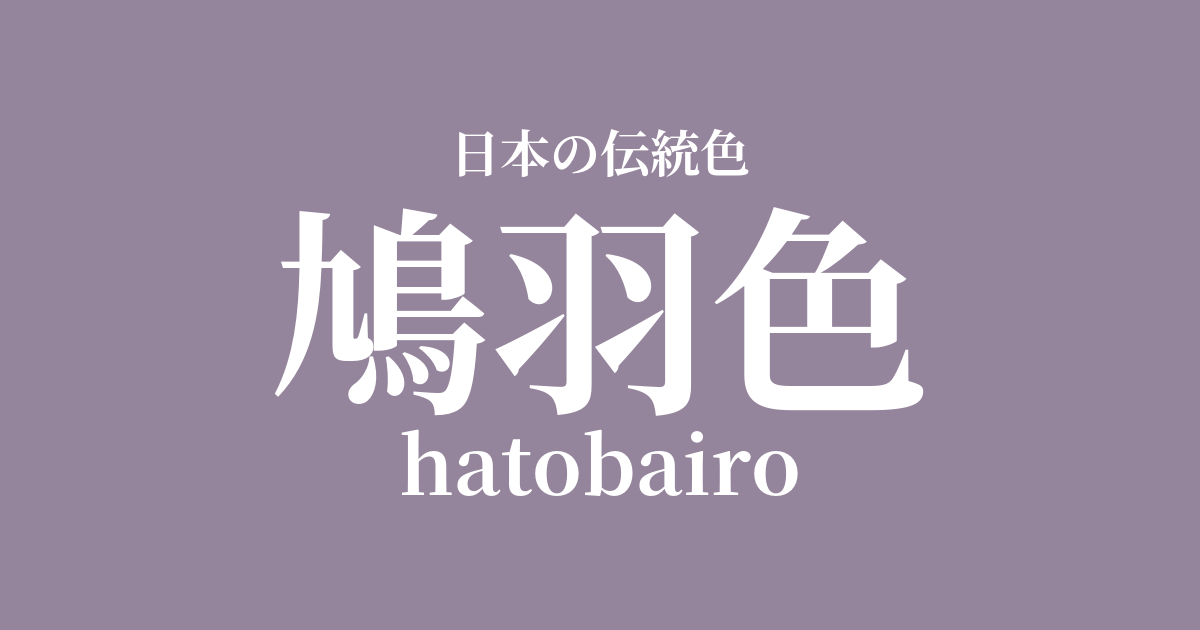
| Japanese color name | Dove feather color |
|---|---|
| reading | hatobairo |
| HEX | #95859C |
| RGB | 149, 133, 156 |
What is dove feather color? Origin and etymology
Hatoba-iro (dove feather color), as the name suggests, is a color name derived from the color of a dove's feathers. In particular, it refers to the grayish-purple feather color seen on the neck and wings of the wood pigeon. This color accurately captures the delicate colors of living creatures in nature and can be said to be one of the colors that symbolizes the refined sense of color of the Japanese people. This color, which gives a sense of elegance while remaining calm, gives a sophisticated impression without being flashy, and has been loved by many people since ancient times.
The historical background of the dove-gray color
The popularity of dove gray dates back to the late Edo period. During the Bunka-Bunsei era (1804-1830), the shogunate's sumptuary laws prohibited commoners from wearing brightly colored clothing. As a result, a major trend emerged known as "Forty-Eight Browns and One Hundred Grays," which focused on enjoying subtle differences in shades of muted colors such as brown and gray. Dove gray was one of the colors that emerged during this trend, and it was widely accepted among the townspeople of Edo as a sophisticated and stylish color, despite its understated appearance.
Related literature, waka poetry, and seasonal words
The color "dove feather" (dove feather) is a relatively new color name that originated in the Edo period, and therefore, it is not directly mentioned in classical literature such as the Heian period's "The Tale of Genji." However, its popularity is reflected in literary works and books depicting customs from the late Edo period. For example, in Tamenaga Shunsui's sentimental novel "Shunshoku Ume no Koyomi," it is described as the color of the characters' clothing, offering a glimpse into the color sensibilities of people at that time.
Furthermore, dove green was sometimes used as a stylish color for kimonos in portraits of beautiful women and actors drawn by ukiyo-e artists.
Color scheme preview
This is to check the readability of the text when this color is used as the background.
Dove feather color scheme proposal
Fujirat (#9EA3B1)
The combination of dove feather color and wisteria gray, a grayish-purple shade, creates a harmonious gradient. The two colors complement each other, giving a very elegant and refined impression. It's suitable for creating a calm and serene atmosphere in kimono layering or interior design.
Gray (#D9E021)
By combining a calm dove gray with a vibrant yellow-green, the two colors stand out, creating a striking contrast. This color scheme is traditional yet modern and fresh. It is particularly effective when used as an accent in obiage (kimono sash accessories), obijime (kimono sash cords), and other small items.
Dark blue (#0F2350)
Combining it with a deep, rich indigo creates a dignified and refined atmosphere. The purplish hue of the dove feather color stands out, emphasizing an intelligent and calm impression. This color scheme is suitable for men's kimonos and haori jackets, as well as for formal designs and business settings.
Practical Scenes
Pigeon feather color has been a popular choice for kimono since the Edo period. Because it gives a stylish and refined impression, it is widely used in everyday wear such as komon and tsumugi, as well as in solid-colored kimonos and formal visiting kimonos. Depending on how it's combined with obi and accessories, it can look chic or vibrant, showing a variety of expressions.
This color, which combines calmness and elegance, is also suitable for interior design. When incorporated into fabrics such as wallpaper, curtains, and cushions, it creates a calm and relaxing space. It blends naturally not only with Japanese-style rooms but also with modern Western-style rooms, bringing a sophisticated atmosphere.
Dove feather gray, a neutral color that doesn't overpower other colors, is also used in web and graphic design. It's easy to use as a background or accent color, making it suitable for websites that want to convey a sense of luxury and reliability. Because it harmonizes well with other colors, it allows for the creation of well-balanced designs.