
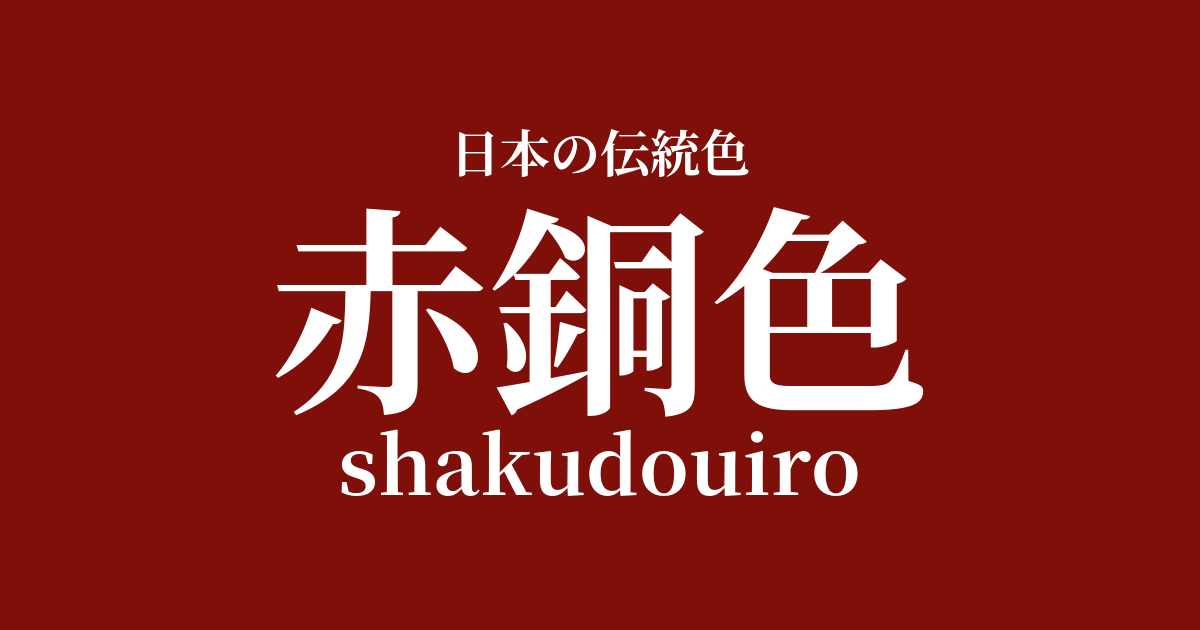
| Japanese color name | Reddish copper color |
|---|---|
| reading | shakudouiro |
| HEX | #7E0F09 |
| RGB | 126, 15, 9 |
What is the color reddish-brown? Origin and etymology.
Shakudō-iro refers to a dark, reddish-brown color. Its name originates from "shakudō," an alloy of copper with a few percent of gold added. When this alloy is treated with a traditional coloring technique called "ni-iro," which involves boiling it in a special solution mixed with verdigris and copper sulfate, it develops a beautiful, slightly purplish black color, reminiscent of a raven's wet feathers. This unique color and metallic texture are the origin of the name shakudō-iro.
A key characteristic is that these are not simply pigments or dyes, but color names that originated from metalworking techniques.
A historical background of reddish-bronze
While the technique of using shakudo (a copper alloy) can be seen in artifacts unearthed from the Kofun period in Japan, it is believed that it was only after the Muromachi period that it became refined as a craft and widely used. In particular, it was frequently used for sword fittings such as tsuba (sword guards), kozuka (small knives), and menuki (ornaments on sword fittings), and was highly valued as a material symbolizing the status and aesthetic sense of samurai. In the Edo period, due to its luxurious feel, it was also used for decorative items such as inro (small containers for carrying medicine), netsuke (miniature sculptures), and kiseru (pipes), and became popular not only among samurai but also among wealthy townspeople.
It is believed that this color name became widely established along with the popularization of such crafts.
Related literature, waka poetry, and seasonal words
Because the color reddish-brown originates from metalwork, it rarely appears directly as a subject in waka or haiku poems that describe natural landscapes. However, in literary works, especially historical novels, the name can be found when describing the possessions and furnishings of samurai. Descriptions such as "a reddish-brown tsuba (sword guard)" or "metal fittings made of reddish-brown" are used as effective expressions to convey the weight and prestige of the item or the high status of its owner.
Although it is not designated as a seasonal word, its deep, subdued colors evoke the heavy, somber atmosphere of late autumn or winter.
Color scheme preview
This is to check the readability of the text when this color is used as the background.
Proposed color scheme: copper-colored
Golden (#E6B422)
Shakudo is originally an alloy containing gold, and gold inlay was often used in its decoration. The rich, deep color of shakudo and the splendor of gold complement each other, creating a dignified and luxurious impression. This is a traditional color scheme that has been seen in armor and works of art and crafts since ancient times.
Indigo (#165E83)
The deep, calming indigo blue and the reddish-black copper color are both traditional Japanese colors and complement each other well. This color scheme creates a sense of gravitas, conveying masculine strength, dignity, and integrity. It's a combination often seen in kimono sashes and samurai armor designs.
White training (#FCFAF2)
The combination of a dark, heavy reddish-brown hue with a clean, bright white creates a strong contrast. This makes the reddish-brown stand out, giving a modern and sophisticated impression. This color scheme is effective when you want to add contrast to a design.
Practical Scenes
In the world of traditional Japanese clothing, copper-colored kimono is used for accessories such as obi sashes, haori jackets, and obi clasps, giving the outfit a sense of gravitas and elegance. It is a particularly favored color for men's kimonos and for attire worn in formal occasions, and it harmonizes beautifully with gold and silver embroidery.
In interior design, using it as an accent color brings depth and a sense of luxury to a space. When used on parts of wallpaper, furniture, fixtures, or lighting, it effectively creates a calm, modern Japanese atmosphere. It also pairs well with wood and stone.
In web and graphic design, using it as a background color or heading helps to convey a sense of luxury and trustworthiness. When combined with gold or white, it creates a design suitable for luxury brand websites or content themed around history and tradition.