
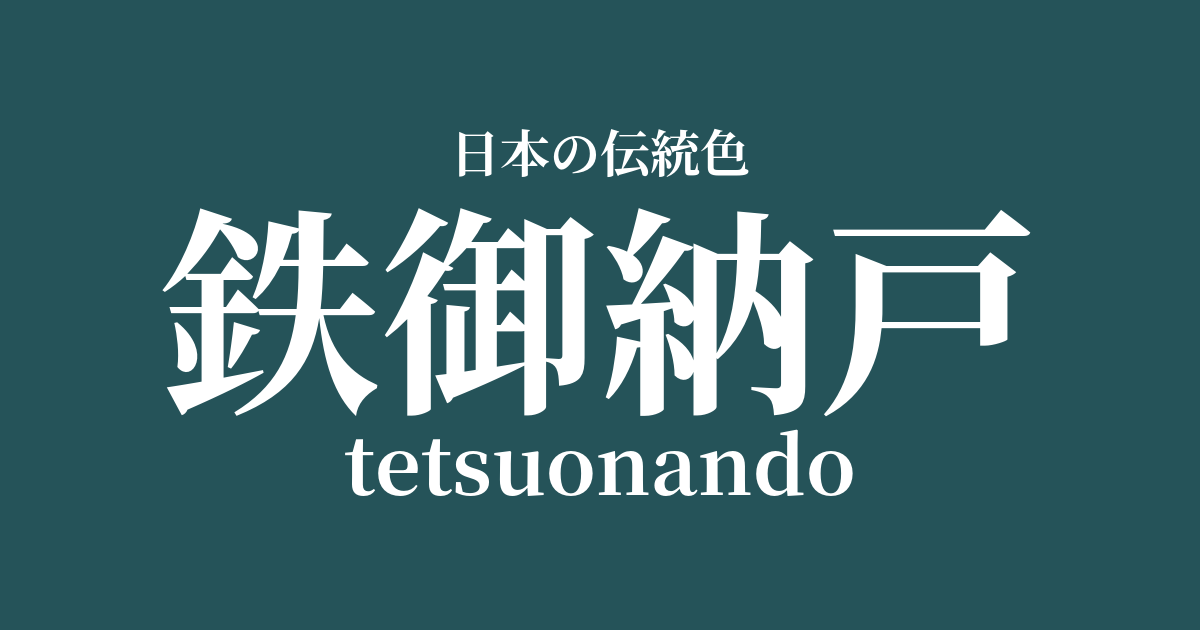
| Japanese color name | Iron storehouse |
|---|---|
| reading | tetsuonando |
| HEX | #255359 |
| RGB | 37, 83, 89 |
What is Tetsu-Onando? Origin and Etymology
The color name "Tetsu-onando" is a combination of two color names: "Tetsu-iro" (iron color) and "Onando-iro" (storehouse color). "Onando-iro" is a dark bluish-green color, said to originate from the darkness of the storehouses in Edo Castle, or from the color of the cloths that hung there. On the other hand, "Tetsu-iro" refers to a bluish-dark green color, like the surface of heated iron.
When these two colors are combined, the addition of iron to the traditional Japanese "Onando" color results in a deeper, more subdued blue-green that is greener and more vibrant, and this color came to be called "Tetsu-Onando" (iron blue-green).
This color name symbolizes the culture of the Edo period, where people distinguished subtle differences in color and enjoyed giving each one a unique name. Instead of simply calling them blue or green, they gave names that evoked specific scenes or materials, imbuing the colors with depth and narrative. Tetsu-Onando is one such refined and sophisticated color born from this Edo-era sensibility.
Historical background of the Iron Storehouse
The history of iron-dyed fabric (Tetsuonando) is deeply intertwined with the maturation of townspeople's culture from the mid-Edo period onward. At that time, influenced by the shogunate's sumptuary laws, subdued and subdued colors such as brown and gray became popular among commoners. This resulted in such a wide variety of colors that it was called "forty-eight shades of brown and one hundred shades of gray." Similarly, blue-based colors derived from indigo dyeing also gained popularity, with "Onando-iro" being a prime example.
Tetsu-Onando is thought to have emerged as a derivative of the popular Onando color. The Edoites' aesthetic sense of "iki" (sophistication/elegance), which sought more complex and nuanced colors, created fertile ground for the creation of such new color names. It is said that its popularity was ignited when Kabuki actors used it in their stage costumes, and it subsequently became widely adopted in the clothing and accessories of ordinary people.
Related literature, waka poetry, and seasonal words
It is difficult to pinpoint any famous waka poems or classical literary works that directly feature the color name "Tetsu-onando." However, in Edo period ukiyo-zoshi by Ihara Saikaku and humorous books by Shikitei Sanba, fashionable colors such as "onando" and "tetsu" frequently appear as part of descriptions of the customs of the time. From these descriptions, it can be inferred that a subdued blue-green color like Tetsu-onando was recognized as a stylish color favored by fashionable townspeople and connoisseurs.
Although this color is not designated as a seasonal word, its deep, tranquil hue evokes images of late summer evenings or waterside landscapes as autumn deepens. In literary expression, it is sometimes used to symbolize a character's calm personality, hidden passion, or urban sophistication.
Color scheme preview
This is to check the readability of the text when this color is used as the background.
Color scheme proposal for the iron storage room
White tea (#B08C6A)
This color scheme combines the cool and intellectual impression of iron-colored lacquer with the warmth and softness of light brown. The two colors complement each other, creating an elegant and refined harmony, making it suitable for modern Japanese designs and creating calm and sophisticated spaces.
Mustard color (#D1A543)
The vibrant, bright mustard yellow against the deep iron-colored navy blue creates a strong contrast, almost like a complementary color. This has an eye-catching effect, giving a modern and bold impression, making it effective as an accent for accessories and designs.
Soot bamboo color (#6E5847)
The combination of the bluish-green of the ironwork and the muted brown of the sooty bamboo creates a sophisticated and calm atmosphere reminiscent of the "chic" aesthetic of the Edo period. The color scheme possesses a sense of weight and luxury, and while traditional, it doesn't feel dated.
Practical Scenes
In the world of traditional Japanese clothing, iron-dyed blue is particularly used in men's kimonos, haori jackets, and obi sashes, and is favored as a color that expresses the refined elegance of a mature man. In women's kimonos and obi sashes, incorporating this color into part of the pattern tightens the overall impression and adds a sophisticated atmosphere.
In interior design, using it on large surfaces such as wallpaper, curtains, and sofas brings depth and tranquility to a space. Combining it with white or light wood-grain furniture creates a stylish, modern Japanese space without becoming too heavy. It's also good to incorporate it as an accent with small items such as cushions and rugs.
In web and graphic design, using this color as a background enhances the visibility of text and images on top, conveying a sense of reliability and expertise. It is also suitable as a key color for corporate websites and brands that want to project a sense of luxury.