
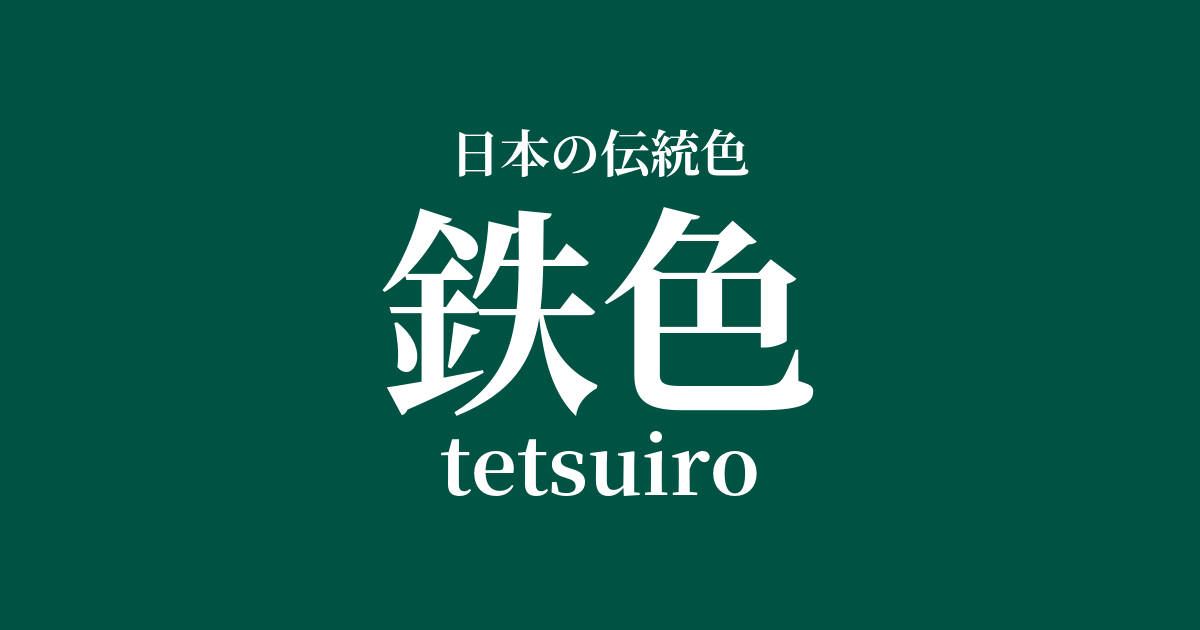
| Japanese color name | Iron color |
|---|---|
| reading | tetsuiro |
| HEX | #005243 |
| RGB | 0, 82, 67 |
What is "iron color"? Origin and etymology
Tetsuiro (鉄色) is a color name derived from "iron," as its name suggests. Specifically, it refers to the unique dark bluish-green hue that iron exhibits as it cools after being heated to a high temperature. This color combines the hard, powerful image of metal with a deep, calm tone. Iron, which has been used for weapons and tools since ancient times, has been a very familiar material to the Japanese people, and it is thought that its color was also integrated into their daily lives.
The historical background of the iron color
It is believed that the color "iron gray" became popular in general from the mid-Edo period onward. At that time, sumptuary laws frequently issued by the shogunate restricted commoners from wearing brightly colored clothing. Within this context, a culture called "Forty-eight Browns and One Hundred Grays" emerged, which involved finding enjoyment in subtle differences in shades such as brown, gray, and indigo. Iron gray was one such color, and as a deep color obtained by repeatedly dyeing with indigo, it was particularly favored as a color for men's kimonos and haori jackets.
As a sophisticated and refined color, it became one of the colors that symbolized the townspeople's culture of Edo.
Related literature, waka poetry, and seasonal words
Due to its subdued and powerful hue, iron gray is sometimes depicted in literary works as a color symbolizing samurai or masculine strength. In Edo period Kabuki and Ukiyo-e prints, iron gray was often used for the costumes of male roles, expressing the character's refined personality and spirit. Although it is not established as a specific seasonal word, it is sometimes used when describing winter scenes because it evokes the coldness of winter and the coolness of metal.
In modern literature, this color is effectively used to portray a character who is upright and strong, or to express a dignified atmosphere.
Color scheme preview
This is to check the readability of the text when this color is used as the background.
Iron-colored color scheme proposal
Gray (#949495)
This color combination is representative of the "Forty-Eight Browns and One Hundred Grays" palette, which was popular during the Edo period. The achromatic gray enhances the deep blue-green of the iron color, creating a stylish and urban impression. It is a color scheme that creates a refined atmosphere while remaining calm.
Persimmon color (#ED6D3D)
The iron-green blue and the persimmon-orange red are close to complementary colors, and they have the effect of making each other appear more vibrant. The warmth of the persimmon softens the coolness of the iron, creating a powerful yet warm impression. It is also a color scheme that evokes an autumn scene.
White training (#FCFAF2)
When combined with a clean, pure white, the gravitas of the iron color stands out, creating a modern and sophisticated impression. The strong contrast in this color scheme conveys a sense of purity and honesty. It's easy to apply not only to traditional Japanese clothing but also to contemporary designs.
Practical Scenes
In the world of traditional Japanese clothing, iron gray is a popular color used for men's kimonos, haori jackets, and hakama trousers, creating an image of a sophisticated and calm adult man. Due to its sense of weight and stability, it has a long history of being used as the color of weapons and armor.
In modern interior design, using it as an accent color for wallpaper, curtains, and furniture can add depth and tranquility to a space. It pairs particularly well with natural materials such as wood and metal, making it useful for creating a modern and sophisticated space.
In web and graphic design, it is suitable when you want to convey trustworthiness and expertise. Using it as the main color for a corporate website or in the packaging design of high-end products can create a sense of calm and reassurance in the viewer.