
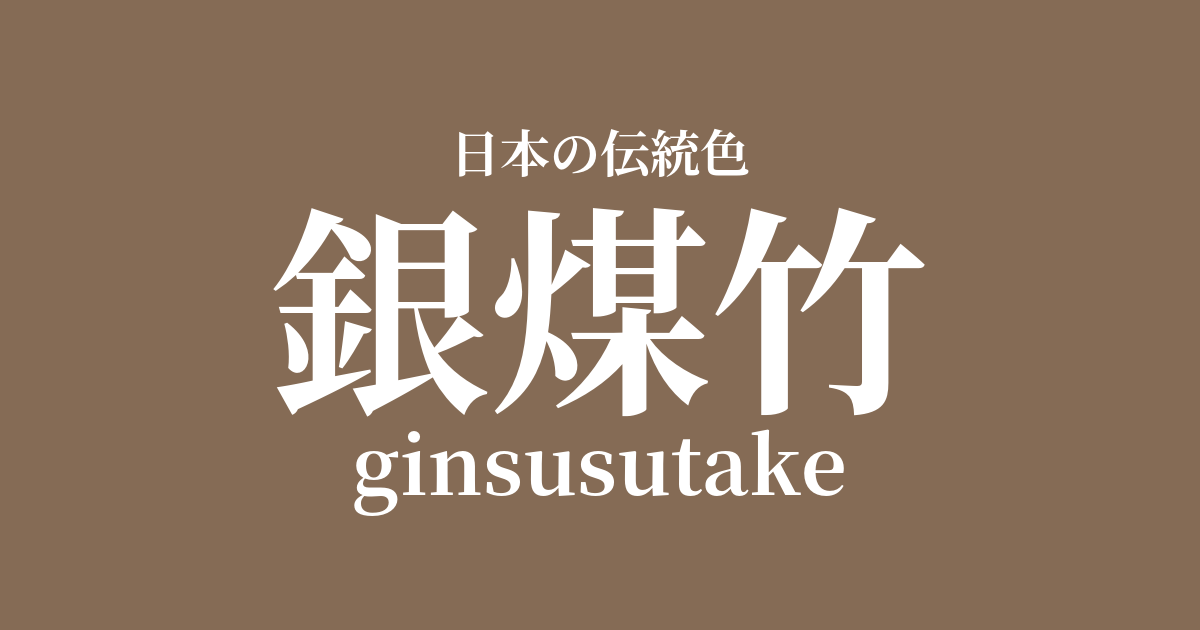
| Japanese color name | silver soot bamboo |
|---|---|
| reading | ginsusutake |
| HEX | #856B55 |
| RGB | 133, 107, 85 |
What is silver soot bamboo? Origin and etymology
Silver sooty bamboo is a color name derived from "soot bamboo," which has been smoked by the smoke of a hearth for many years, resulting in a deep brown color. Soot bamboo, naturally smoked over several decades to more than a century, was highly valued as a high-quality material with a unique luster and color. By adding the prefix "silver" to this color of soot bamboo, it is said that the name expresses a cool, slightly silvery sheen and a refined nuance.
It is thought to be one of the colors that originated from an aesthetic sense that enjoyed subtle differences in color, exemplified by the "48 shades of brown and 100 shades of gray" that were popular during the Edo period.
Historical background of silver soot bamboo
The color name "ginsutake" (silver soot bamboo) is believed to have become widely used from the mid-Edo period onward. At that time, the shogunate frequently issued sumptuary laws, restricting commoners from wearing brightly colored clothing. As a reaction to this, people began to find countless subtle shades within subdued colors such as brown and gray, and a culture of enjoying this as "chic" flourished.
Silver-smoked bamboo was one of the colors that emerged during that trend, and it is said to have been particularly favored as a stylish color among the connoisseurs who played a leading role in Edo's townspeople culture.
Related literature, waka poetry, and seasonal words
It is difficult to find examples of the specific color name "ginsusutake" (silver soot bamboo) appearing directly in classical literature or waka poetry. This is likely because it was a relatively new fashionable color that originated in the Edo period and was mainly used in colloquial language and the world of dyeing. However, "susutake" (soot bamboo), from which the color is derived, has long been deeply rooted in Japanese life as a material symbolizing the wabi-sabi aesthetic, used in things like pillars in tea rooms, tea utensils, and flower vases.
Therefore, in literary works, its existence is sometimes indirectly suggested as a prop used to depict quiet and evocative scenes.
Color scheme preview
This is to check the readability of the text when this color is used as the background.
Silver sooty bamboo color scheme proposal
White training (#FCFAF2)
The combination of the subdued, calming brown of silver-smoked bamboo and the near-pure white of the pure white creates a sense of cleanliness and luxury. The strong contrast enhances each other's colors, giving a modern and sophisticated impression. It creates a striking color scheme in Japanese-style spaces and designs.
Iron closet (#455753)
Like the silver-smoked bamboo, the iron-colored navy blue, born from the refined aesthetic of Edo, gives a sophisticated and understated impression that appeals to connoisseurs. The combination of deep brown and greenish-dark blue is intelligent and profound, and is suitable for expressing masculine strength and stability.
Yellowing leaves (#DDA450)
The calm tones of silver-smoked bamboo, combined with the bright yellow of yellow-smoked leaves (a shade of withered leaves), create a color scheme reminiscent of the bountiful harvest of autumn. Although they are all earth tones of the same family, the difference in brightness creates warmth and depth, giving them a friendly and approachable feel.
Practical Scenes
In the world of kimono, silver bamboo, with its refined and understated color, is particularly used for men's haori jackets and kimonos, as well as for women's obi sashes and obiage sashes, appealing to connoisseurs. While not flashy, its texture, combined with the material itself, creates a deep and sophisticated look, perfect for a mature and refined style. Pairing it with other shades of brown or gray completes a chic, Edo-style coordination.
In interior design, using this color for wallpaper, fixtures, and furniture creates a calm, modern Japanese space. It pairs exceptionally well with natural materials such as wood, Japanese paper, and diatomaceous earth, achieving both tranquility and a sense of luxury. Careful lighting design further enhances the beauty of the color's interplay of light and shadow.
In web and graphic design, using this color as a background or main color is effective in conveying a sense of reliability, tradition, and authenticity. It is suitable for websites of established brands, traditional crafts, and luxury inns. Combining it with white or off-white allows for an elegant design while maintaining readability.