
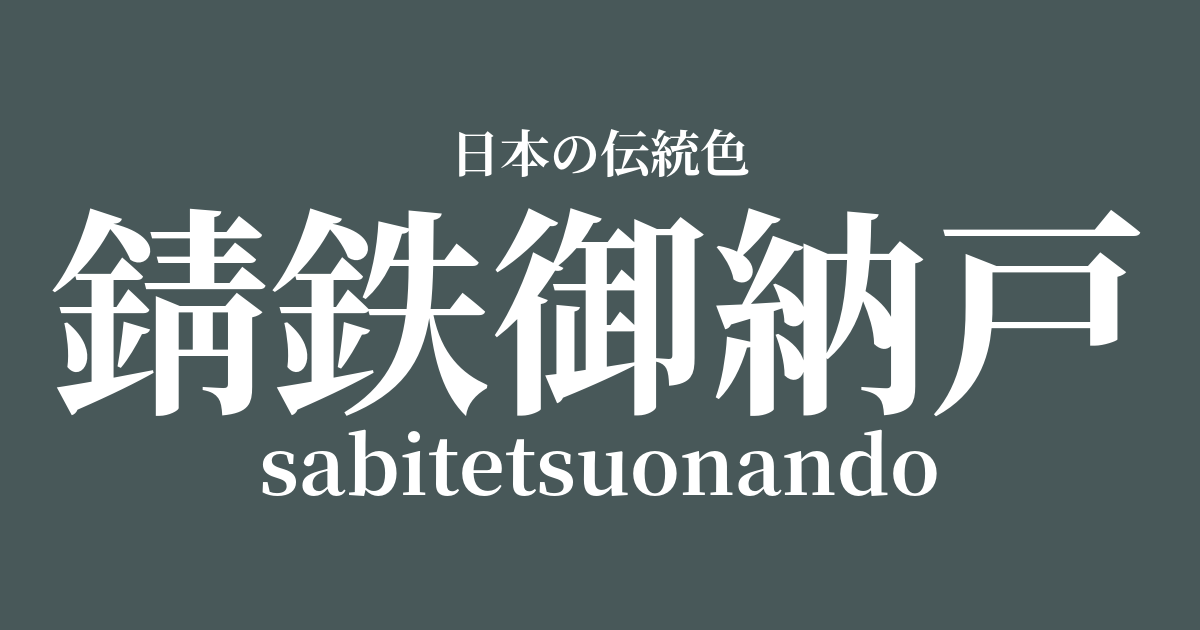
| Japanese color name | Rusty Iron Storehouse |
|---|---|
| reading | sabitetsuonando |
| HEX | #485859 |
| RGB | 72, 88, 89 |
- What is a rusty iron storage room? Origin and etymology
- Historical background of the rusted iron storage room
- Related literature, waka poetry, and seasonal words
- Color scheme preview
- Color scheme proposal for the rusty iron storage room
- Practical Scenes
- FAQ
- Japanese colors similar to rusted iron lacquerware
What is a rusty iron storage room? Origin and etymology
The name "Sabi-tetsu Onando" is a combination of two color names: "Onando-iro" and "Sabi-tetsu-iro." "Onando" refers to a storage room within a castle where clothes and furnishings were kept, and the name is said to originate from the color of the curtains in that room. This dark blue-green color, Onando-iro, became widely popular from the mid-Edo period onward.
On the other hand, "rusty iron color" literally refers to a reddish-black color like rusted iron. When these two elements are combined, rusty iron nando has a unique depth to its color, which is a combination of the bluish-green of nando color with a reddish, subdued tone like rust. It is known as a color favored by connoisseurs, embodying the Edo aesthetic of "iki" (sophistication and elegance).
Historical background of the rusted iron storage room
During the Edo period, the shogunate frequently issued sumptuary laws, restricting commoners from wearing extravagant clothing. As a result, people began to find enjoyment in subtle variations in shades of muted colors such as brown, gray, and indigo. This was known as "Forty-eight Browns and One Hundred Grays," and it became the background for the development of a wide variety of Japanese colors.
Rust-colored navy blue is one of the colors that emerged during this trend. It is said that the color became widely popular among the common people, especially because the popular Kabuki actor Ichikawa Danjuro V favored and used the color "rust-colored navy blue." It was loved as a color that symbolized the "chic" of Edo townspeople culture, which valued sophistication and composure over ostentation.
Related literature, waka poetry, and seasonal words
It is difficult to pinpoint any famous waka poems or literary works that directly mention the color name "Sabi-tetsu Onando." However, this color strongly reflects the culture of the Edo period, and its hue can be found in ukiyo-e prints and illustrated books depicting the customs of that time.
In particular, this color is often depicted as the stage costume of Kabuki actors or the kimono of stylish townspeople. This color is interpreted as symbolizing the Edo aesthetic, which disliked ostentation and valued understated elegance. Although it is not designated as a seasonal word, it is a color that evokes a quiet and tranquil feeling of the autumn and winter seasons.
Color scheme preview
This is to check the readability of the text when this color is used as the background.
Color scheme proposal for the rusty iron storage room
Indigo tea (#5A544B)
By combining it with a shade of indigo and brown that resembles a blend of blue and brown, the subtle nuances of each color are enhanced, resulting in a sophisticated color scheme that evokes the "chic" of Edo. It gives off a calm and profound impression, appealing to connoisseurs.
Gray white (#E9E4D4)
By combining it with a light grayish-white color that has a slight yellowish tint, the heavy feel of the rusted ironwork is softened, creating a modern and clean impression. A contrast is created, and each color enhances the other.
Persimmon color (#9F563A)
By combining it with the reddish-brown persimmon color, the bluish-green of the rusted iron tandoor color stands out, creating a color scheme that harmonizes warmth and sophistication. It creates a calm, Japanese atmosphere reminiscent of traditional Japanese houses and crafts.
Practical Scenes
In the world of traditional Japanese clothing, rust-colored iron (sabi-tetsu onando) is used for men's kimonos, haori jackets, and obi sashes, and is favored as a color that creates a stylish, calm, and mature look. For women's kimonos, incorporating this color into accessories such as obi-jime (sash cord) and obi-age (sash scarf) can tighten the overall coordination and give a refined impression.
In interior design, using this color on large areas such as wallpaper, curtains, and sofas brings a sense of gravitas and tranquility to the space. It pairs well with light-colored wood and dark brown wood, making it suitable for modern Japanese-style spaces and studies. Incorporating it as an accent color in cushions and small accessories is also effective.
In web and graphic design, using this color as a background can convey a sense of luxury and reliability. Its contrast with white or off-white text is beautiful, creating a sophisticated impression while maintaining readability. It's a suitable color for websites themed around history and tradition, or for projects that aim to project a chic brand image.