
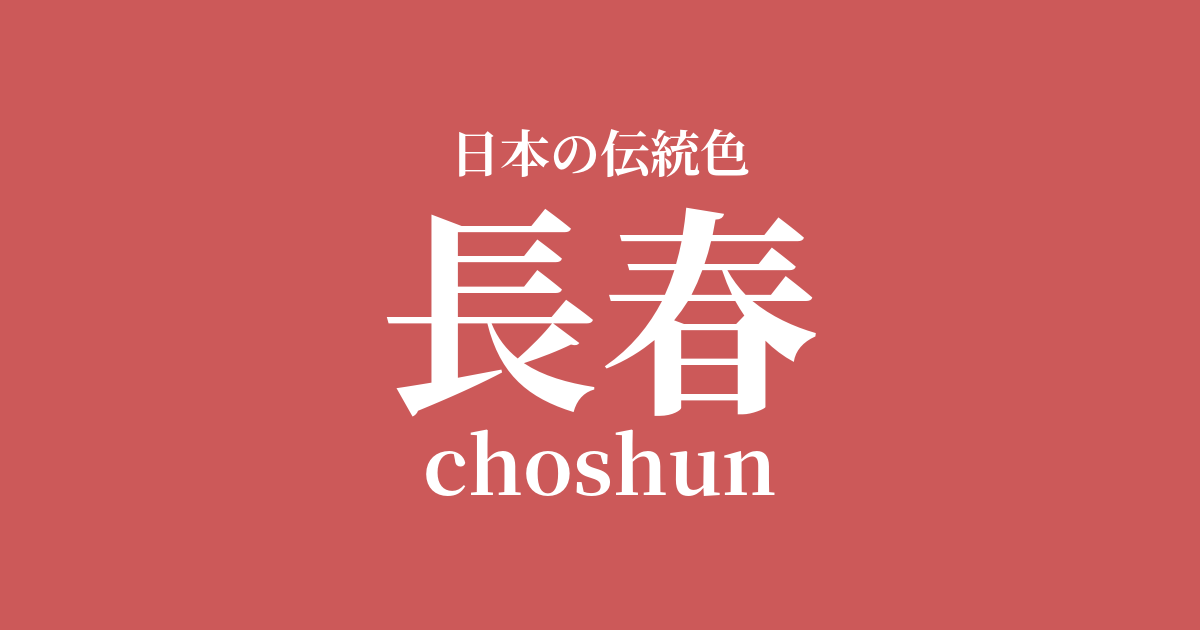
| Japanese color name | Changchun |
|---|---|
| reading | choshun |
| HEX | #CC5959 |
| RGB | 204, 89, 89 |
What is Changchun? Origin and etymology
Changchun is a traditional Japanese color referring to a slightly muted, gentle red. Its name originates from the color of the flower of the rose family plant "Changchun flower" (Changchun ka), also known as "Koshin rose" (Koshinbara), which is native to China. This flower is characterized by blooming not just in a specific season, but throughout all four seasons, hence the name "Changchun," meaning "long spring."
Due to its strong vitality and continuous blooming, it has been revered since ancient times as an auspicious plant symbolizing eternal youth, longevity, and perpetual prosperity.
The color name "Changchun" (長春) is derived from the color of the auspicious Changchun flower. It's not simply red, but a subdued, calm shade that conveys elegance and grace amidst its vibrancy. The color embodies the vitality and auspicious meanings associated with plants, making it one of the colors nurtured within Japanese aesthetics.
Historical background of Changchun
The Changchun rose, from which the name Changchun originates, is believed to have been introduced to Japan during the mid-Edo period. This rare, ever-blooming rose, which came from China, became popular as a garden plant among feudal lords and wealthy townspeople. It is thought that its name gradually became widely known and also became established as a color name for the flower. In particular, due to the auspicious meaning of "eternal youth and longevity" associated with its name, it was favored for use in celebratory clothing, furnishings, and works of art and crafts.
Even in modern times, Changchun color has been highly valued in the world of traditional Japanese clothing. Its exquisite hue, neither too flashy nor too plain, makes it a color that can be worn by people of all ages and has been incorporated into obi sashes, kimonos, and accessories. Even today, its traditional background and calm atmosphere have led to its adoption in Japanese-style designs and products, and it continues to be passed down as an integral part of Japanese color culture.
Related literature, waka poetry, and seasonal words
The flower from which the name "Changchun" originates, the Changchun rose, is used as a seasonal word (summer) in haiku under the names "Changchun" and "Koshinbara." Although it is difficult to pinpoint a specific season due to its ability to bloom throughout the year, it is mainly recognized as a summer flower, and many haiku poets have composed poems about it. These poems often express the vitality of the flower that continues to bloom without interruption, and the emotions evoked by its tranquil presence.
While the color name "Changchun-se" (long spring color) doesn't appear directly or frequently in classical literature, it was a popular subject for paintings. In particular, due to its auspicious connotations, it was often depicted in paintings celebrating longevity. Beyond simply representing a color, the name is sometimes used in poetry and stories as a symbolic word embodying wishes for eternal spring, youth, and prosperity.
Kōshin rose, even with the shoji screen open, the sun is low.
Color scheme preview
This is to check the readability of the text when this color is used as the background.
Changchun color scheme proposal
Nightingale (#918D40)
The red of Changchun and the green of the nightingale are close to complementary colors, enhancing each other's beauty. This combination of plant colors evokes the arrival of spring, creating a natural, calm, and elegant impression. It's a suitable color scheme for emphasizing a Japanese aesthetic.
Blue gold (#FABE29)
The vibrant yellow of turmeric adds splendor and warmth to the gentle red of Changchun. This combination of colors, both associated with good fortune, creates a bright and lively impression, making it suitable for celebrations and festive occasions.
Navy blue (#192F60)
The deep navy blue complements the reddish tones of Changchun, giving the overall impression of sophistication and intelligence. This color scheme is well-suited to expressing trust and stability, and is known as a combination that can be easily applied to modern and refined Japanese-style designs.
Practical Scenes
In the world of traditional Japanese clothing, the color Changchun is widely used in formal wear such as visiting kimonos, casual kimonos, and accessories like obiage (sash ties) and obijime (sash cords). Because it is a calm red, it can be worn elegantly by people of all ages and harmonizes well with other colors. In particular, due to its auspicious connotations, it is often incorporated into outfits for celebratory occasions such as weddings and tea ceremonies.
In interior design, using it as an accent color brings warmth and tranquility to a space. Incorporating it into cushion covers, curtains, or parts of wallpaper can create a modern Japanese atmosphere. It pairs particularly well with natural materials such as wood and tatami mats, contributing to the creation of a peaceful and relaxing space.
In web and graphic design, it is effective when you want to express Japanese tradition or a Japanese aesthetic. Rather than using it as the main color, using it as an accent color, button, or heading can give the entire site an elegant and calm impression. It is suitable for websites related to traditional crafts, Japanese sweets, and inns.