
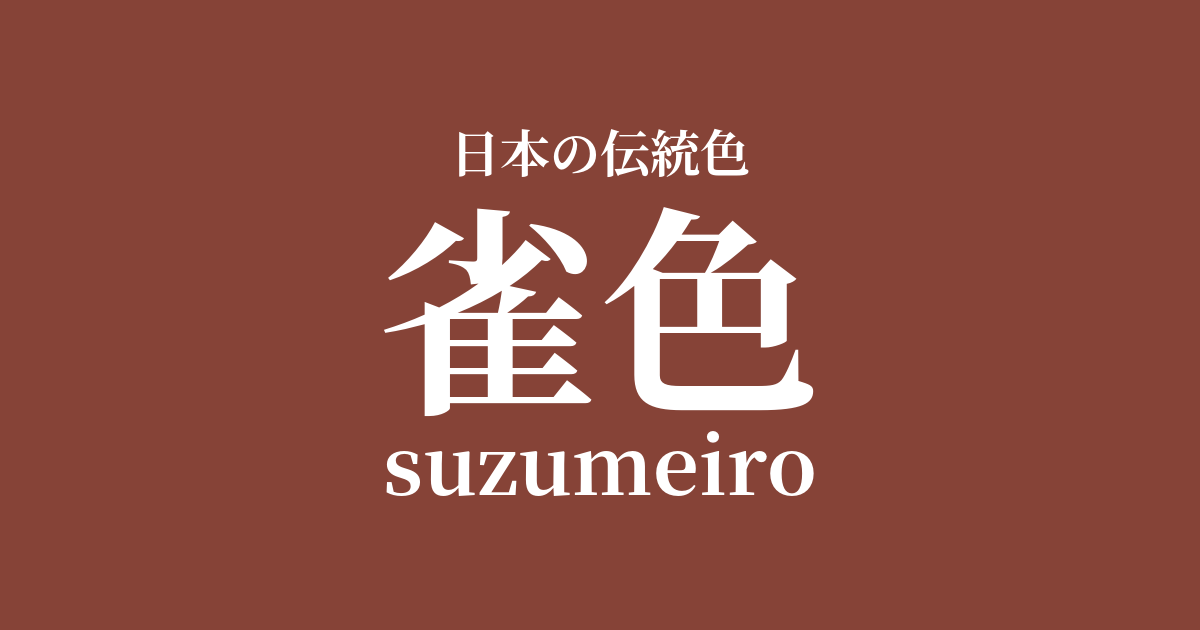
| Japanese color name | Sparrow color |
|---|---|
| reading | suzumeiro |
| HEX | #864337 |
| RGB | 134, 67, 55 |
What is "sparrow color"? Origin and etymology.
"Suzumeiro" (sparrow color) is a reddish-dark brown color derived from the head color of the sparrow, a wild bird that is close to us. It is counted as one of the "Forty-eight Browns and One Hundred Grays" (shijūhatchahyakunezumi), a group of various browns and grays that were popular during the Edo period, and is a color name that symbolizes the traditional Japanese naming method of taking color names from plants and animals in nature. Its simple and warm hue blended into the lives of ordinary people in Edo and became a beloved color considered stylish.
It is sometimes also known by the name "Suzumecha" (sparrow tea).
The historical background of the sparrow color
The name "sparrow color" is believed to first appear in literature during the Edo period. Particularly from the mid-Edo period onward, sumptuary laws issued by the shogunate restricted commoners from wearing brightly colored clothing. As a reaction to this, a culture arose in which people found subtle differences in shades of muted colors such as brown and gray, and enjoyed appreciating them. Sparrow color was one of the fashionable colors that emerged against this backdrop and was cherished as a color that reflected the "chic" aesthetic sense of the townspeople of Edo.
Related literature, waka poetry, and seasonal words
The color sparrow green, due to its everyday and simple hue, has been used in literary works to describe people's lives and natural landscapes. For example, in Natsume Soseki's novel "I Am a Cat," the expression "sparrow-colored hair" appears, describing the hair color of one of the characters. This suggests that this color was deeply rooted in the lives of people at that time.
Furthermore, while "sparrow" itself is not a seasonal word in haiku, "baby sparrows" are used as a seasonal word for spring, and "rice sparrows" for autumn, and these colors are associated with the scenes depicted.
The sky is the color of sparrows, and Shiki's memorial day is approaching.
Color scheme preview
This is to check the readability of the text when this color is used as the background.
Sparrow-color scheme proposal
Soot bamboo color (#6E5545)
The combination of sparrow green and sooty bamboo green, both naturally derived brown tones, gives the overall look a sense of unity and depth. The calm tones create a gentle and sophisticated impression. It is suitable for interiors and fashion with a Japanese aesthetic.
Deutzia color (#F7FCFE)
The color of the deutzia flower is a slightly yellowish white, like the flowers that bloom in early summer. When combined with a dark sparrow green, it adds brightness and a sense of cleanliness, creating an elegant contrast. The colors complement each other, resulting in a well-balanced color scheme.
鶸Menghuang (#8D9949)
Hiwamegi is a bright yellowish-green color reminiscent of young spring leaves. Its natural color scheme evokes images of sparrows flitting about in the fields and mountains. The combination of earth tones is highly harmonious, creating a vibrant, lively, and calming effect.
Practical Scenes
In the world of traditional Japanese clothing, sparrow green is used in silk fabrics such as tsumugi, komon, and obi sashes, giving a stylish and refined impression. It is especially often incorporated into everyday kimonos, and although not flashy, it is a color loved by connoisseurs. By combining it with other shades of brown or green, you can enjoy elegant and seasonally appropriateコーディネート.
In interior design, incorporating it into fabrics such as wallpaper, curtains, and furniture creates a warm and calming atmosphere. It pairs particularly well with natural materials such as wood, Japanese paper, and earthen walls, making it suitable for creating Japanese modern or natural-style spaces. When combined with white or off-white, it brings brightness and a sense of openness to the space.
In web design and graphic design, sparrow green can be used as a background or accent color to convey a sense of reliability and traditional atmosphere. It is suitable for content related to history and culture, or for websites dealing with organic products. To ensure readability, it is common to combine it with white or light beige text.