
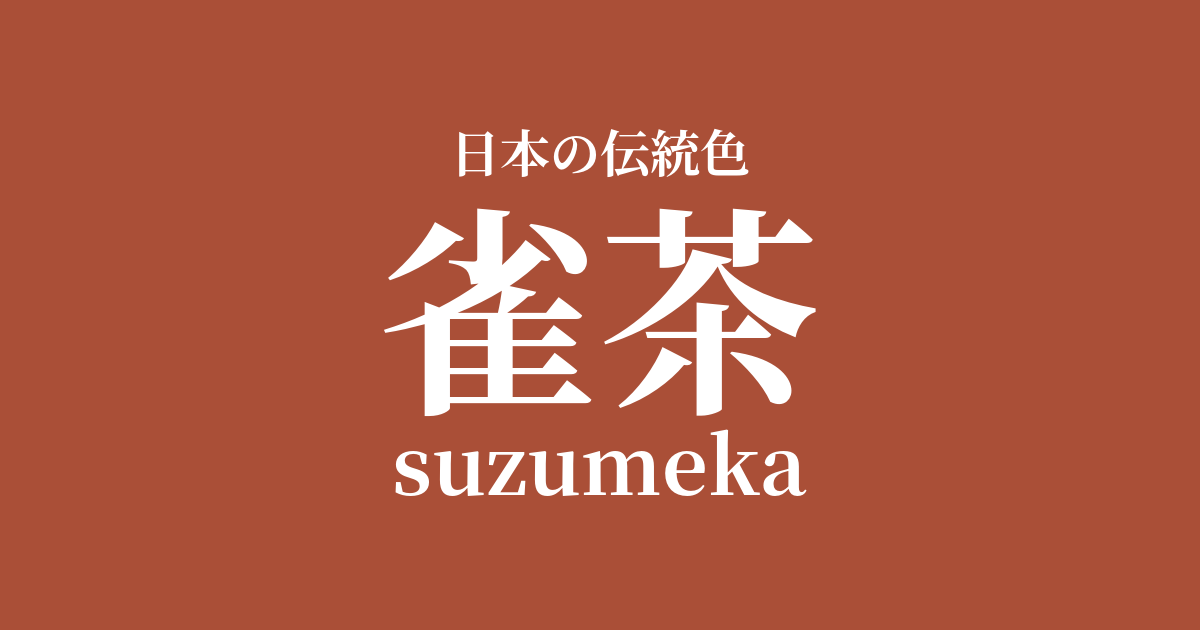
| Japanese color name | Sparrow tea |
|---|---|
| reading | suzumeka |
| HEX | #AA4F37 |
| RGB | 170, 79, 55 |
What is Suzumecha? Origin and etymology
Suzumecha (sparrow brown), as its name suggests, is a reddish-brown color derived from the color of the head of the sparrow, a common wild bird. It is counted as one of the "Forty-eight Browns and One Hundred Grays" (shijūhacchahyakunezumi), a general term for various shades of brown and gray that became popular from the mid-Edo period onward. It reflects the traditional Japanese sensibility of incorporating things found in nature into color names, and is characterized by its down-to-earth and approachable name.
This color symbolizes the keen observational skills of the people of Edo and their rich aesthetic sense that incorporated these observations into their daily lives and culture.
Historical background of sparrow tea
The popularity of "Suzumecha" (a type of brown) dates back to the mid-Edo period. The shogunate frequently issued sumptuary laws, restricting commoners from wearing brightly colored clothing. As a reaction to this, people began to find enjoyment in subtle variations within subdued colors such as brown and gray, resulting in such a diverse range of shades that it was called "Forty-Eight Browns and One Hundred Grays." Suzumecha was one of these, and it is said to have been particularly favored as a sophisticated color within the townspeople's culture of Edo.
Furthermore, the popularity of brown in general was boosted by the fact that Ichikawa Danjuro I, a popular Kabuki actor at the time, favored brown tones and popularized "Danjuro-cha," a color named after himself. Reddish-brown colors like Suzume-cha are sometimes associated with this Danjuro-cha color family. These fashionable colors spread to the common people through actors and courtesans who were fashion leaders, further enriching Edo's color culture.
Related literature, waka poetry, and seasonal words
While it is difficult to pinpoint specific famous waka poems or literary works that directly feature the color name "Suzumecha" (sparrow tea), it strongly reflects the culture of the Edo period when this color was popular. In popular literature such as sharebon and kibyoshi, the colors of the characters' clothing were often depicted according to the fashionable colors of the time, and it is thought that colors in the Suzumecha family were included among them.
Furthermore, in the portraits of beautiful women and actors painted by ukiyo-e artists, these subtle shades of brown are skillfully depicted as the colors of the kimonos worn by stylish townspeople and courtesans.
As a seasonal word, the word "sparrow" itself does not have a specific season associated with it, but "sparrow chicks" are used in spring poetry, and "rice sparrows" are used in autumn poetry. Sparrows have long been birds closely associated with people's lives, and their appearance has been the subject of many haiku and waka poems. The color name "sparrow tea" is a combination of this familiarity with sparrows and a sense of color, and can be said to be a color that embodies the Japanese view of nature and sense of the seasons.
Sparrow chicks, move aside, move aside, the horse is coming.
Color scheme preview
This is to check the readability of the text when this color is used as the background.
Sparrow Tea Color Scheme Proposal
Indigo tea (#554738)
The reddish hue of Suzumecha is complemented by the deep, subdued brown of Aibicha, creating a harmonious and refined color scheme. Both are shades of brown favored during the Edo period, giving a harmonious, stylish, and sophisticated impression. This color combination is suitable for designs that want to emphasize a Japanese aesthetic.
Blue gold (#FABE22)
The vibrant yellow of the turmeric adds elegance and brightness to the calm tones of the sparrow tea. This combination of warm colors, reminiscent of autumn foliage and harvest, creates a warm and lively impression. It's an effective accent that draws attention.
Moss color (#69821B)
The combination of the earthy, bark-like color of sparrow tea and the deep green of moss creates an earthy color scheme reminiscent of natural landscapes. It gives a calm and reassuring impression and harmonizes well with interiors and natural-themed designs.
Practical Scenes
In the world of traditional Japanese clothing, this color is considered a stylish Edo-era color and is used in kimonos, obi sashes, and haori jackets. It goes particularly well with everyday kimonos made of silk or cotton, creating a sophisticated and fashionable look. When combined with other shades of brown or indigo, it creates an outfit that is understated yet distinctive.
Because of its warm, reddish-brown hue, incorporating it into your interior design will create a calm and relaxing atmosphere. It is particularly effective when used on one wall of wallpaper, or on fabrics such as cushions and rugs. It also pairs very well with wooden furniture and blends seamlessly into Japanese modern and natural-style spaces.
In website and graphic design, using it as a background or accent color can give the overall design a sense of warmth and trustworthiness. It is particularly suitable for themes related to traditional crafts, Japanese cuisine, and history. When combined with white or off-white, it creates an elegant and sophisticated impression.