
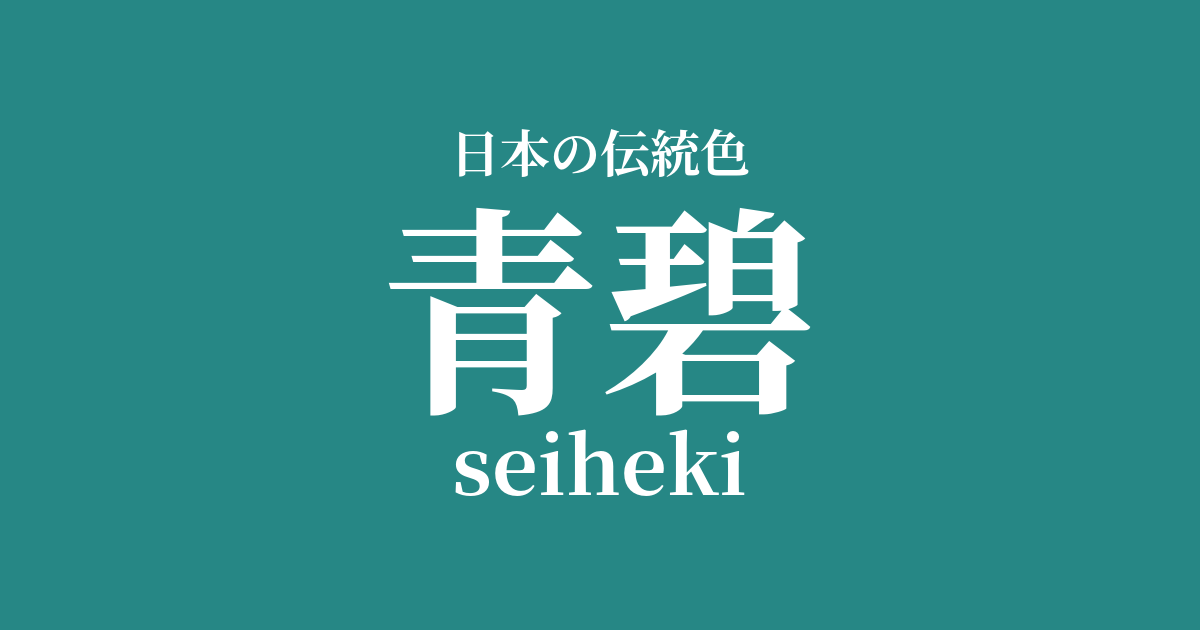
| Japanese color name | blue |
|---|---|
| reading | seiheki |
| HEX | #268785 |
| RGB | 38, 135, 133 |
What does "Ao-heki" mean? Origin and etymology
The color "Ao-heki" literally combines the words "blue" and "heki." "Heki" originates from the word for jasper, a beautiful gemstone with a bluish-green color. The deep, clear color of this gemstone is an intermediate color between blue and green, representing a slightly bluish-green. Jasper, which has been treated as a precious stone since ancient times, is said to have given a mysterious and noble impression and was an object of admiration for people.
Therefore, the color name "sei-heki" (青碧) embodies values and aesthetic sensibilities that go beyond mere color.
The historical background of the blue-green
The character "碧" (heki) has been used in Japan since ancient times and has become established as a word referring to a beautiful blue stone. While the character "碧" can be found in literary works from the Heian period, it is thought that the color name "青碧" (seiheki) only became commonly used relatively recently. In particular, during the Edo period, as dyeing and weaving techniques developed and a wide variety of colors were created, such subtle intermediate colors also came to be expressed.
Since the modern era, it has become established as the name of a paint or dye, and has come to be recognized as one of Japan's traditional colors.
Related literature, waka poetry, and seasonal words
While the color name "seiheki" (青碧) itself doesn't appear frequently in classical literature, the character "heki" (碧) was often used to describe the deep color of water or the sky. Classical literature such as "The Tale of Genji" contains abundant descriptions of green and blue hues, and scenes that evoke seiheki are also depicted. For example, when describing the surface of a deep, clear pond or the color of leaves on trees after the rain, words like "midori" (緑) and "ao" (青) were used, and it is presumed that these words included a deep hue similar to seiheki.
Although it doesn't directly exist as a seasonal word, it's a color that evokes the deep green of trees in summer and the clear blue of the autumn sky.
Color scheme preview
This is to check the readability of the text when this color is used as the background.
A blue-green color scheme proposal
White training (#F3F3F3)
A color scheme where deep blue hues are complemented by pure, lustrous white. It exudes cleanliness and elegance, giving a quiet and sophisticated impression. Suitable for kimono combinations, minimalist web design, and Japanese modern interiors.
Kutsuha color (#917347)
The deep green of azure and the brownish-brown of withered leaves create a harmonious combination reminiscent of the colors of nature. It evokes a sense of calm and warmth, creating a profound atmosphere like an autumn forest. It gives a gentle impression in interior design and fashion.
Coral color (#F58F78)
The cool impression of the deep blue is contrasted by the vibrant, warm coral color, creating a near-complementary relationship between the two. They enhance each other's beauty, resulting in a modern and lively impression. Using this combination in accessories or graphic design can create a striking visual impact.
Practical Scenes
Due to its calming and deep hue, blue-green is used in a variety of settings. In kimonos and obi sashes, it gives a chic and intellectual impression and is particularly favored in formal occasions. When combined with colors such as white, silver, and gold, it can create a dignified and elegant look.
In interior design, incorporating it into accent walls, cushions, or curtains brings tranquility and depth to a space. It pairs well with natural materials such as wood and Japanese paper, making it suitable for creating a modern Japanese-style space. Its calming effect also makes it suitable for studies and bedrooms.
In web and graphic design, this color is used to convey trustworthiness and expertise. When used as a main color, it creates a dignified atmosphere, while when used as an accent color, it tightens the overall design. It's a color that allows for the creation of a unique worldview while maintaining readability.