
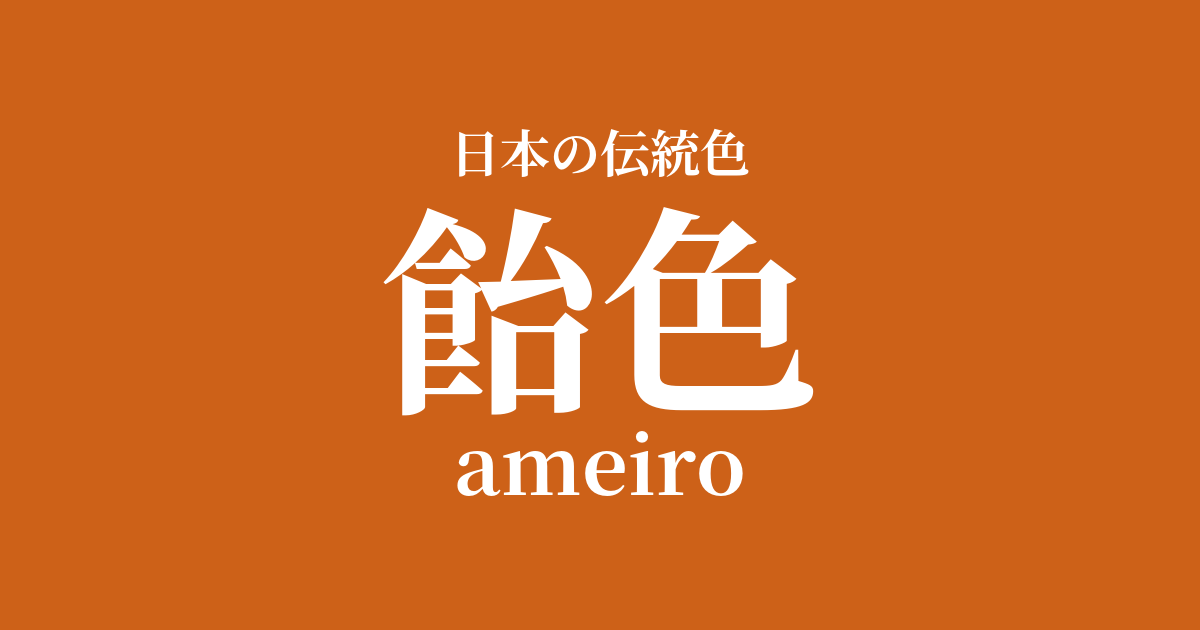
| Japanese color name | Amber |
|---|---|
| reading | ameiro |
| HEX | #CD6118 |
| RGB | 205, 97, 24 |
What is "amber color"? Origin and etymology
Amber color refers to a deep, translucent yellowish-brown color, like the candy made by boiling down starch syrup or sugar. It can also refer to a reddish-orange color, and as the name suggests, its direct origin is the food "candy." A glossy, smooth texture is often included as a characteristic of the color. Furthermore, because it resembles the color of tortoiseshell (bekko), a craft made from processed tortoise shell, it is sometimes considered the same as or treated as a similar color to "bekko-iro" (tortoiseshell color).
It has become established as a familiar and warm color name, widely found in nature and in crafts.
Amber-colored historical background
The color name "ameiro" (amber color) is believed to have become commonly used after the Edo period, when candy became widely popular among ordinary people. While candy itself existed before then, its establishment as a color name is thought to be a relatively recent development. Particularly important when discussing this color is "ameyu," a type of glaze used in the world of pottery. This glaze contains iron and is named for the beautiful amber color it produces when fired.
It was traditionally used in pottery kilns throughout Japan, such as Mashiko ware, Koishiwara ware, and Shussai kiln, and its simple beauty was highly valued within the folk craft movement.
Related literature, waka poetry, and seasonal words
The warm, lustrous color of amber has been used in literature to describe the texture of human skin and objects, as well as nostalgic scenes. For example, Natsume Soseki's "I Am a Cat" uses the expression "smooth amber-colored skin," describing the luster of the skin. The color of furniture and tools that have been used and developed a sheen is also often described as "turning amber-colored."
This goes beyond mere color description; it has the effect of imbuing things with a depth that comes from the passage of many years, such as value and affection. Although it is not directly designated as a seasonal word, it can play a role in creating a sense of the season by evoking images of autumn harvests and warm winter foods.
Color scheme preview
This is to check the readability of the text when this color is used as the background.
Amber-colored color scheme proposal
Indigo (#165E83)
The warm amber color and the cool indigo color complement each other, creating a color scheme that is close to complementary. This results in a deep contrast, giving a refined and modern Japanese impression. This combination is often seen in traditional Japanese crafts such as ceramics and textiles.
Maroon (#764A2B)
Amber and chestnut brown are both similar shades of brown, creating a unified and harmonious blend. This warm and gentle color scheme evokes the autumn berries and colorful leaves. It creates a natural and rustic atmosphere, making it suitable for interior design and fashion.
Gray (#D7CF3A)
The vibrant contrast between the amber-reddish brown and the bright yellow-green creates a striking color scheme. It evokes a sense of vitality, like ripe fruit and young leaves, giving an impression of both energy and nostalgia. It's suitable for retro-modern designs and as an accent for websites.
Practical Scenes
Incorporating amber into kimonos and obi sashes creates a warm, calm, and elegant impression. It suits the autumn season particularly well, and combining it with dark green, indigo, or mustard yellow creates a sophisticated and deep look. It's a color often used in slightly more casual everyday kimonos such as tsumugi and komon.
In the field of interior design, amber-colored furniture and flooring bring warmth and a sense of depth to a space. Often described as the color of wood that has been used for many years and developed a beautiful sheen, it pairs well with vintage and country-style spaces. It's also effective to use it as an accent in lampshades or ceramic accessories.
Using amber in web design can evoke images of trust, tradition, and the warmth of handcrafted work. It's suitable for websites showcasing long-established shops, food-related businesses, and traditional crafts. Combining it with lighter colors like white or off-white creates an elegant and highly readable design.