
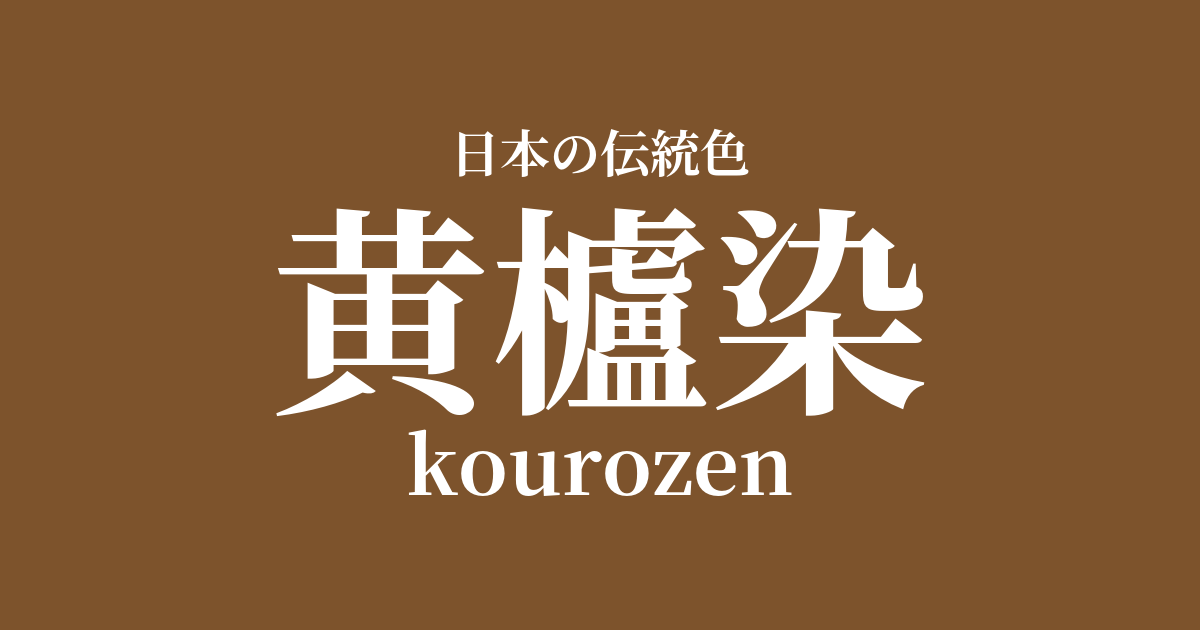
| Japanese color name | yellow oak dyeing |
|---|---|
| reading | kourozen |
| HEX | #7D532C |
| RGB | 125, 83, 44 |
What is Kōrozen? Origin and etymology
Kōrozen is a dye primarily derived from the heartwood of the bark of the Japanese wax tree (Rhus succedanea), a deciduous tree belonging to the Anacardiaceae family, and dyed using sappanwood (Scommon lacquer) as a mordant. By adding the reddish tint of sappanwood to the yellow dye solution of the Japanese wax tree, a reddish-yellowish-brown color is produced. This dyeing method is very complex, and the color subtly changes depending on how the light hits it, sometimes appearing greenish, reddish, or even golden.
Due to its mystical hue, it has been called the color of the sun and has held special significance as a color symbolizing the authority of the Emperor.
Historical background of yellow dye
The yellow-dyed robe was designated as the emperor's color in 818 AD, during the reign of Emperor Saga in the Heian period. At that time, it was officially designated as the color of the robe worn by the emperor during important ceremonies and was declared an "absolutely forbidden color." This color was strictly forbidden to be worn by anyone other than the emperor and symbolized his status and authority.
This regulation was passed down for a long time afterward and continues to be used to this day as the color of the formal court attire worn by the Emperor during the most important ceremonies, such as the enthronement ceremony.
The dyeing technique for Kōrozen is extremely advanced, and it is said that the method has been passed down as a secret within specific families of dyers for generations. At times, there were times when the technique was in danger of disappearing, but within the tradition of valuing court ceremonies, the method has been preserved. A Kōrozen robe is not merely a garment, but an important symbol that embodies Japanese history and culture, and the traditions of the Imperial family.
Related literature, waka poetry, and seasonal words
Because the color yellow-dyed rouge was a color only permitted to be worn by the emperor, it rarely appears directly in general literary works or waka poetry. Its existence is mainly found in official records detailing the laws and regulations of the Ritsuryo system, such as the Engishiki, and in historical narratives describing the emperor's attire. For example, in Heian period literature such as The Tale of Genji, it is sometimes indirectly mentioned as a symbol representing the emperor's nobility when describing his appearance.
Although not established as a seasonal word, its color name is known as a word that speaks to the depth of Japanese history and culture.
Color scheme preview
This is to check the readability of the text when this color is used as the background.
Suggested color scheme for yellow-dyed fabric
Dark purple (#594255)
Metsu-murasaki is a deep purple color, almost black, and was used by high-ranking monks and other high-ranking figures. The contrast between the sun-like light of Kōrozen and the deep, dark stillness of Metsu-murasaki creates a solemn and dignified impression. It is a combination that evokes a sense of historical authority.
Moss color (#69821B)
Moss green is a deep, calming shade of green. The earthy, bark-like brown tones of the yellow-green dye harmonize with the natural green of moss green, creating a gentle and stable color scheme reminiscent of the earth and forests. This combination reflects the Japanese view of nature.
White training (#FFFFFF)
Shironeri is a pure white, like refined silk. The purity of Shironeri enhances the complex and deep hues of Kōrozome, emphasizing a sacred and pure impression. This color scheme creates a dignified yet refreshing atmosphere, suitable for ceremonial occasions.
Practical Scenes
Because yellow safflower is a forbidden color for the Emperor, it is not normally used in ordinary clothing or products. However, colors that imitate its hue are sometimes incorporated into designs with special significance. For example, it may be used in high-class Japanese accessories, costumes for traditional performing arts, or graphic designs with historical themes to express authority and gravitas.
In interior design, reddish-brown colors like those found in Japanese safflower dye (kōrozen) give a space warmth, tranquility, and a sense of luxury. Using it as an accent color for wallpaper, curtains, or cushions can create a modern Japanese-style space or a dignified, classic space. It pairs particularly well with wood, allowing for coordination that evokes the beauty of traditional Japanese architecture.