
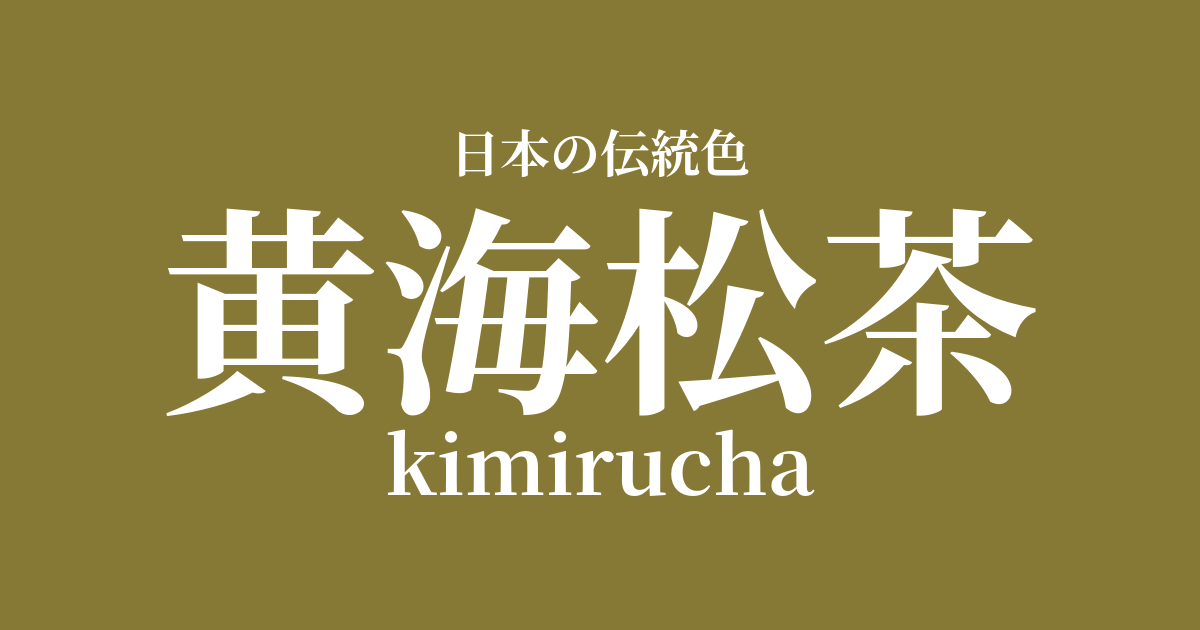
| Japanese color name | yellow sea pine tea |
|---|---|
| reading | kimirucha |
| HEX | #867835 |
| RGB | 134, 120, 53 |
What is Huanghai Pine Tea? Origin and Etymology
Yellow seaweed tea is a muted yellowish-brown color with a greenish tint. As the name suggests, it is derived from the color of seaweed called "miru" that attaches to rocks in shallow waters. A greenish color called "miru-iro" has existed since ancient times, using miru as a dye raw material, but when brown became popular in the mid-Edo period, "miru-cha" was created by adding a brownish tint to this miru-iro. Yellow seaweed tea is a further derivative of this miru-cha, with an even more yellowish tint.
This color name can be said to symbolize the refined sense of color of the Edo period, which appreciated subtle differences in shades.
As exemplified by the phrase "48 shades of brown and 100 shades of gray," countless shades of brown and gray were created during the Edo period. With sumptuary laws restricting flashy colors, common people found subtle beauty in subdued colors and enjoyed a wide variety of shades. Yellow seaweed brown is one of the colors that emerged during this trend, and its name reflects the sensibilities of the era, incorporating elements of brown and yellow, which were fashionable colors at the time, based on the natural substance seaweed.
Historical background of Huanghai Pine Tea
The mid-to-late Edo period, when sea lion tea was popular, was a time when townspeople culture flourished. In particular, colors worn by Kabuki actors became extremely popular among the common people as "actor colors." For example, "Danjuro tea," favored by the fifth Ichikawa Danjuro, is famous. Sea lion tea is thought to have been one of these trendy colors, accepted by the Edo townspeople who appreciated sophistication. Its subdued and calm hue suited the aesthetic sensibilities of the time, which valued "sophistication" and "elegance" over flashiness.
This color was primarily used for dyeing kimonos, haori jackets, and obi sashes. Such subdued, intermediate colors were particularly favored in men's traditional Japanese clothing. Furthermore, shades similar to this yellow-seaweed brown can be seen in various crafts and works of art from the period, such as ceramics, lacquerware, and ukiyo-e prints. This suggests that this color was not merely a fleeting trend, but was deeply rooted in the lifestyle and culture of Edo.
Related literature, waka poetry, and seasonal words
While the color name "Ki-umimatsu-cha" (yellow seaweed tea) rarely appears directly in literary works, its etymology, "umimatsu" (seaweed), has been celebrated in the world of Japanese poetry since ancient times. Numerous poems about umimatsu are included in the Manyoshu and Kokin Wakashu anthologies, where it is used as a subject to express seaside scenes and feelings of love. In particular, it is often used as a pun with the word "miru" (to see), adding depth to the poems.
For example, in "The Tales of Ise," there is a poem that expresses the sentiment of "I am only watching you from afar, like a fisherman eating seaweed." In this way, seaweed has been a part of the Japanese sensibility since ancient times. It is thought that the familiarity and image of seaweed cultivated through classical literature may have been the background to the creation of yellow seaweed tea, which bore the name of seaweed, during the Edo period. As a seasonal word, seaweed is sometimes treated as a seasonal word for the New Year.
The fishermen of the open sea eat seaweed, and even on the rocky shore, where seaweed grows, I see you.
Color scheme preview
This is to check the readability of the text when this color is used as the background.
Yellow sea pine tea color scheme proposal
Aphrodisiac tea (#6B5B44)
Like Huanghai Tea, this brown shade was popular during the Edo period. The greenish Huanghai Tea and the reddish Kobi Tea are both earth tones and complement each other well, creating a natural, deep, and calming impression. It is a harmonious color combination that brings out the best in each other's colors.
Blue gold (#FABE22)
Turmeric yellow is a vibrant yellow that adds brightness and elegance to the subdued yellowish-green tea. The two colors complement each other, creating a traditional yet modern and sophisticated impression. This color combination is suitable for use as an accent in kimono sashes and accessories.
Bellflower color (#5A4F9F)
The yellowish-brown sea pine tea and the bluish-purple bellflower color are close to complementary colors, and they have the effect of making each other appear more vibrant. This combination creates an intelligent and elegant atmosphere, giving an impression of high class. It is a color scheme that is classic yet fresh.
Practical Scenes
In the world of traditional Japanese clothing, yellow seaweed brown is a sophisticated color favored by connoisseurs and is used in kimonos, haori jackets, and obi sashes. Choosing this color for everyday kimonos, such as tsumugi or komon, creates an effortlessly stylish look. It is also a favorite color for men's kimonos, conveying a calm and mature elegance. Combining it with other shades of brown or green creates a sophisticated and refined look.
In interior design, incorporating this color into wallpaper, curtains, and furniture upholstery creates a calm, modern Japanese atmosphere. It pairs exceptionally well with natural materials such as wood, bamboo, and Japanese paper. Using it as an accent color in cushions and accessories adds depth and character to a space, creating a peaceful and relaxing ambiance.
In web and graphic design, using this color as a background or main color can convey images of trustworthiness, tradition, and nature. It is particularly well-suited to websites of long-established businesses, traditional crafts, and organic product brands. Combining it with white or off-white creates an elegant and sophisticated design.