
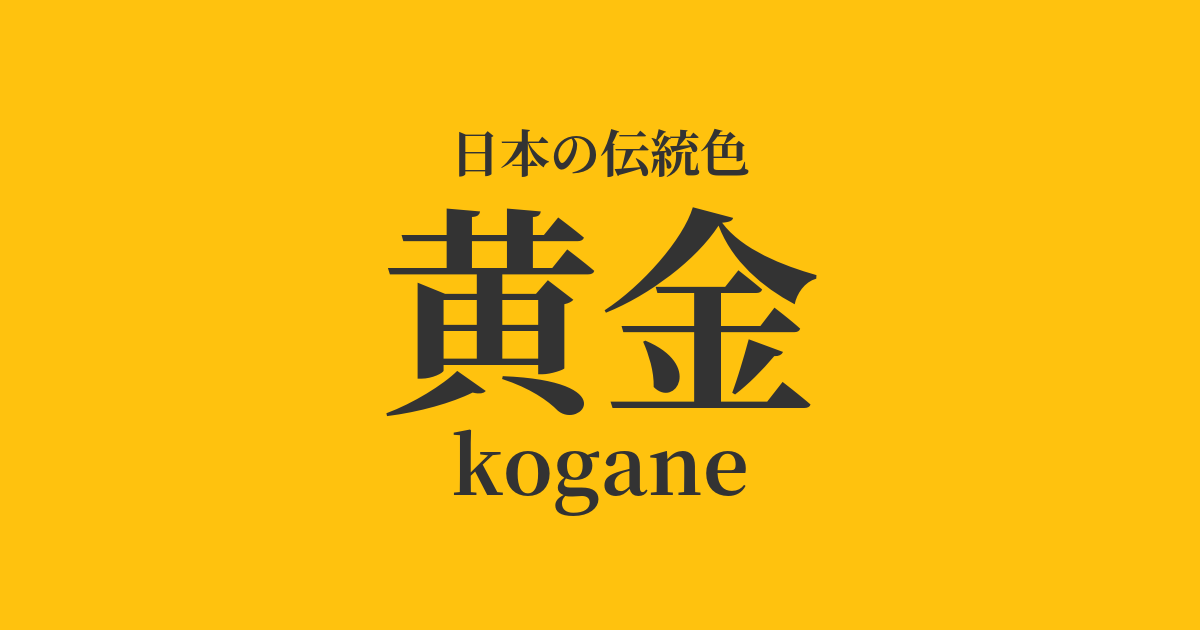
| Japanese color name | gold |
|---|---|
| reading | kogane |
| HEX | #FFC20E |
| RGB | 255, 194, 14 |
What is gold? Origin and etymology
The color "kogane" (golden yellow) is a color name that imitates the brilliance of the precious metal "kin" (gold). As the name suggests, it refers to a bright yellow color similar to a shining golden yellow. The reading "kogane" is thought to be derived from "kane" (gold) with the prefix "ko," and it has been used since ancient times to mean a beautiful or valuable metal. Just as the sight of ripening rice stalks shining with a golden color is described as a "golden wave," it is deeply rooted in the hearts of the Japanese as a symbol of abundance, wealth, and prosperity.
The historical background of gold
Gold has a long history in Japan, with records in the Shoku Nihongi (Continued Chronicles of Japan) indicating the first gold production in Japan was reported in Mutsu Province in 749. Gold held such national value that the era name was changed from "Tenpyo" to "Tenpyo Kanpo" to celebrate this discovery. During the Nara period, gold leaf was used on the Great Buddha of Todai-ji Temple, and during the Heian period, it was widely used in the decoration of Buddhist architecture and statues, such as the Konjikido (Golden Hall) of Chuson-ji Temple, to express the brilliance of the Pure Land.
During the Azuchi-Momoyama period, the anecdote of Toyotomi Hideyoshi having a "golden tea room" built is famous. This was intended to demonstrate his authority and wealth to the world, and it is a prime example of how gold was used as a symbol of power. In the Edo period, gold was used not only as currency but also widely in crafts such as maki-e (lacquerware) and kinran (gold brocade), and it permeated the culture of the common people.
Related literature, waka poetry, and seasonal words
In the world of literature, the color gold frequently appears as a metaphor for abundance and brilliance. In the Manyoshu, the Japanese kerria flower is described as "koganebana" (golden flower), its vibrant yellow color likened to the gleam of gold. The autumn landscape of ripening rice stalks is also described as "golden," a word cherished as a symbol of the joy of harvest and the changing of the seasons. As a seasonal word, "rice stalks" and "rice fields" in autumn are associated with the color gold, representing the season of abundant harvest.
Summer grasses, the remnants of warriors' dreams.
Color scheme preview
This is to check the readability of the text when this color is used as the background.
Golden color scheme proposal
Jet black (#0D0D0D)
The golden sheen and the deep, jet-black of the black are contrasting colors that enhance each other to the fullest. This combination evokes luxury and elegance, and is a traditional color scheme found in art and lacquerware from the Azuchi-Momoyama period, making it ideal for expressing a sense of luxury and gravitas.
Crimson (#B7282E)
Golden yellow and deep crimson red are both warm colors and highly compatible with each other. They evoke a passionate and vibrant impression reminiscent of a twilight sky or autumn leaves. This color scheme is effective in creating a festive atmosphere and an energetic image.
Lapis Lazuli (#1F4788)
The golden yellow and the deep blue of lapis lazuli are close to complementary colors, creating a powerful contrast that highlights each other. This color scheme, which can also be seen in ancient Egyptian ornaments, possesses a universal beauty and evokes a noble and mysterious atmosphere. It is a combination with a strong visual impact.
Practical Scenes
In the world of kimono, gold is used in the form of gold thread or gold leaf on formal kimonos such as tomesode and furisode, as well as obi sashes, to create an impression of high status and splendor. Especially in formal wear, when applied together with auspicious patterns, it plays an important role in expressing celebratory sentiments and a festive atmosphere. Because it gives a luxurious and resplendent impression, it is considered a color suitable for special occasions.
In interior design, using gold as an accent color brings a sense of luxury and warmth to a space. Incorporating it partially into lighting fixtures, picture frames, and small accessories can create a sophisticated and opulent feel. When using it in wallpaper or fabrics, it's important to consider the balance with other colors to create an elegant impression.
In web and graphic design, gold is suitable for brand websites and product packaging where you want to convey a sense of exclusivity and luxury. Using it in logos, headings, and buttons can attract user attention and visually convey trustworthiness and high value. However, overuse can become too flashy, so it's important to use it appropriately with ample white space.