
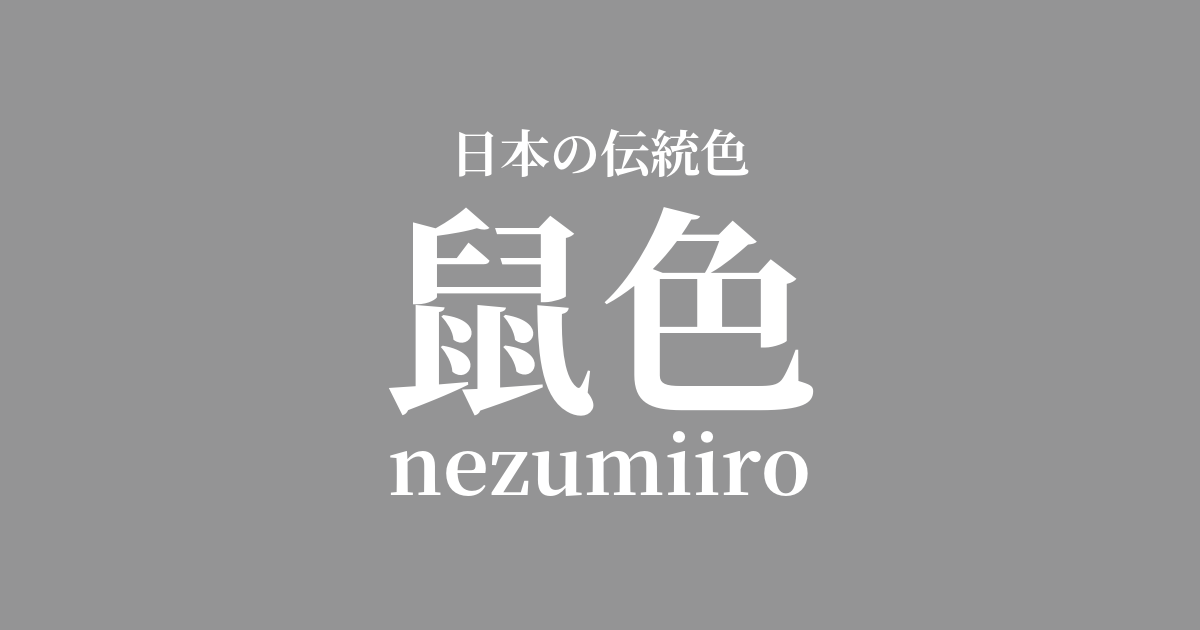
| Japanese color name | gray |
|---|---|
| reading | nezumiiro |
| HEX | #949495 |
| RGB | 148, 148, 149 |
What is "mouse gray"? Origin and etymology
As its name suggests, "mouse gray" is a traditional Japanese color derived from the color of a mouse's fur. In the past, it was simply called "gray" or "lead gray," but it is believed that the name "mouse gray" became common around the early Edo period. Although it is an achromatic color, the slight inclusion of blue, red, or yellow hues creates a variety of shades, fostering a culture of appreciating these subtle differences.
This color was widely accepted as a symbol of refined aesthetics, reflecting the samurai spirit of avoiding ostentation and the townspeople's culture that valued simplicity and frugality.
Gray historical background
Gray became particularly fashionable during the mid-Edo period. The shogunate frequently issued sumptuary laws, restricting commoners from wearing silk fabrics, gold and silver threads, and brightly colored clothing such as purple and crimson. As a reaction to this, people began to find enjoyment in subtle variations in shades of muted colors like brown and gray, which were not subject to restrictions, and this was considered "chic" or "stylish."
This trend gave rise to the phrase "48 shades of brown and 100 shades of gray," and many derivative colors such as silver gray, Rikyu gray, and indigo gray were created. These were not merely substitutes under constraints, but rather expressions of the creativity and aesthetic sense of the townspeople of Edo. Colors favored by Kabuki actors also became popular, and gray, linked to culture, became established as one of the important colors symbolizing Edo culture.
Related literature, waka poetry, and seasonal words
The color gray frequently appears in Edo period literature and ukiyo-e prints. In Ihara Saikaku's ukiyo-zoshi, as well as in sharebon and kokkeibon, it is depicted as the color of the characters' clothing and used as a prop to express their social status or refined character. In particular, gray kimonos are often depicted as a color favored by Edo's pleasure-seekers and stylish people.
While gray doesn't have a specific season as a seasonal word, it's sometimes used to express the cloudy skies of winter or a sense of loneliness. In the world of waka and haiku poetry, the color "gray" isn't often used directly, but its quiet and calm atmosphere resonates with the aesthetics of wabi-sabi. Since the modern era, it has been used in many literary works to depict urban, sophisticated, or melancholic scenes.
Winter hibernation with gray walls and no lights.
Color scheme preview
This is to check the readability of the text when this color is used as the background.
Gray color scheme proposal
Soot bamboo color (#6F514C)
This combination with brown tones was popular during the Edo period, known as "Forty-Eight Browns and One Hundred Grays." The subdued, sooty bamboo brown enhances the calm atmosphere of the gray, expressing the sophisticated and refined aesthetic of Edo. It is suitable for Japanese modern designs.
Indigo (#274054)
The deep indigo color emphasizes the cool side of gray, creating an intelligent and modern impression. The contrast between the achromatic and chromatic colors is clear, yet their muted tones create a harmonious balance. It conveys a sense of reliability in business settings and web design.
Cherry blossom pink (#FEEAFA)
The soft, delicate cherry blossom pink adds warmth and vibrancy to the often sterile gray. This color scheme creates a gentle, ephemeral atmosphere, reminiscent of a spring day's hazy sky. Incorporating it into fashion or interior design can create an elegant and feminine space.
Practical Scenes
In the world of kimono, gray remains a beloved staple color for stylish attire, such as Edo komon and tsumugi. Adding accent colors with obi sashes and accessories allows for a refined yet understated look. In particular, lighter shades of gray, such as silver gray and wisteria gray, are highly valued as colors that do not detract from elegance even in formal settings.
In interior design, using gray as a base color for wallpaper and furniture creates a modern and calming space. It pairs well with various materials such as wood and metal, making it suitable for a wide range of styles, from minimalist to Japanese modern. It also works exceptionally well as a background color that enhances other colors.
In web and graphic design, gray is used to convey reliability and stability. Using it as text or background color can create a sophisticated impression while maintaining readability. When combined with other vibrant colors, it can also function as a subtle accent color.