
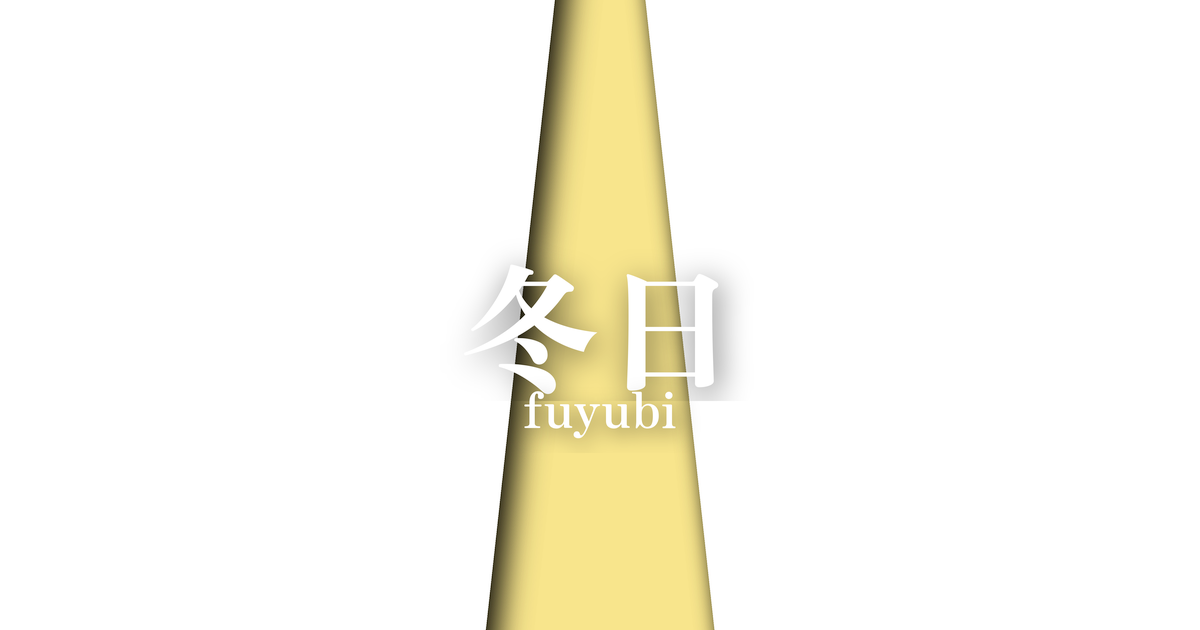
| Japanese color name | winter day |
|---|---|
| reading | fuyubi |
| season | 冬 |
| Color of the table | White (shiro) |
| Back color | Light yellow (tankoh) |
What is a winter day? Origin and etymology
"Fuyubi" (Winter Sun) is a combination of colors that expresses the soft, warm sunlight that shines through the clear winter air. As the name suggests, it depicts a winter scene in color, with the "white" on the outside symbolizing the fallen snow and the freezing winter sky, and the "pale yellow" on the inside symbolizing the gentle sunlight that illuminates that scenery.
This color scheme captures the subtle warmth and serene beauty that can be felt even in the harsh cold, conveying to us today the refined aesthetic sense of the Heian aristocracy, who were sensitive to the subtle changes in nature and reflected them in their attire.
The etymology directly derives from the word "fuyubi" or "tōjitsu," meaning winter sun or its sunlight. In the aristocratic society of the Heian period, expressing the changing seasons through the colors of clothing was considered an important aspect of refinement. The "fuyubi" color scheme is thought to have originated not merely as a combination of colors, but as a poetic and elegant idea of wearing the very winter scenery that was celebrated in waka poetry and stories.
It can be inferred that the intention was not only to create visual beauty but also to evoke a sense of psychological warmth by introducing a warm, pale yellow color into the bleak landscape.
Historical background of winter days
The "kasane no irome" (layered color combinations) is a unique color culture that developed among the aristocracy during the Heian period as Japanese culture matured. Through the combination of colors of the outer and inner fabrics of clothing, or the colors of multiple layers of clothing, it was possible to express seasonal scenes, plants, and emotions. "Fuyubi" (winter day) is said to have been one of the color combinations worn during the winter season, and was used among the women of the imperial court.
While there aren't many specific records of it being worn, it's thought to have been chosen as attire that accurately expressed the season for ceremonies or private gatherings on sunny winter days.
Numerous color combinations are recorded in documents such as the "Masasuke Shōzoku Shō," which is believed to describe the clothing of the late Heian period, but there are only a limited number of instances where the name "Fuyūbi" (winter day) is explicitly mentioned. However, the combination of white and yellow tones is a natural color scheme that represents a winter scene, and it has been suggested that it may have been passed down through oral tradition or custom. People at that time not only relied on documents, but also observed nature with their own sensibilities and created color combinations for their clothing based on those observations.
Winter sunshine can be seen as one of the colors born from such a creative aesthetic sensibility.
Related literature, waka poetry, and seasonal words
The word "winter sun" itself appears in many waka, haiku, and classical literature as a seasonal word for winter, and is an important element that symbolizes winter scenery. In works such as "The Pillow Book" and "The Tale of Genji," descriptions of snow, ice, and the light shining on them are used effectively in winter scenes. While direct mentions of "winter sun" as a color combination are rare, the colors of the clothing worn by characters in these works are often depicted in a way that resonates with such winter scenery.
For example, the depiction of layering yellowish-colored clothing in a snowy landscape can be said to be in line with the aesthetic sensibilities of the colors associated with "winter sunshine."
A winter's day, and a frozen shadow on horseback
Winter Days and Scenes
"Fuyubi" (winter day), as the name suggests, is a color scheme worn in winter, especially from the 10th to the 12th month of the lunar calendar. In the modern calendar, this corresponds to roughly late November to February. This color scheme expresses the scenery woven by winter nature, particularly the tranquil scene of a sunny day with snow piled up. The white on the outside symbolizes the purity of fresh snow and the transparency of the winter sky, while the pale yellow peeking through from the inside symbolizes the warmth of the sun felt amidst the cold.
The color scheme evokes a sense of hope and tranquility amidst the harsh winter season, making it suitable for occasions where a pure and peaceful atmosphere is desired, such as New Year's celebrations.
Color scheme suggestions for winter days
Tokiwa-iro (#175140)
This color is reminiscent of evergreen trees like pine trees, which retain their green leaves even in winter. It symbolizes vitality and permanence. It adds depth and elegance to the soft hues of winter days, creating a calm and sophisticated impression. It is suitable for use as an accent color in Japanese clothing sashes, accessories, and designs.
Charcoal gray (#434343)
A warm charcoal gray reminiscent of charcoal burning in a fireplace or hearth. It complements the white and pale yellow light of winter sun, creating a modern and sophisticated impression. Effective in contemporary interiors and fashion.
Plum blossom red (#E16B8C)
The colors of plum blossoms that begin to bloom at the end of winter. This combination evokes a sense of spring amidst the harsh winter. It adds vibrancy and a breath of life to the quiet colors of winter, creating an atmosphere full of hope.
Practical Scenes
In traditional Japanese clothing, the "winter day" color scheme is used to express a sense of the season in formal garments such as visiting kimonos, casual kimonos, and undergarments. In particular, incorporating this color combination into accessories such as obiage (sash scarf), obijime (sash cord), and haneri (collar) can subtly add a wintery feel to one's attire. The combination of white and light yellow gives a pure and elegant impression, making it suitable for formal occasions such as New Year's greetings and the first tea ceremony of the year.
The "winter day" color scheme can be effectively utilized in contemporary design fields as well. In interiors, adding light yellow as an accent in cushions, rugs, and lighting to a minimalist space based on white creates a warm and bright atmosphere. In web design and graphics, it is highly valuable as a color scheme that gives a clean and gentle impression, making users feel at ease and comfortable.