
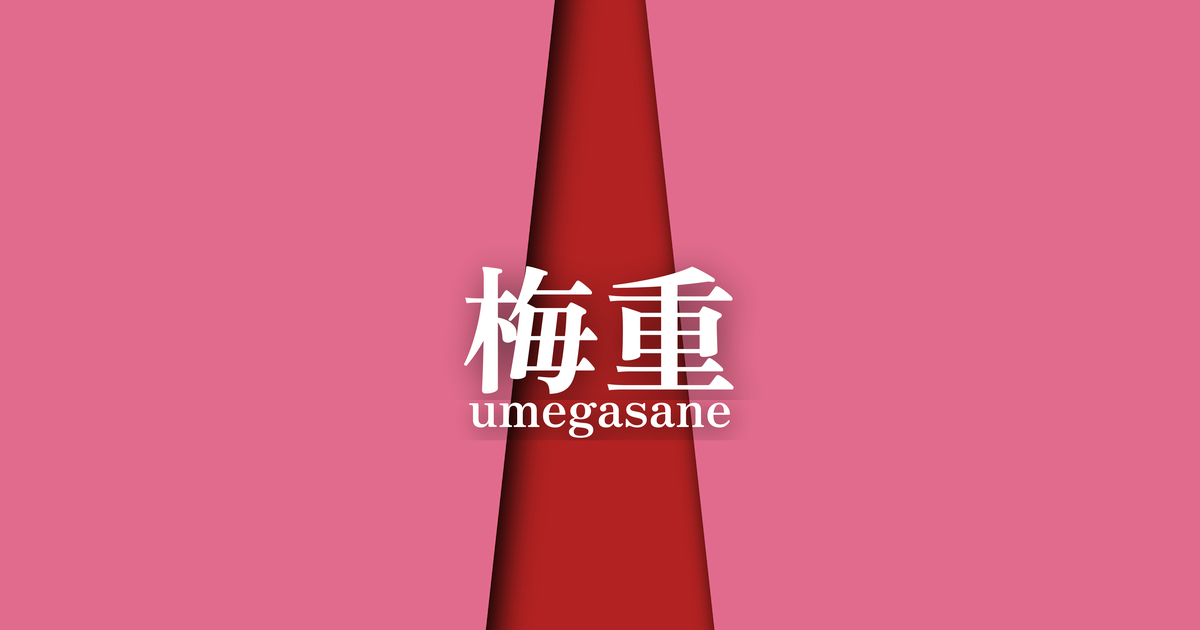
| Japanese color name | Umeju |
|---|---|
| reading | umegasane |
| season | 冬 |
| Color of the table | Plum blossom color (kobaiiro) |
| Back color | Deep red (shinku) |
What is Umeju? Origin and etymology
"Umeju" is a layered color combination that expresses the colors of the red plum blossoms that bloom at the end of winter. Its name is said to capture the way the petals of the red plum blossom overlap in layers, as well as the shades of color seen within a single flower. The "red plum color" on the outside is thought to represent the youthful color of the flower when it first blooms, while the "deep red" on the inside is thought to symbolize the deeper color of the flower and the shadows within it. This color scheme reflects the powerful vitality and elegance of the plum blossom, which heralds the arrival of spring in a season when the cold still lingers.
This color scheme is a manifestation of the Heian aristocracy's aesthetic sense, which keenly captured the beauty of natural landscapes and translated them into the color combinations of their clothing. More than simply beautiful, the layered color schemes played an important role in expressing the changing seasons and the emotions of the people that accompanied them. "Ume-ju" (plum blossom layer) is said to have been beloved by people of that time as a color symbolizing the anticipation of spring and the radiance of life that endures the harsh winter.
The historical background of Umeju
In the aristocratic society of the Heian period, the "kasane no irome" (layered color combinations) that expressed the seasons through clothing developed into a sophisticated cultural practice. "Ume-ju" (plum blossom color combination) is one of the representative color combinations used from winter to early spring. This color scheme was mainly used in the uchiki (outer robes) and other garments worn by women in the imperial court, and is said to have adorned New Year's celebrations and other auspicious occasions in daily life.
For people at that time, the color of their clothing was not merely decorative, but an important element that indicated their education and refinement, and seasonal color schemes like "Umejū" were highly valued.
Related literature, waka poetry, and seasonal words
In Heian period literature such as "The Tale of Genji" and "The Pillow Book," the colors of the characters' clothing play an important role in conveying their social status, feelings, and the season to the reader. While the name "umeju" (plum blossom layered garment) does not appear directly very often, the layered garments of "koubai" (red plum blossom) are frequently mentioned. For example, in the "Umegae" chapter of "The Tale of Genji," there is a scene in which a twill fabric of the color of red plum blossom is used as a bag for the incense that Hikaru Genji gives to his ladies.
This suggests that plum blossoms, as flowers that herald the arrival of spring, had a noble and elegant image.
When the east wind blows, send forth your fragrance, plum blossoms; do not forget spring, even though your master is gone.
The season and scenery of plum blossoms
"Umeju" is a color scheme considered most appropriate for wearing from the end of winter to early spring, roughly from January to February according to the calendar. This period is the coldest time of the year, yet it is also when plum blossoms begin to bloom before other flowers, signaling the arrival of spring. This color scheme expresses the noble beauty of red plum blossoms blooming proudly amidst a snow-covered landscape, as well as the warmth of life hidden within.
It was highly valued as a color that accurately expressed the feeling of the season at celebrations for the New Year and gatherings of people eagerly awaiting spring.
Umeju's color scheme proposal
White (#FFFFFF)
The pure color scheme evokes the image of red plum blossoms blooming in the snow. It complements the vibrant red of the plum blossoms, giving an impression of integrity and dignity. In Heian period attire, white also played an important role as a color symbolizing sanctity and purity.
Light green (#A9D159)
The light green color of young grass sprouting in early spring has a strong seasonal affinity with the heavy plum blossoms that herald the arrival of spring. This combination gives a youthful impression full of vitality and vividly expresses the transition from winter to spring.
Dark purple (#4A2440)
Purple has been considered a noble color since ancient times. The splendor of the plum blossoms, combined with the calmness and depth of the deep purple, creates a dignified and refined impression. This combination evokes the color schemes used in formal occasions such as court ceremonies.
Practical Scenes
In traditional Japanese clothing, the "ume-ju" (plum blossom pattern) is incorporated into visiting kimonos, furisode (long-sleeved kimonos), and accessories such as obiage (sash ties) and obijime (sash cords) worn from winter to early spring. It is particularly suitable for slightly formal and elegant occasions such as New Year's greetings, the first tea ceremony of the year, and theater performances. In the fields of modern fashion and design, its vibrant and elegant color scheme is attracting attention. Using it as a key color on a website or in product packaging design can create a Japanese aesthetic and a sense of the season.
In interior design, incorporating them as accents such as cushion covers or tapestries can add warmth and elegance to a space.