
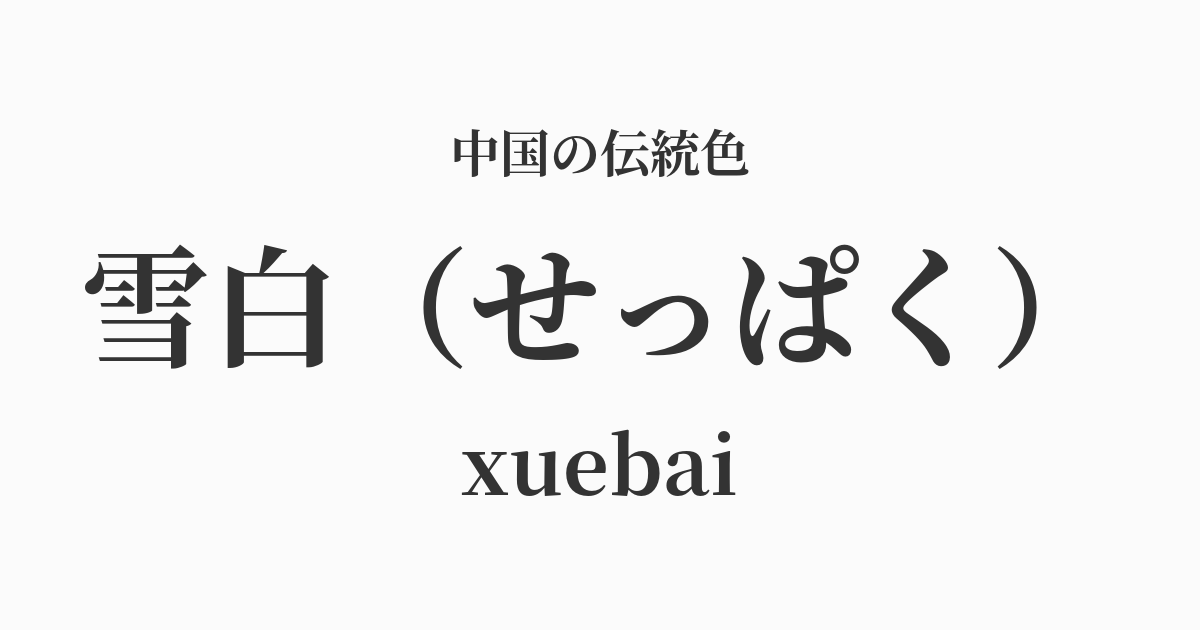
| Color name | snow white |
|---|---|
| reading | Desperation |
| pinyin | xuebai |
| HEX | #FBFBFB |
| RGB | 251, 251, 251 |
What does "Yukishiro" mean? Origin and etymology
As the name suggests, "seppaku" (雪白) is a color name that describes the pure whiteness of freshly fallen snow.
The fresh snow falling from the sky and covering the earth was a symbol of unblemished purity. It can be said that these colors capture the quiet, sacred beauty that the ancient Chinese found in the harsh winter landscape.
By using the word "snow" rather than simply "white," it evokes a sense of cold, crisp air and even the soft, light-reflecting texture of snow.
Historical background of snow white
In Chinese history, white was a color with diverse meanings. In the Yin-Yang and Five Elements philosophy, it symbolized the west, autumn, and metal, and at times it was also treated as a color that evoked death and separation.
However, the white expressed by the word "snow white" is distinct from these aspects and has been cherished primarily in poetic contexts as a symbol of purity and integrity. In particular, bureaucrats and writers associated this pure whiteness of snow with an ideal spirituality that remains untainted by the corruption of the secular world.
Many poems from the Tang and Song dynasties depict poets lost in solitary contemplation amidst snowy landscapes, and the white of snow became deeply associated with an aesthetic of tranquility and solitude.
Snow White in Chinese Art and Crafts
The aesthetic of snow white was refined in Chinese art, particularly in the world of ink painting. In landscape painting, instead of using white paint to depict snowscapes, a technique called "ryūhaku" (留白) is used, where the white of the paper itself is used to represent the snow. This technique, which emphasizes the presence of snow by leaving it unpainted, resonates with the serene worldview associated with snow white.
Furthermore, the beauty of white porcelain, which reached its peak during the Song Dynasty, also resonates with the image of snow-white. In particular, the warm, ivory-like white seen in Ding ware white porcelain, and the translucent, bluish "yingqing" white of Jingdezhen ware, evoke the image of snow reflecting light, captivating many people.
In fashion, while white is associated with mourning attire, it was also favored by scholars who valued purity and by Taoist priests who detached themselves from the secular world. Snow-white clothing was a color that spoke of the wearer's high spirituality and nobility.
Koshu Mikasa-o, Dotsuri-sagae-yuki.
Color scheme preview
This is to check the readability of the text when this color is used as the background.
Snow White Color Scheme Proposal
Black (#3E3A39)
This combination evokes the world of ink paintings depicting snowscapes, creating a quiet and dignified impression. The contrast between black and white enhances each other, resulting in a minimalist and sophisticated look.
Plum blossom color (#F2A0A1)
This pure and beautiful color scheme evokes the image of red plum blossoms blooming amidst pristine white snow. It simultaneously conveys the stillness of winter and the anticipation of spring's arrival, leaving a hopeful impression.
Moon White (#D9E4E8)
It evokes a fantastical winter night scene where the light of snow and moonlight gently blend together. It is understated yet elegant, perfect for creating a refined and graceful atmosphere.
Practical Scenes
In interior design, snow white has the effect of making a space appear larger and brighter. When used as the base color for walls and ceilings, it creates a clean and minimalist space. Adding dark colors such as natural wood or charcoal black as accents can create a calm, modern Japanese atmosphere.
In fashion, snow white brings a sense of cleanliness and elegance to winter outfits. When incorporated into soft materials such as wool coats or cashmere sweaters, the color's grace is further enhanced. It pairs well with any color and gives the wearer a sophisticated impression.
In web design and graphic design, using a background color highlights other elements and creates a clean, trustworthy image. When combined with designs that utilize white space effectively, it can convey a sense of luxury and expertise.