
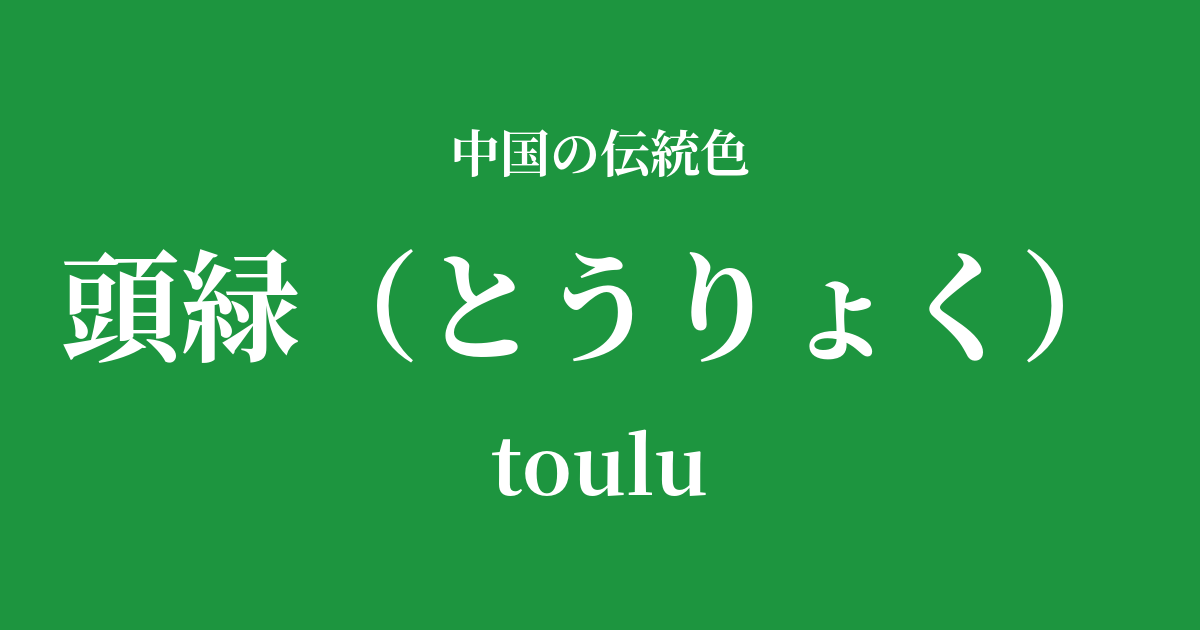
| Color name | Green Head |
|---|---|
| reading | power |
| pinyin | toulu |
| HEX | #1D953F |
| RGB | 29, 149, 63 |
What does "头绿" mean? Origin and etymology.
头绿 (Tou-Lu), as its name suggests, means "the very first green" or "the finest green," a vibrant green full of vitality. The character "头" (Tou) signifies the beginning or the highest rank, illustrating how special this color was.
In spring, the vibrant color of young grass sprouts from the earth all at once after a long winter. Or, the deep, clear green of jade, considered the finest of all gemstones. Tou-Lu (头绿) is a color name that captures the most beautiful greens in nature. This color embodies positive images such as freshness, youthfulness, and hope.
The historical background of Tougreen
In Chinese history, green has been associated with the element "wood" in the Five Elements theory and has been considered a color symbolizing the east and spring. As a color that governs the birth and growth of life, it has been deeply rooted in people's lives since ancient times.
During the Tang Dynasty, green was used as the color of clothing (pinse yi) to indicate the rank of officials, but it generally represented a relatively lower class. However, from a cultural perspective, green was deeply cherished by literati and artists as a color that represented the beauty of nature and a tranquil spirit.
Especially from the Song dynasty onward, as a culture of appreciating nature matured, the beauty of green began to be frequently expressed in poetry and paintings. During the Ming and Qing dynasties, the popularity of jade increased even further, and its vibrant and elegant green color, such as Tou-Lu, became highly valued in jewelry and crafts.
Tougreen in Chinese art and crafts
In the world of Chinese art, vibrant greens like Tou Lu were essential colors for expressing the vitality of nature. In particular, in a painting style called "blue-green landscapes," green and blue were the main colors used to depict magnificent natural landscapes that resembled utopias.
In the field of ceramics, the beautiful green color of celadon produced at the Longquan kiln during the Song dynasty, reminiscent of a sky after rain or jade, is famous. Furthermore, the enamelware favored by the Qing dynasty court incorporated Western techniques, resulting in even more vivid and diverse shades of green, reminiscent of Toulo.
In fashion culture, this color was likely incorporated into clothing celebrating the arrival of spring and in women's attire expressing youthfulness. The luster of silk fabrics further enhanced the vibrancy of the head green, and together with jade hair ornaments and earrings, it is thought to have conveyed the wearer's elegance and vitality.
Harukazemata Midori River south bank
Color scheme preview
This is to check the readability of the text when this color is used as the background.
Head green color scheme suggestion
Hot fat (#9B1E64)
This combination of vibrant green and deep reddish-purple is striking. Like the red of flowers and the green of trees, the colors complement each other, creating a lively and vibrant impression. It also has a traditional yet modern feel.
Ivory white (#FEFDE2)
When combined with a warm ivory white background, the vibrancy of the head green stands out. This color scheme creates a sense of cleanliness and elegance, making it ideal for creating a sophisticated and refined space.
Fujio (#FFD700)
This bright and hopeful color scheme evokes the fresh leaves and sunlight of spring. The radiant yellow of the wisteria color enhances the freshness of the head green, creating a positive impression that gives viewers energy and joy.
Practical Scenes
In interior design, tonal green is an ideal accent color that brings vitality and freshness to a space. Simply incorporating it through small items like cushions, curtains, or art panels will brighten the entire room and create a lively atmosphere. It particularly complements natural spaces based on white, beige, and wood tones.
In fashion, it's a color that has the power to be the focal point of an outfit. Especially in spring and summer, incorporating it into dresses, blouses, or scarves will instantly brighten up your look. Just like pairing it with jade jewelry, adding even just one accessory in this color will give you a sophisticated impression.
In website and graphic design, it's effective when used for buttons and icons that you want to attract attention. It also aligns with brand images that deal with themes such as nature, health, eco-friendliness, and growth. When used as an accent in a minimalist design, it creates visual rhythm and freshness.