
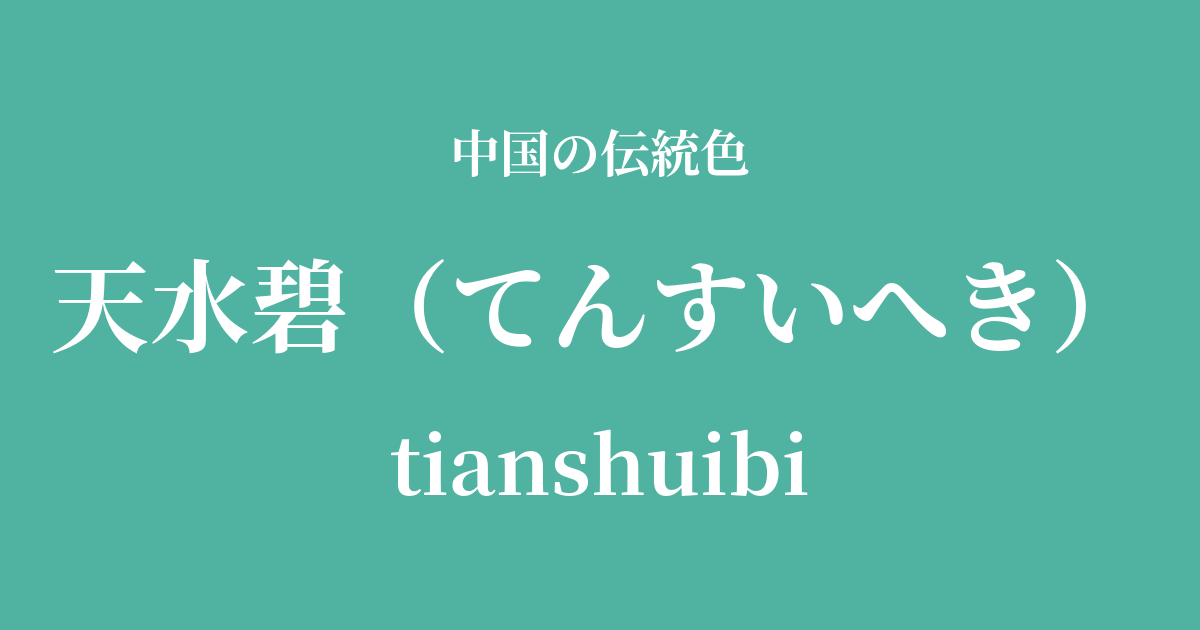
| Color name | Tensui Aoi |
|---|---|
| reading | Tensuiheki |
| pinyin | tianshuibi |
| HEX | #50B2A0 |
| RGB | 80, 178, 160 |
What is Tensui Ao? Origin and etymology
Tensui-heki refers to a pure blue-green color that reflects the clear sky after the rain. "Tensui" means rainwater or the color of the sky after the rain, and "heki" is a word that describes a deep, beautiful green color.
This poetic name is said to originate from an anecdote about Li Yu, the last emperor of the Southern Tang dynasty during the Five Dynasties and Ten Kingdoms period. According to "Yun Gu Za Ji," a work written by the Song dynasty scholar Zhang Hao, one day after a rain shower, the scenery outside was beautifully clear, as if washed clean. Li Yu, gazing at this sight, saw palace ladies dressed in green and exclaimed, "This is truly heavenly water and blue," and that is how the name was born.
The historical background of Tensui Ao
The Southern Tang dynasty (937-975), in which Tian Shui Bi was born, was a country that, despite being a time of war, flourished with a magnificent court culture, supported by the rich economic power of Jiangnan.
In particular, Li Yu, the last emperor, met a tragic end as a politician, but he is known as a cultured man with exceptional talent in poetry, calligraphy, and painting. His keen aesthetic sense pioneered a delicate and lyrical world of "ci" (poetry), which had a profound influence on later generations.
The creation of the color Tian Shui Bi (天水碧) can truly be attributed to Li Yu's artistic sensibility. His act of discovering the fleeting beauty of nature and giving it a poetic name symbolizes the refined court culture of the time. This color is more than just a hue; it conveys the aesthetics of an era and the sensibilities of an extraordinary cultural figure and emperor.
Tian Shui Bi in Chinese Art and Crafts
The pure and deep hue of Tian Shui Bi shares its aesthetic with the celadon glazes that reached their peak during the Song Dynasty. In particular, the "Tian Blue" of Ru ware, which is said to have aimed to capture the color of the sky after the rain, has something in common with Tian Shui Bi. While Tian Shui Bi has a greener tint, Tian Blue is more bluish, but both can be said to reflect the aesthetics of Song Dynasty literati who sought to capture the ephemeral and beautiful colors of the natural world.
Furthermore, in the realm of fashion culture, Tian Shui Bi (天水碧) is thought to have been used in the clothing of literati and the aristocracy, particularly in Hanfu (traditional Chinese clothing) and silk fabrics, as a color that conveyed nobility and intelligence. Its subdued tone may have been especially favored by people who did not like extravagant decorations and valued inner richness.
The first sun on the leaf, the rain, the water surface, and the first wind and rain.
Color scheme preview
This is to check the readability of the text when this color is used as the background.
Ami Mizuki's color scheme proposal
Moon white (#D9D6C3)
The pure beauty of Tensui-Ao is enhanced by the soft white of Tsukishiro, creating a quiet, refined, and elegant impression. This color scheme is recommended for calm spaces such as studies and bedrooms.
Momoko (#F2A0A1)
This color scheme is fresh and vibrant, reminiscent of peach blossoms blooming on plants after the rain. It evokes the brightness and splendor of spring's arrival and makes a striking accent color in fashion.
Pilestone (#9C5442)
The reddish-brown color of the ochre stone, reminiscent of the earth, harmonizes with the natural hues of the turquoise stone, creating a deep and calming impression. It's a combination that feels both traditional and modern.
Practical Scenes
With its calm and intellectual aura, Tensui Ao can be used in a variety of modern settings.
If you're incorporating it into your interior design, using it as an accent wall in your living room or study will create depth and a sense of calm in the space. Additionally, using it in fabrics such as cushions, curtains, and rugs can add a refreshing and elegant touch to the entire room.
In terms of fashion, Aoi Amamizu's dresses and blouses give a sophisticated impression on their own. Using them as accent colors with accessories such as scarves, bags, and jewelry will add an intellectual touch to your outfit.
In web and graphic design, it is suitable for expressing themes such as trustworthiness, nature, and the environment. Using it as a key color can convey a sense of security and integrity to users.