
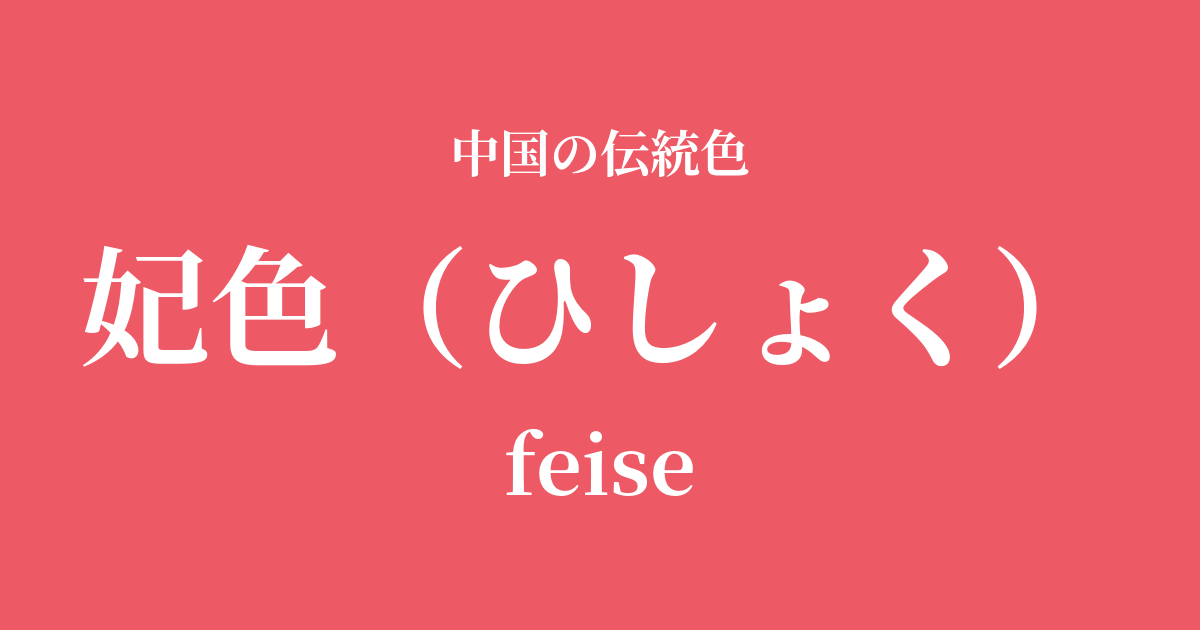
| Color name | Princess Color |
|---|---|
| reading | food |
| pinyin | feise |
| HEX | #ED5A65 |
| RGB | 237, 90, 101 |
What is "Hiiro"? Origin and etymology
Hishoku, as the name suggests, is a lustrous and elegant red color that symbolizes the "consorts" who are the emperor's wives and concubines.
This color, which embodies youthful vitality and feminine beauty, is said to originate from the lipstick and blush colors favored by women of the royal court. It was a color that further enhanced their fair and beautiful skin, highlighting their charm.
Rather than a simple red, this shade, which is closer to pink with a hint of blue, possesses both a delicate and alluring charm. It is a color with a romantic background that evokes the glamorous figures of women who received deep favor from emperors, such as Yang Guifei.
Historical background of the princess
It is uncertain whether the name "female color" originated in a specific era, but the image associated with this color is deeply connected to the culture of the Tang Dynasty in particular. In Chang'an, the capital of the Tang Dynasty, which was filled with an international and open spirit, the aesthetic sensibilities of women were also very vibrant.
Women of that era idealized voluptuous figures and favored brightly colored clothing and bold makeup. The color "Hiiro" (a type of red) is one of the colors that embodied the aesthetic sensibilities of that time and is thought to have been widely used among the women of the court.
The colors worn by the emperor's favorite concubines had the power to influence the fashion trends of the time. These concubine colors were not merely beautiful colors, but also held special significance in Chinese history as symbols of women's status and authority in the court, as well as the ultimate in feminine beauty.
Concubine in Chinese Art and Crafts
The color "fei-se" (female color) fully showcased its beauty in Chinese clothing culture, particularly in silk textiles. Dyed on lustrous silk, the fei-se changed its appearance depending on the light, further enhancing the elegant movements of the woman who wore it. It can also be seen as one of the vibrant colors of Hanfu, such as the "ju-kun" (a type of kimono) worn by women during the Tang Dynasty.
Furthermore, the "Shijoga" (court lady paintings) of beautiful women painted during the Tang Dynasty depict women wearing clothing and makeup reminiscent of concubines. For example, the colors of the clothing worn by the noblewomen in the "Shijoga with a Hairpin," attributed to Zhou Fang, convey to this day the elegant and glamorous atmosphere of the world evoked by concubines.
In the world of ceramics, the elegant pink pigments reminiscent of the imperial consort's color were used in "enamelware" and "feminine confectionery," which developed during the Qing dynasty. The flowers, birds, and figures depicted on these porcelain pieces reflect the refined aesthetic sensibilities of the imperial court and share a similar charm with the elegant splendor of the imperial consort's color.
Cloud costume flower thoughts, spring breeze wind cage roukano.
Color scheme preview
This is to check the readability of the text when this color is used as the background.
A proposed color scheme for the princess.
Moon white (#D9D6C3)
The splendor of the princess's color is enhanced by the gentle and elegant white of the moon's white. This color scheme gives a refined and graceful impression reminiscent of the royal court.
Buddha Head Blue (#3B5A6F)
The warm, rosy hue and the calm, cool, deep blue hues complement each other beautifully, creating an impressive color scheme that evokes a modern and artistic atmosphere.
Dark blue (#E6D2D5)
By combining it with the lotus root color, the vibrancy of the princess color is softened. The overall impression is soft, feminine, and gentle.
Practical Scenes
In interior design, using a rosy hue as an accent color is highly recommended. Simply incorporating it into small items such as cushions, curtains, or art panels will bring vibrancy and warmth to the space. In particular, adding it to a modern space based on white or gray creates a sophisticated accent.
Using it in bedroom fabrics will create a romantic and cozy atmosphere.
In fashion, choosing a queen-colored hue for a dress or blouse that takes center stage creates an instantly captivating presence. It pairs exceptionally well with lustrous materials such as silk and satin, further highlighting the elegance of the color.
It's also lovely to incorporate it as an accent color in accessories such as bags, scarves, and jewelry. This will give your entire outfit a brighter and more elegant look.
In web and graphic design, this color is particularly effective for websites featuring products and services aimed at women. When used as a main color, it creates a luxurious impression, while using it as an accent color for buttons and banners can attract users' attention and encourage clicks.