
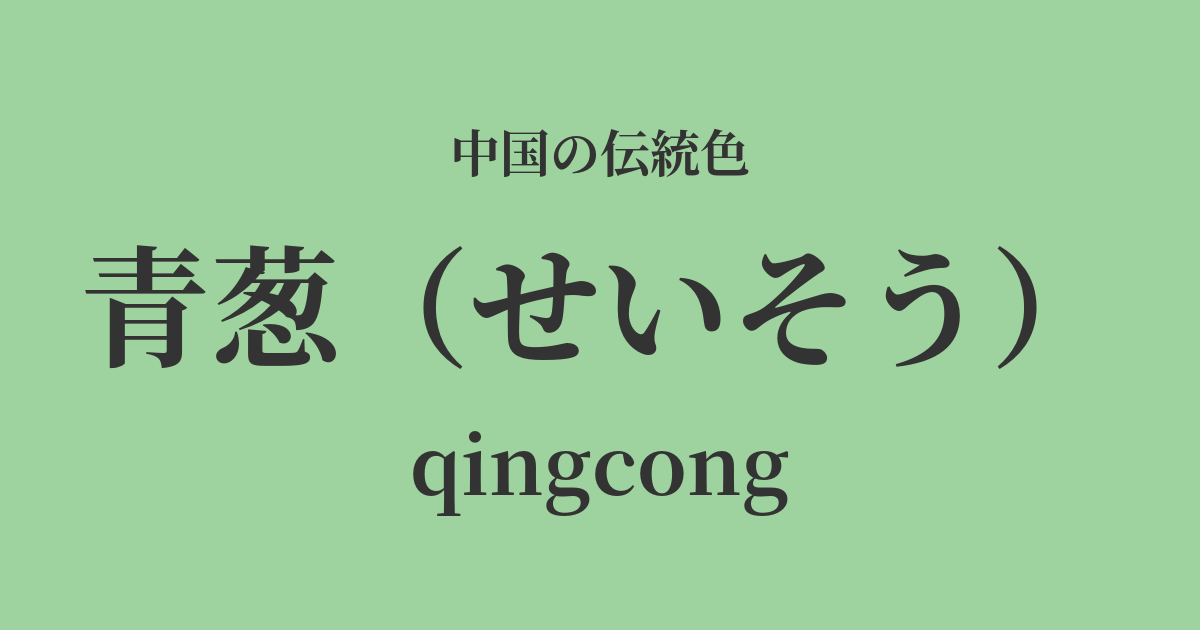
| Color name | green onion |
|---|---|
| reading | seiso |
| pinyin | qingcong |
| HEX | #9ED29E |
| RGB | 158, 210, 158 |
What is green onion? Origin and etymology
As the name suggests, "seiso" refers to a fresh, vibrant yellowish-green color, like the young leaves of a scallion that have just sprouted in early spring.
This color has long been considered a symbol of the strength of life that sprouts after enduring a harsh winter, as well as freshness and youth. In ancient Chinese, the character for "blue" referred to a wide range of cool colors, including green and blue, so the color green is represented by writing "blue onion." It is a simple and familiar color name taken from the color of a plant that is familiar in people's diet.
Historical background of green onions
Rather than being a color that was popular in a particular dynasty, green onion is a color that has been a part of people's lives throughout history. Because it does not require expensive pigments and is a color that is universally found in nature, it is thought to have been used in the clothing and everyday items of ordinary people.
In Chinese culture, where agriculture has been the foundation of the nation, green, reminiscent of crop growth, was favored as a color of abundance and hope. In particular, the color of green onions, which herald the arrival of spring, must have resonated with people's hearts as they celebrated the start of a new season.
Green onions in Chinese art and crafts
The color of green onions can be found in various Chinese works of art. For example, among the celadon porcelain that reached its peak during the Song Dynasty, there are pieces with a soft green glaze called "fenqing," which resembles green onions. Its gentle and calming hue was beloved by many literati.
In the world of painting, it was used to represent the budding of spring mountains in landscape paintings and the vibrant leaves of plants depicted in meticulous brushwork. In fashion culture, it was sometimes incorporated into women's clothing as a color to express youthfulness. When lustrous silk fabrics are dyed in this azure color, its vividness and sense of life are further enhanced.
Green onion stinging soil buds, red line flowering branches.
Color scheme preview
This is to check the readability of the text when this color is used as the background.
Green onion color scheme proposal
Anzu (#F7C274)
When combined with a soft yellow reminiscent of apricots, this color scheme evokes a cheerful and tranquil spring scene. It gives a natural and warm impression, creating a friendly and approachable atmosphere.
Dark blue (#E6D8D5)
Pairing it with a pale, elegant pinkish-beige reminiscent of lotus root enhances the freshness of the green onions, creating a sophisticated and calm impression. This is recommended when you want to create an elegant and refined atmosphere.
Uchu Bai (#F0F0F0)
By combining it with a slightly bluish white, reminiscent of a fish's belly, the freshness and cleanliness of green onions are highlighted. This color scheme gives a clean, modern, and refreshing impression.
Practical Scenes
In interior design, green onions bring freshness and a sense of relaxation to a space. Incorporating them as an accent color in cushions, curtains, and accessories will make the entire room brighter and more vibrant. They are especially well-suited to spaces with natural wood or a white base color.
In fashion, choosing this color for spring and summer blouses, skirts, and dresses gives a youthful and fresh impression. It can also brighten the area around your face. Pairing it with basic colors such as white, beige, and light gray creates an elegant and sophisticated look.
In web and graphic design, this color is suitable as a key color for websites themed around organic products, health, and nature. It allows you to create designs that convey a sense of security and trust while gently speaking to the user's heart.