
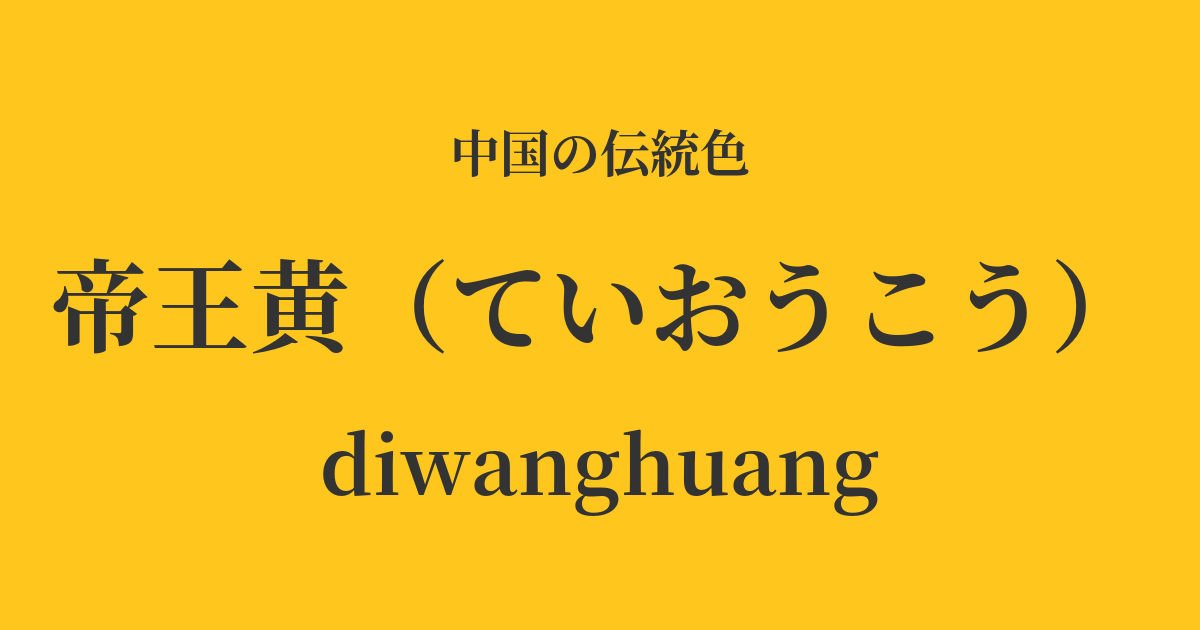
| Color name | emperor yellow |
|---|---|
| reading | Teioukou |
| pinyin | diwanghuang |
| HEX | #FFC61E |
| RGB | 255, 198, 30 |
What is Imperial Yellow? Origin and Etymology
Imperial Yellow, as its name suggests, is the supreme color symbolizing successive emperors of China. This brilliant yellow was not merely a beautiful color, but also represented absolute authority and the center of the universe.
The underlying philosophy is the Five Elements theory, an ancient Chinese philosophy of nature. In the Five Elements theory, all things are believed to be composed of five elements: wood, fire, earth, metal, and water, each of which is associated with a direction, a season, and a color. Yellow is the color of "earth," which governs the center, and was therefore considered a color that symbolizes the being who stands at the center of the world, namely the Son of Heaven (emperor).
Historical background of Emperor Huang
It is said that yellow was clearly designated as the color reserved exclusively for the emperor during the Sui Dynasty. It is believed to have started when the first emperor, Emperor Wen, routinely wore a yellow robe (outer garment). In the subsequent Tang Dynasty, a decree was issued prohibiting ordinary officials and commoners from wearing yellow clothing. As a result, yellow became a "forbidden color," a special color permitted only to the emperor.
The use of Imperial Yellow became even more widespread, especially during the Ming and Qing dynasties. This color was used in every aspect of court culture, from the magnificent glazed tiles adorning the Forbidden City in Beijing to the dragon robes worn by the emperor in ceremonies, visually representing the emperor's sacred authority. In the Qing dynasty, this vibrant yellow, known as "Ming Huang," was designated as the highest-ranking color, permitted only to the emperor, empress dowager, and empress.
The Emperor Yellow in Chinese Art and Crafts
The most symbolic use of Imperial Yellow is in the "Dragon Robe," the ceremonial robe of the emperor. Made of shimmering yellow silk, the Dragon Robe was intricately embroidered with auspicious motifs such as dragons, auspicious clouds, and the twelve-symbol crest in gold and colorful silk threads, and was truly a work of art that embodied the authority of the emperor.
In architecture, the yellow glazed tiles covering the roof of the Palace Museum (Forbidden City) in Beijing are famous. Their golden gleam in the sunlight symbolizes the sacredness of the emperor's residence. This noble yellow is also used on the roof of the Imperial Vault of Heaven (Huangqiu) in the Temple of Heaven Park, where emperors performed rituals to worship Heaven.
In the field of ceramics, the "yellow glaze" porcelain fired in the imperial kilns (official kilns) of the Ming and Qing dynasties is well known. These vessels, brightly colored both inside and out in yellow, were made for the emperor and royal family as tableware or for use in religious ceremonies, and their manufacture and use were strictly controlled.
Color scheme preview
This is to check the readability of the text when this color is used as the background.
Imperial Yellow color scheme proposal
Navy blue (#222C41)
The deep navy blue complements the brilliance of the imperial yellow, highlighting each other's beauty. The authority of the emperor and the intelligence symbolizing the heavens and bureaucrats merge, creating a dignified and majestic impression.
Cinnabar (#FF4D4F)
This combination of yellow and red is considered the most auspicious in China. It's a color scheme often seen in palace columns and decorations, giving a festive, vibrant, and powerful impression.
Tsukihaku (#EAF4FC)
A pure white with a subtle bluish tint gently complements the vividness of the imperial yellow. It maintains a noble atmosphere while giving a light, sophisticated, and modern impression.
Practical Scenes
In interior design, incorporating Emperor Yellow as an accent color in cushions, rugs, or art panels instantly adds vibrancy and a sense of luxury to a space. In particular, combining it with dark brown wood or black furniture makes the color stand out, creating a modern and sophisticated atmosphere.
In fashion, it's best to use it as an accent color in accessories such as scarves, bags, and jewelry, rather than making it the main focus of your outfit. Simply pairing it with basic colors like black, white, or navy will give your entire look a brighter and more energetic impression.
In website and graphic design, it's effective when used for buttons and headlines that you want to attract attention. Setting a dark background enhances the brilliance of the imperial yellow, giving users a sense of exclusivity and trustworthiness. It also exudes a powerful presence as a key color for a brand.