
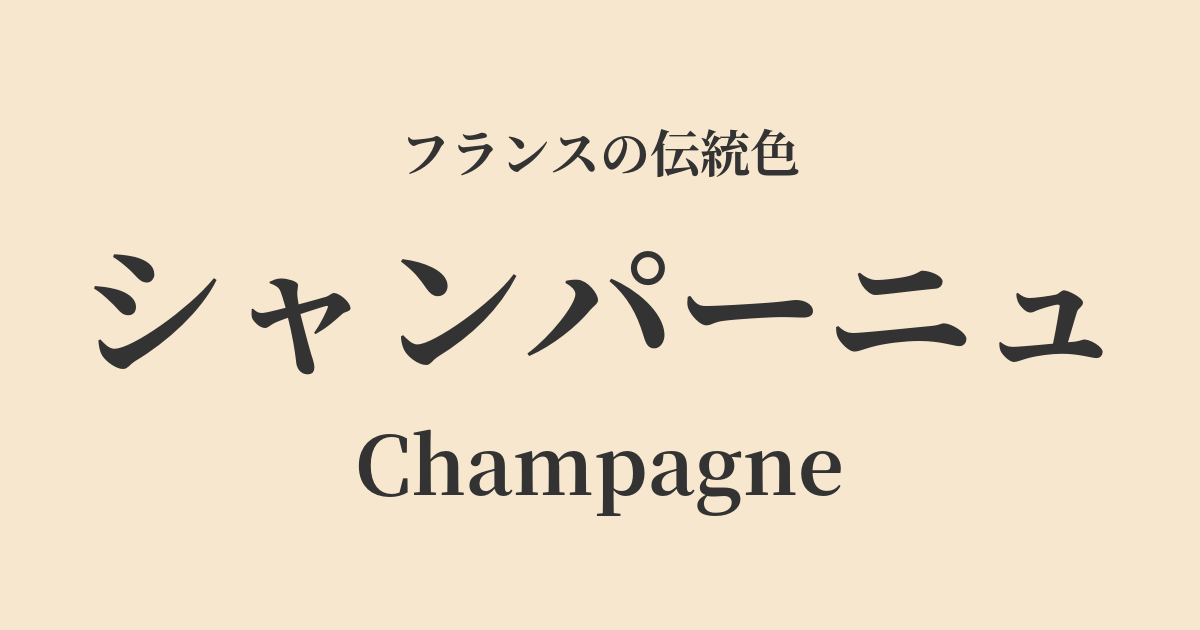
| French | Champagne |
|---|---|
| Katakana | Champagne |
| HEX | #F7E7CE |
| RGB | 247, 231, 206 |
What is Champagne? Origin and Etymology
Champagne, as the name suggests, is a color derived from "champagne," a sparkling wine produced in the Champagne region of France. This pale cream color with a delicate golden shimmer beautifully expresses the fine bubbles of champagne poured into a glass and the celebratory sparkle it brings.
Unlike simple beige or cream, this color is characterized by a subtle yellowish tint, implying nuances of luster and brilliance. Like champagne that uplifts the spirits of those who drink it, this color possesses a special power to evoke feelings of elegance and happiness in those who see it.
The historical background of Champagne
The cultural significance of the color Champagne dates back to the 18th century, when champagne itself became deeply intertwined with French court culture. In particular, Madame de Pompadour, the mistress of Louis XV, was a great lover of champagne, and it was an indispensable drink at the lavish banquets held at the Palace of Versailles.
During this era, champagne became a status symbol for royalty and nobility, and its sophisticated image was reflected in the color "Champagne." As a color that adorned banquets and special occasions, and as a color that symbolized the elegance of the upper class, it became deeply rooted in French history.
During the "Belle Époque" (the golden age) from the late 19th to the early 20th century, champagne became even more widely popular among the general public, and the color champagne was cherished as a color that reflected the glamorous and optimistic atmosphere of the era.
Champagne in the world of art and fashion
The hues of champagne have an artistic affinity with 18th-century Rococo art. In the paintings of Antoine Watteau and François Boucher, the soft, shimmering colors reminiscent of champagne frequently appear in the silk dresses worn by elegant aristocrats and in the opulent interior decorations. These works convey the refined aesthetic and playful atmosphere of the time.
In the world of fashion, champagne is a color that has been loved across generations. It is especially popular as a color for wedding dresses and evening gowns, and when combined with lustrous fabrics such as silk and satin, its elegant shimmer is brought out to its fullest potential. It is flattering to the skin and has the effect of making the wearer look gentle and dignified.
Furthermore, in interior textiles, it is used in curtains, wallpaper, cushions, and other items, and is highly valued as a color that brings brightness, warmth, and a subtle sense of luxury to a space.
Champagne is the only wine that makes a woman look beautiful even after she's finished drinking it.
Color scheme preview
This is to check the readability of the text when this color is used as the background.
Champagne color scheme suggestions
Gris de Lignant (#B7A89B)
The warmth of champagne harmonizes with the natural, calming atmosphere of linen gray, creating a sophisticated French chic space. Recommended for occasions where you want to convey an elegant and tranquil impression.
Rose Pompadour (#ED82A2)
By combining it with the rose color loved by Madame de Pompadour, you can express the elegant and sweet world of Rococo. It gives a festive, feminine, and uplifting impression.
Blue Nuit (#0F2540)
The deep, night-sky-like blue of the Nuits champagne complements the bright, sparkling hues of the champagne. The beautiful contrast creates a modern, luxurious, and dramatic impression.
Practical Scenes
In interior design, using champagne-colored wallpaper, curtains, and sofas over large areas brightens the entire space and creates a warm atmosphere. When combined with gold or brass lighting and accessories, it creates a classic and elegant impression, while when paired with natural materials such as light wood and linen, it creates a natural and relaxed space.
In fashion, champagne truly shines in formal settings. Champagne-colored dresses and suits enhance the wearer's elegance and create a sophisticated impression. In everyday outfits, incorporating it through knitwear, blouses, or accessories like scarves can brighten the face and add a touch of soft elegance.
In web design, using it as a background color enhances the content while bringing a gentle and elegant atmosphere to the entire site. It's ideal for sites that want to express a sophisticated worldview, such as luxury brands, wedding-related sites, beauty sites, and lifestyle sites.