
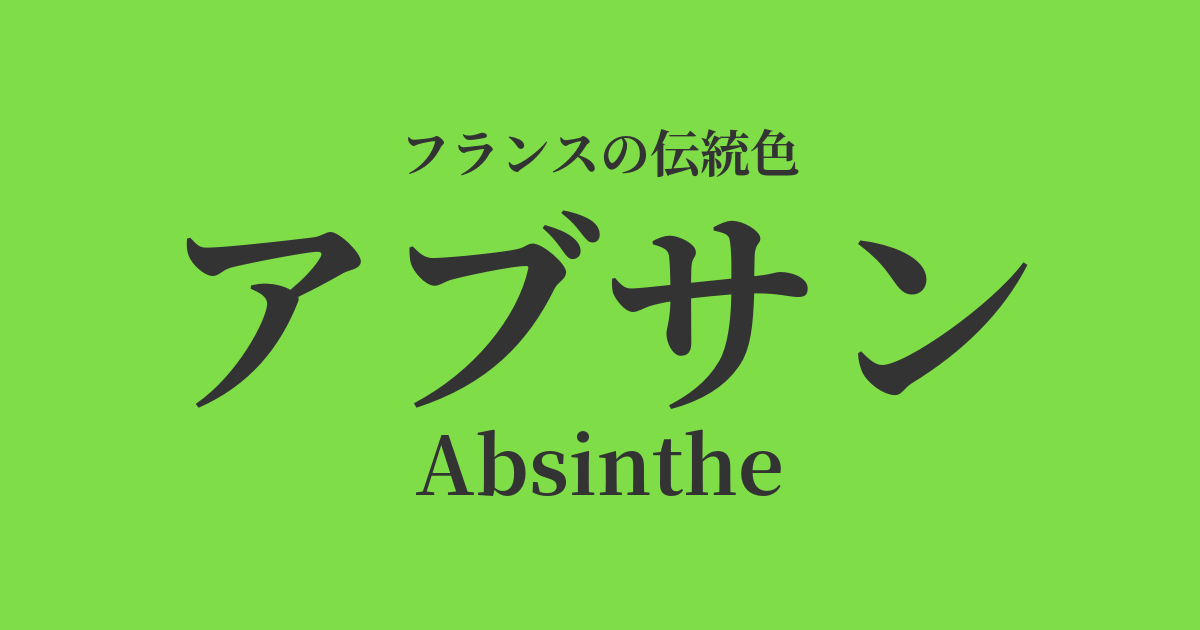
| French | Absinthe |
|---|---|
| Katakana | absinthe |
| HEX | #7FDD48 |
| RGB | 127, 221, 72 |
What is absinthe? Origin and etymology
Absinthe, as its name suggests, derives its distinctive yellowish-green color from the herbal liqueur "absinthe," which is made primarily from wormwood.
The name of this liqueur is said to originate from the scientific name of wormwood, "Artemisia absinthium," and further back, from the Greek word "apsinthion" (meaning "unable to enjoy"). This word derives from the intense bitterness of the wormwood used as an ingredient.
The ouzo effect, which causes the liqueur to become cloudy white when water is added, and its vibrant green color due to chlorophyll are its distinctive visual features. This slightly artificial and enchanting hue has become the established name for the color.
The historical background of absinthe
The history of absinthe begins in Switzerland at the end of the 18th century, when it was created as a panacea. It later spread to France, and in the mid-19th century, its existence became widely known when the French army distributed it to soldiers as a tonic during colonial campaigns.
Especially in Paris during the "Belle Époque" (the golden age) from the late 19th to the early 20th century, absinthe enjoyed explosive popularity. In cafes, 5 pm was known as "the green hour" (l'heure verte), and it was a common sight to see many people enjoying absinthe. It was more than just a drink; it was a cultural ritual, a source of socializing and inspiration for artists and intellectuals.
However, the hallucinogenic and addictive effects of thujone, a component of absinthe, became a social problem, and it was criticized as the "green devil." Stories of many artists suffering from absinthe addiction further amplified its sinister image. Finally, in 1915, the French government banned the manufacture and sale of absinthe. This ban lasted for a long time, but it was lifted at the end of the 20th century with stricter regulations on its ingredients, and the legendary liqueur and its color were revived in modern times.
Absinthe in the world of art and fashion
Absinthe had a profound influence on late 19th-century art, particularly on Impressionist and Post-Impressionist painters. They depicted the light and shadow of the era, as well as the inner lives of the people, that absinthe symbolized, on their canvases.
Edgar Degas's masterpiece, "Absinthe," depicts men and women with vacant expressions in a café, sharply capturing the social isolation and decadent atmosphere brought about by absinthe. Henri de Toulouse-Lautrec, who continuously depicted the nights of Montmartre, also featured many people drinking absinthe in his works.
Vincent van Gogh was also said to be a drinker of absinthe, and some believe that the vibrant colors and swirling brushstrokes seen in his works were influenced by it. In the world of literature, poets Paul Verlaine and Arthur Rimbaud are said to have been captivated by its allure and drawn inspiration from it for their works. The color of absinthe was truly a mirror reflecting the creativity and struggles of artists at the turn of the century.
One glass of absinthe and you see things the way you want them to be. Two glasses and you see them as they don't exist. Finally, you see them as they really are. And that is the most terrifying thing in the world.
Color scheme preview
This is to check the readability of the text when this color is used as the background.
Absinthe color scheme suggestions
Violet de Palme (#804A8F)
When combined with a deep, alluring purple, it evokes the decadent and mysterious atmosphere loved by artists of the late 19th century. This color scheme is perfect for creating a unique and artistic impression.
Blanc Cassé (#EAE2D0)
By pairing it with a warm, off-white color reminiscent of ecru, the natural, herbal aspects of absinthe are highlighted. This color scheme creates a refreshing, organic, and comfortable space.
Rose Pompadour (#ED7A9E)
When combined with a vibrant and cheerful pink, the colors complement each other, creating a modern and pop impression. It's recommended for those who want to express themselves boldly and playfully in the fields of fashion and design.
Practical Scenes
Absinthe, with its vibrant color, is a very effective accent color for spaces and designs.
In interior design, incorporating small items like cushions, art panels, or a single chair can instantly elevate the room and create a sophisticated impression. When using colors on larger areas like wallpaper, choosing muted colors will create a calming atmosphere.
In fashion, incorporating this color into dresses, blouses, or scarves instantly creates a glamorous and fashionable look. The beautiful green of absinthe stands out especially when used as an accent color in monochrome outfits such as black, white, or gray.
In web design, it's effective when used for buttons and banners you want to attract attention. Its unique appeal can also be utilized as a brand color in creative fields or for services that want to emphasize innovation.