
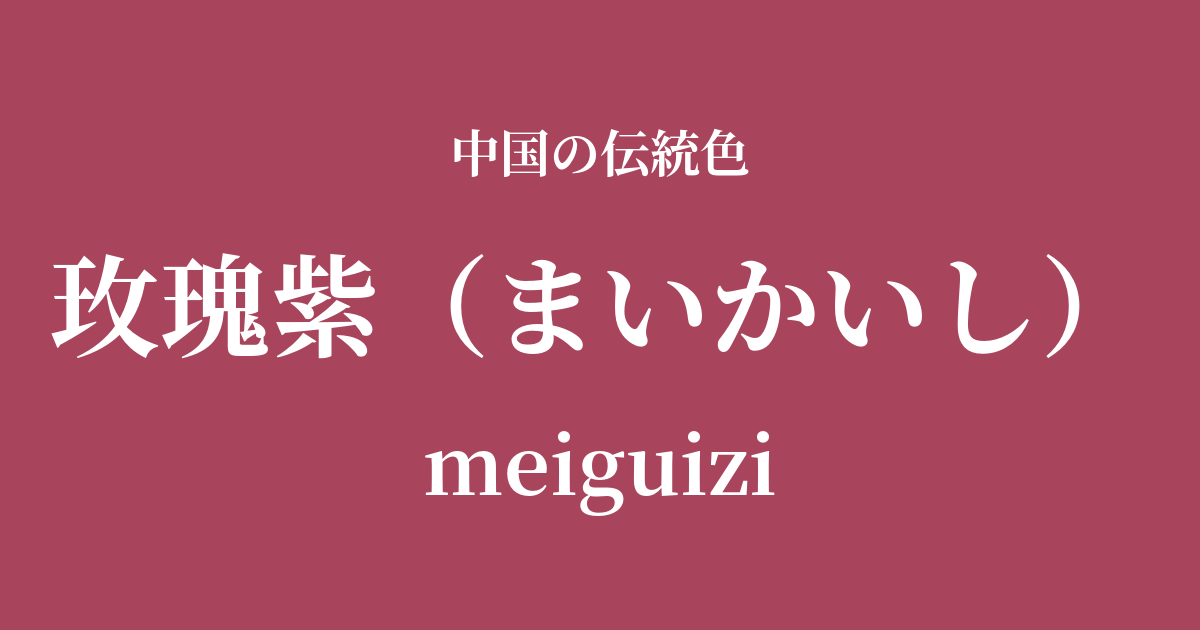
| Color name | 玫瑰violet |
|---|---|
| reading | every day |
| pinyin | meiguizi |
| HEX | #A8455D |
| RGB | 168, 69, 93 |
What is rose purple? Origin and etymology
As the name suggests, "Meigui Zi" (玫瑰紫) is a deep reddish-purple color derived from the color of the "Meigui" (玫瑰) flower.
In Chinese, "玫瑰" (meigui) primarily refers to the Japanese rose (Rosa rugosa). This rose is a plant belonging to the rose family, and it blooms with brightly colored flowers in the summer, emitting a fragrant aroma. The color "玫瑰紫" (meigui zi) captures the vibrant colors of these beautiful and lively petals.
These color names, derived from the beautiful colors of flowers in nature, have a very romantic and poetic background.
The historical background of rose purple
Roses, or Japanese roses (Rosa rugosa), have been cultivated in China since ancient times and have been deeply ingrained in people's lives not only as ornamental plants but also for their medicinal uses, fragrances, and as an ingredient in flower teas. Their beauty has been cherished since ancient times, as evidenced by their mention in Tang Dynasty poetry.
It is difficult to pinpoint exactly when the color name "rose purple" became established, but it is believed that specific color names derived from natural objects increased, especially during the Ming and Qing dynasties, when color culture became more refined. In particular, complex and deep colors were favored in the Qing court, and colors like rose purple were likely used in clothing and ornaments.
In the world of ceramics, the beautiful purplish-red speckles of "kiln transformation" seen in the glazes of Jun ware, one of the five great kilns of the Song Dynasty, are sometimes described as "rose purple." This mystical color, born by chance in the kiln's flames, is extremely rare and highly valued by successive emperors and literati.
Roses in Chinese Art and Crafts
Rose purple has been used in Chinese art and crafts for its elegant hue.
The most iconic example is the Jun ware ceramics of the Song Dynasty. Based on a sky-blue glaze, the rose-purple speckles created by the copper content depict scenes reminiscent of a sunset sky or blooming flowers, captivating the viewer. This technique influenced later generations, and during the Qing Dynasty, beautiful porcelain imitating Jun ware was produced at the Jingdezhen Imperial Kilns.
In fashion culture, this color was used in Hanfu and court attire to express the wearer's nobility and refined aesthetic sense. Rose purple, especially when expressed in lustrous silk fabrics, changes its appearance depending on how the light hits it, exuding a profound charm. Combining the passion of red with the nobility of purple, this color is said to have been favored for enhancing the beauty of mature women.
Yangliu danqiao green, 玫瑰拂地hong.
Color scheme preview
This is to check the readability of the text when this color is used as the background.
Rose purple color scheme proposal
Tsukihaku (#EAEAE1)
The quiet white, reminiscent of moonlight, gently enhances the vibrancy and depth of the rose purple. This color scheme is elegant, calm, and gives a refined, graceful impression.
Matsuka (#BCEE68)
This combination, like rose petals and young leaves, evokes a sense of vitality in nature. The colors enhance each other's vibrancy, creating a lively yet elegant impression.
Mayuzumi (#49494B)
The deep ink-black of the eyebrow color beautifully complements the reddish hue of the rose purple, creating an overall dignified and refined atmosphere. It's a modern, chic color scheme that exudes mature elegance.
Practical Scenes
Rose purple, with its noble and elegant characteristics, creates an impressive space and style in a variety of settings.
In interior design, incorporating it as an accent in fabrics such as cushions, curtains, and rugs brings depth and an elegant atmosphere to the space. It pairs particularly well with napped materials like velvet, creating a sense of richness and luxury. Combining it with gold or brass lighting and accessories will give an even more luxurious impression.
In fashion, using it in key pieces like dresses, blouses, and skirts creates an elegant and memorable style. Even incorporating it in small accessories like scarves, bags, or lip color can brighten the face and bring out a sophisticated, mature charm.
In web and graphic design, this color is suitable as the main or accent color for brand websites where you want to convey a sense of luxury or femininity. It is an effective color when you want to convey both trustworthiness and passion at the same time.