
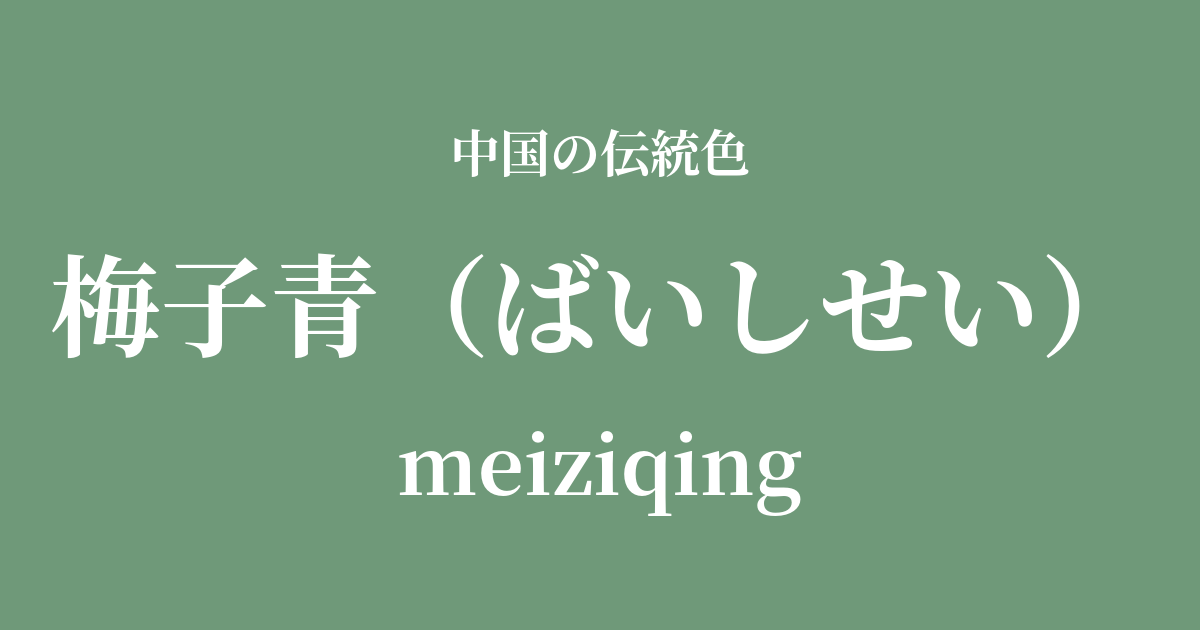
| Color name | Umeko Ao |
|---|---|
| reading | Baishisei |
| pinyin | meiziqing |
| HEX | #6F9979 |
| RGB | 111, 153, 121 |
What is Umekosei? Origin and etymology
Baishisei, as its name suggests, is a deep, gentle bluish-green color derived from the color of unripe green plums (umeko) that ripen in early summer.
This color is not simply green, but rather a subtle shade with a hint of blue, creating an exquisite hue. It evokes the fresh vitality, purity, and tranquility found in plums after the rain.
The poetic names, inspired by natural scenery, strongly reflect traditional Chinese aesthetics and have been cherished as colors that bring peace and elegance to people's hearts.
Historical background of Umekosei
The name Mei Zi Qing is most historically associated with the celadon ware of the Longquan kiln, which reached its peak during the Southern Song dynasty (12th-13th centuries).
This celadon, fired in the Longquan County area of Zhejiang Province, was crafted with the utmost skill and held supreme value as a tribute to successive emperors and the imperial court. Meizi Qing was a term used to refer to the particularly beautiful glaze color of Longquan celadon.
It is characterized by a deep, lustrous, and smooth texture reminiscent of jade, achieved by repeatedly applying thick layers of glaze and firing it. Its mystical beauty captivated people at the time and it is considered one of the pinnacles in the history of Chinese ceramics.
Mei Ziqing in Chinese Art and Crafts
Umekosei is, first and foremost, synonymous with ceramics, especially the Longquan celadon of the Southern Song dynasty, and has etched its name into the world of art. Its perfect form and the beauty of its glaze have had an immeasurable influence on later ceramic production. In Japan, it was brought in large quantities from the Kamakura period onward and became dearly loved by tea masters as "Kinuta celadon," and was highly prized as the pinnacle of tea ceremony utensils.
In addition, in the realm of fashion culture, subdued blue-green colors like plum blossom green were favored by the literati and intellectual classes. This understated and elegant hue is said to have symbolized intelligence and inner richness, giving a refined look to clothing such as Hanfu.
Color scheme preview
This is to check the readability of the text when this color is used as the background.
Plum blossom blue color scheme proposal
Tsukihaku (#EAF4FC)
By combining it with the pale, pure white of Tsukishiro, the elegant impression of Umekoshiro is further enhanced. It creates a quiet and clear atmosphere, making it an ideal color scheme for calm spaces and sophisticated designs.
Anzu (#F7C274)
Adding a warm apricot yellow, reminiscent of apricot fruit, infuses the tranquility of the plum blossom green with vitality and brightness. It creates a gentle, natural atmosphere that evokes the arrival of spring.
Pilestone (#99462A)
By combining it with a deep reddish-brown reminiscent of ochre, the colors complement each other, creating a dignified and refined impression. It's a sophisticated color scheme that feels both traditional and modern, perfect for adults.
Practical Scenes
In interior design, incorporating plum blossom blue as an accent color in wallpaper, curtains, cushions, etc., brings a sense of calm and elegance to the space. It pairs well with natural materials such as light-colored wood and bamboo, blending seamlessly into both Japanese and Western-style rooms, creating a peaceful atmosphere.
In fashion, using it in items such as dresses, blouses, and scarves gives an elegant and sophisticated impression. It can also be expected to have the effect of making skin tone look more beautiful, and when paired with basic colors such as white, beige, and gray, it creates a refined look.
In web design and graphic design, using it as a background or key color creates a design that conveys trustworthiness and reliability. It is suitable for minimalist, high-quality brand websites and pages introducing natural products.