
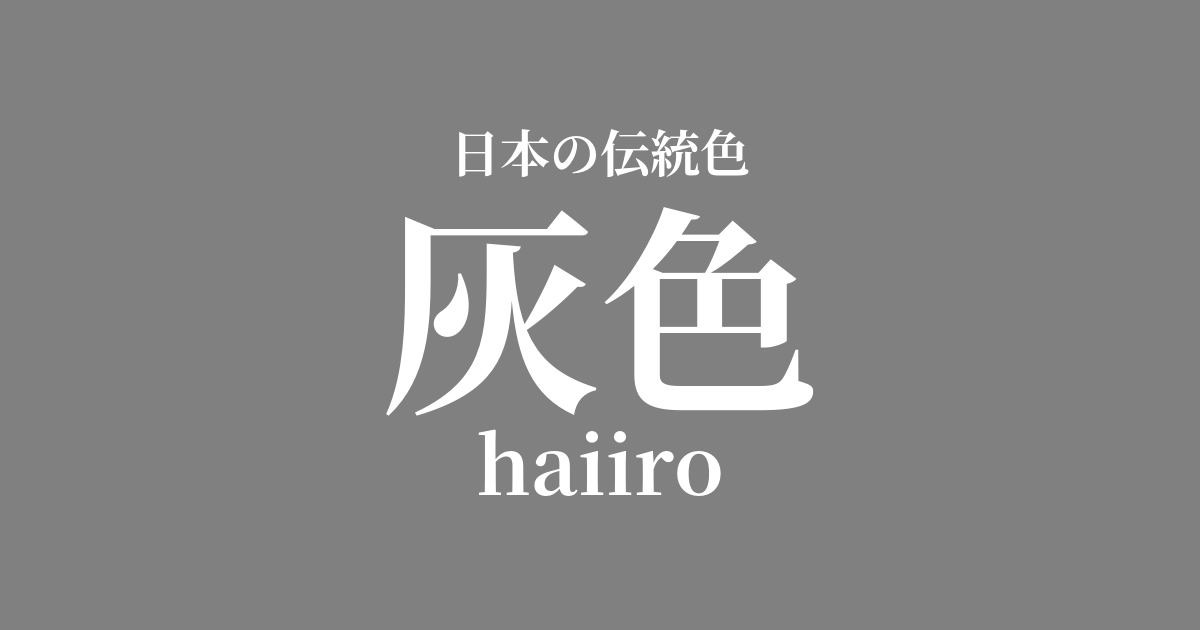
| Japanese color name | gray |
|---|---|
| reading | haiiro |
| HEX | #808080 |
| RGB | 128, 128, 128 |
What is gray? Origin and etymology
Gray, as its name suggests, derives from the color of "ash" left after something is burned. It is an achromatic color that lies between black and white, and although it has existed since ancient times, its name is considered to have become commonly used relatively recently. In the Heian period, similar shades were called "nibi-iro" or "usuzumi-iro," and were mainly used for mourning clothes and the robes of Buddhist monks. Therefore, it was perceived as a color that was the opposite of flamboyant, giving a plain and modest impression.
A gray historical background
During the Heian period, gray tones were called "nibi-iro" (dull gray) and were primarily used for mourning clothes, thus having a strong association with unfortunate occasions. However, from the Kamakura period onward, as Zen Buddhism spread and ink painting flourished, the achromatic worldview expressed through the shades of ink came to be appreciated as a form of beauty. As a result, gray also came to be seen as a color symbolizing spirituality and the concept of wabi-sabi (a Japanese aesthetic emphasizing simplicity and transience).
The value of gray underwent a major transformation during the Edo period. When the shogunate's sumptuary laws prohibited commoners from wearing brightly colored clothing, people found endless variations in subdued colors such as brown and gray, and enjoyed this as a form of "chic" or "refined" style. The phrase "forty-eight shades of brown and one hundred shades of gray" was coined, indicating the popularity of diverse shades of gray, and a culture of appreciating subtle differences in color, such as silver gray, Rikyu gray, and Fukagawa gray, flourished.
Gray became a symbol of the aesthetic sensibilities of the common people of Edo, born out of constraints.
Related literature, waka poetry, and seasonal words
While the direct use of "gray" is rare in literary works, similar terms like "dull gray" and "pale ink gray" have appeared since ancient times. In "The Tale of Genji," when Hikaru Genji is exiled to Suma, he wears a dull gray garment, effectively using the color to symbolize despair and sorrow. In the world of haiku, "gray" is sometimes treated as a seasonal word for winter, evoking images of braziers and hearths, and serving as an element to express the stillness of winter and the activities of people.
Skylarks sing in the gray sky.
Color scheme preview
This is to check the readability of the text when this color is used as the background.
Gray color scheme proposal
Indigo (#274A78)
Gray and indigo, popular during the Edo period, are both considered a stylish color combination beloved by ordinary people. They convey a sense of calm and sophistication, making them suitable for modern Japanese designs. The two colors complement each other, creating a profound harmony.
Cherry blossom pink (#FEEAFA)
By combining the inorganic and cool impression of gray with a soft, gentle cherry blossom pink, warmth and tenderness are added. This color scheme, reminiscent of the hazy spring sky and cherry blossoms, is modern yet evokes the natural beauty of Japan, creating an elegant and refined atmosphere.
Yamabuki (#F8B500)
Combining a neutral gray with a vibrant, bright golden yellow creates a strong contrast, adding a visual accent. The cheerful and vibrant impression of the golden yellow stands out against the stillness of the gray, resulting in a modern and lively design.
Practical Scenes
In the world of kimono, it is used in stylish outfits such as Edo Komon and Tsumugi. Because it is achromatic, it goes well with obi and accessories, and adding a pop of color creates a refined impression. As a color loved by both men and women, regardless of the season, it is still incorporated into many traditional Japanese garments today.
In interior design, gray is an ideal color for creating a modern and minimalist space. When combined with exposed concrete walls and simple furniture, it creates an urban and sophisticated atmosphere. It also pairs well with the warmth of wood and the green of houseplants, bringing a sense of calm and tranquility to the space.
In web and graphic design, using it as a base color enhances other colors and improves content readability. It can be effectively used in corporate websites where you want to convey trustworthiness, calmness, and intelligence, as well as in portfolio sites with a minimalist design.