
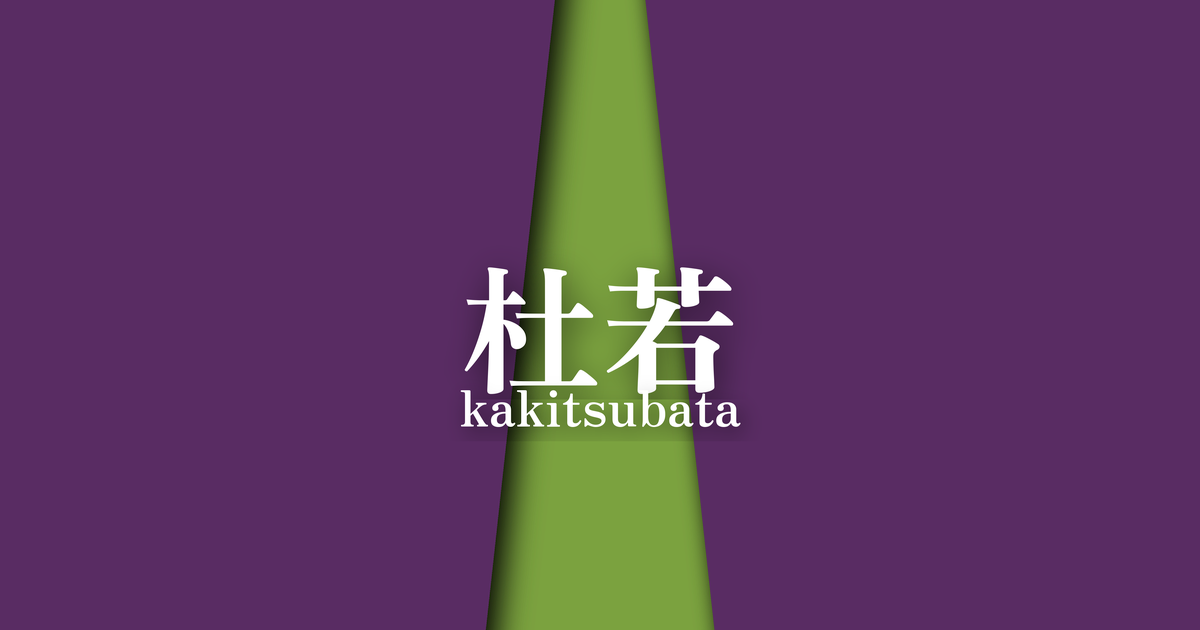
| Japanese color name | Duwaka |
|---|---|
| reading | kakitsubata |
| season | 夏 |
| Color of the table | Purple (murasaki) |
| Back color | Moegi (light green) |
What is a Japanese iris? Origin and etymology
The layered color combination "Kakitsubata" (iris) captures the scene of irises blooming by the water's edge in early summer. The deep purple used on the outside symbolizes the beautiful petals of the iris, while the fresh, vibrant green on the inside represents the lush, sprouting leaves. In this way, Heian period aristocrats skillfully incorporated the colors of nature into their clothing, delicately expressing the changing seasons. The name "Kakitsubata" itself is directly derived from the plant, reflecting a realistic yet elegant aesthetic.
Historical background of the Japanese iris
During the Heian period, the color scheme of clothing was an important element in aristocratic society, indicating an individual's education and refinement. "Kasane no Irome" (layered color combinations) were a refined aesthetic expression of the seasons, developing as a cultural element that enriched life in the imperial court. "Kakitsubata" (iris) was a color scheme representative of early summer, particularly favored by women. This color scheme was not merely beautiful, but also deeply connected to the worldviews of waka poetry and stories, playing a role as a cultural symbol.
Related literature, waka poetry, and seasonal words
The iris appears in many classical literary works, but the anecdote in the ninth section of "The Tales of Ise," "Journey to the East," is particularly famous. The waka poem that Ariwara no Narihira composed after seeing a cluster of irises in Yatsuhashi, Mikawa Province, is an acrostic poem in which the first letters of each line spell out "kakitsubata," indicating that the iris has been a familiar poetic motif since ancient times. Through this story, the iris became associated with sentiments such as the melancholy of travel and longing for the capital.
Furthermore, the iris is established as a seasonal word for summer, and its beauty has been celebrated in many waka and haiku poems.
Having grown accustomed to wearing this Chinese robe, and with a wife by my side, I think of the long journey I have taken.
The season and scenery of irises
The "Kakitsubata" (iris) color combination is worn during the early summer season, from April to May in the old lunar calendar, and from May to June in the current calendar. This period is when irises bloom all at once by the water's edge, and the garment reflects this scene. The purple on the outside represents the fully bloomed flowers, and the light green on the inside represents the vibrant leaves, and the vivid contrast between the two creates a refreshing and elegant atmosphere of early summer. It was worn in public settings at the imperial court and at seasonal events, serving to announce the arrival of the season to those who saw it.
Color scheme proposal for irises
White training (#FFFFFF)
The pure and unblemished white of shironeri enhances the vibrancy of the purple and light green of the iris. This combination evokes a refreshing feeling of being by the water and gives an impression of nobility, and it was frequently used as a basic color in Heian period attire.
Asatan (#84B9CB)
Asahanada is a bright blue color reminiscent of clear water. Since irises are plants that bloom by the water's edge, combining them with this color creates a more realistic and refreshing scene. It results in a natural and harmonious color scheme.
Golden (#E6B422)
The golden color is reminiscent of the yellow pattern at the center of the iris flower. Adding a yellow hue, which is close to the complementary color of purple, enhances each other's colors, resulting in a vibrant and striking color scheme. It adds a touch of luxury as an accent.
Practical Scenes
In Heian period attire, "kakitsubata" (Japanese iris) was primarily used in women's uchiki (outer robes) and was a representative color that expressed the feeling of early summer. In modern times, this color scheme is sometimes incorporated into kimonos, obi sashes, and Japanese accessories. It is particularly suitable for occasions where the sense of the season is important, such as early summer tea ceremonies. Furthermore, its elegant color scheme is also applied to Japanese-style interior design, textiles, and website color schemes, creating a dignified atmosphere.