
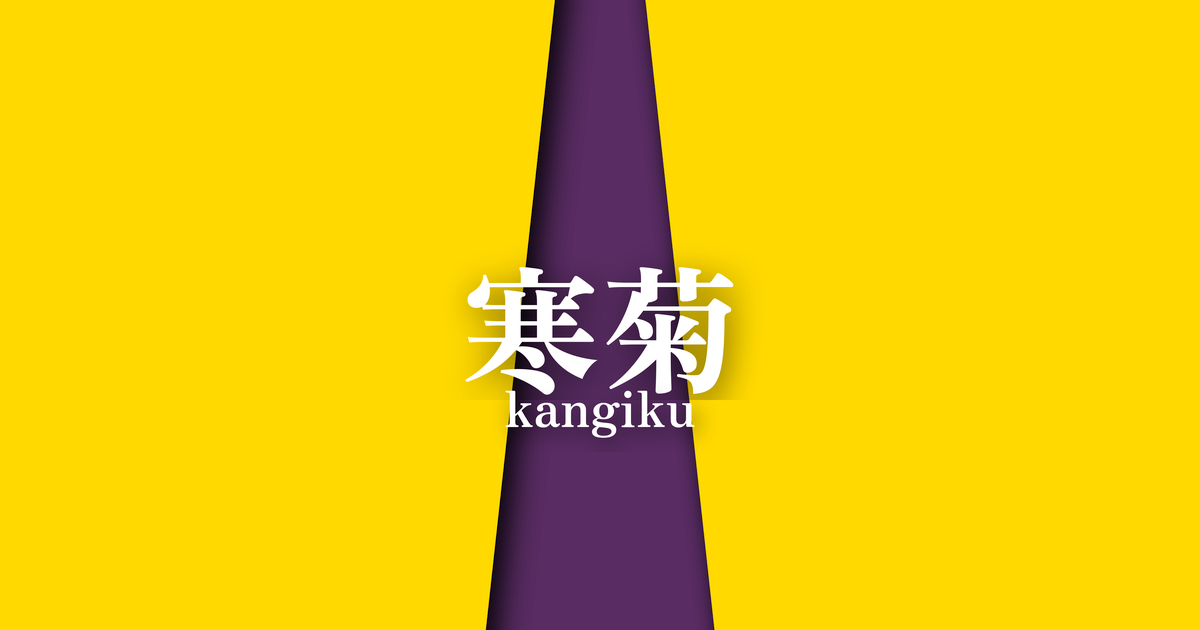
| Japanese color name | Kangiku |
|---|---|
| reading | kangiku |
| season | 冬 |
| Color of the table | Yellow (ki) |
| Back color | Purple (murasaki) |
- What is a winter chrysanthemum? Origin and etymology
- Historical background of winter chrysanthemums
- Related literature, waka poetry, and seasonal words
- The season and scenery of winter chrysanthemums
- Color scheme proposal for winter chrysanthemums
- Practical Scenes
- FAQ
- Color combinations for the same season (winter)
What is a winter chrysanthemum? Origin and etymology
"Kangiku" (winter chrysanthemum), as its name suggests, is a color combination that represents the chrysanthemum flower blooming proudly in the harsh cold of winter. The vibrant yellow on the outside represents the chrysanthemum petals, while the deep purple on the inside is said to symbolize the chrysanthemum's leaves and stems, or the crisp, cold air of winter. Chrysanthemums have been considered a symbol of longevity and nobility since ancient times, and winter chrysanthemums in particular were loved by Heian-era aristocrats for their strong vitality and nobility.
This color scheme is thought to incorporate the elegance and strength of winter chrysanthemums into the attire.
Historical background of winter chrysanthemums
In the aristocratic society of the Heian period, the culture of "kasane no irome," which expressed the delicate changes of the four seasons through the color schemes of clothing, became refined. People keenly perceived the beauty of nature and reflected it in their attire, thereby demonstrating their education and aesthetic sense. "Kangiku" (winter chrysanthemum) was used as winter attire and is presumed to have been worn at court ceremonies and private banquets. This color scheme played a role in adding a vibrant and splendid touch of life to the otherwise colorless winter landscape.
Related literature, waka poetry, and seasonal words
There are no clear examples of the color combination name "Kangiku" (winter chrysanthemum) directly appearing in Heian period literary works. However, the scene of chrysanthemums blooming in a winter garden, covered in snow, is often beautifully depicted in works such as "The Tale of Genji" and "The Pillow Book." It is highly probable that the aesthetic sensibilities expressed in these literary works influenced the creation of seasonal color combinations like "Kangiku."
The nobles enjoyed recreating scenes depicted in waka poetry and stories with their own attire, sharing a sense of the seasons.
On a cold evening with lingering frost, the chrysanthemum blossoms, their colors unchanging.
The season and scenery of winter chrysanthemums
"Kangiku" (winter chrysanthemum) is a color combination worn during the winter season, from October to December in the old lunar calendar, which corresponds to late November to early February in the current calendar. The yellow on the outside evokes the vibrant chrysanthemum flowers blooming in the cold, while the purple on the inside is reminiscent of frost-covered leaves and the cold, crisp winter air. This vivid contrast highlights the noble beauty of the chrysanthemum, a symbol of vitality, in the winter season when all things lose their color.
The sight of a court lady wearing a uchiki (a type of robe) of this color must have left a vivid impression on those who saw it, much like a single chrysanthemum blooming in a winter garden.
Color scheme proposal for winter chrysanthemums
White training (#FFFFFF)
This combination evokes the pristine scene of winter chrysanthemums blooming amidst a snowy landscape. The vibrant yellow and purple colors complement each other, creating a pure and noble impression. White was also highly valued as a color of purity in Heian period attire.
Rusty light green (#88A3A4)
A muted blue-green reminiscent of a winter's cloudy sky or a frozen water surface. While nearly complementary to the vibrant yellow of winter chrysanthemums, its subdued tone harmonizes, creating a quiet and refined winter scene.
Dark brown (#654321)
A deep brown reminiscent of frozen earth or withered tree trunks. It enhances the vitality of the winter chrysanthemum and brings warmth and stability to the overall color scheme. This combination is easy to apply to modern interiors and fashion.
Practical Scenes
In Heian period attire, this color scheme was primarily used as a layering technique for the uchiki (a type of kimono worn by women). It is believed to have been worn at winter ceremonies and private gatherings to accurately express the feeling of the season. In modern times, incorporating this color scheme into kimonos, obi sashes, and other Japanese accessories can create a dignified and stylish winter look.
Furthermore, using it as an accent in Japanese-style interior design, web design, or product packaging can bring a sense of traditional Japanese elegance and seasonality to the space or product.