
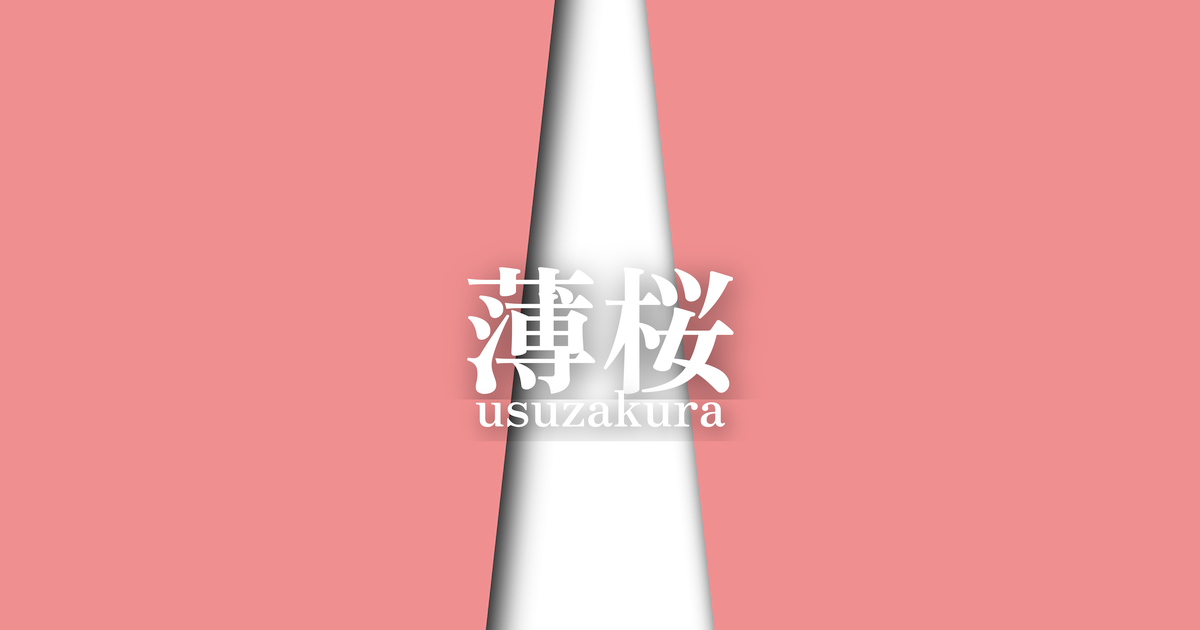
| Japanese color name | Light Cherry Blossom |
|---|---|
| reading | usuzakura |
| season | 春 |
| Color of the table | Light red (usubeni) |
| Back color | White (shiro) |
What is Usuzakura? Origin and etymology
"Usuzakura" (pale cherry blossom) is, as the name suggests, a color combination that expresses the pale pink of cherry blossoms. It captures the delicate hues of cherry blossoms that have passed their peak and are gradually losing their color, as well as the translucent petals in the sunlight. By using pale pink on the front and white on the back, it is said to symbolize the lovely color of the cherry blossom petals and the whiteness of the underside and the dignified way they fall. This color combination strongly reflects the ancient Japanese aesthetic of finding transience in things that change amidst the splendor of spring in full bloom.
This color scheme not only directly captures the essence of the cherry blossoms themselves, but also seems to aim at expressing the light and atmosphere of spring. The combination of pale pink and white evokes images of cherry trees shining in the gentle spring sunlight and petals fluttering in the wind. It is one of the elegant and lyrical color schemes created by the refined sensibilities of the Heian aristocracy, who abstracted natural scenes and reconstructed them as colors for clothing.
Historical background of Hakuo
During the Heian period, in aristocratic society, it was considered an important aspect of refinement to be sensitive to the changing seasons and express them through the color schemes of one's clothing. This culture of "layered color combinations" was an expression of their aesthetic sense, which sought to become one with nature, and it added color to life in the imperial court. In particular, among women, there was a competition to create original color combinations that reflected the seasons in the court attire of ladies-in-waiting, which consisted of wearing multiple layers of uchiki (outer robes).
"Usuzakura" (pale cherry blossom) is said to have been particularly popular among the many spring colors. Given that cherry blossoms were frequently celebrated as a symbol of beauty in waka poetry and narrative literature, it is easy to imagine that colors associated with cherry blossoms were highly valued. Wearing clothing in this color for spring events such as cherry blossom viewing parties and poetry gatherings was likely an important way to demonstrate the wearer's dignity and refined taste.
Related literature, waka poetry, and seasonal words
Many literary works from the Heian period depict scenes of admiring cherry blossoms, offering a glimpse into the aesthetic sensibilities behind the color "Usuzakura" (pale cherry blossom). In the "Flower Banquet" chapter of "The Tale of Genji," the cherry blossom banquet hosted by Hikaru Genji is described in splendor, and it is suggested that the costumes of the characters were appropriate for a spring night. Although the name "Usuzakura" is not directly mentioned, the scene perfectly aligns with the worldview expressed by this color.
Furthermore, "The Pillow Book" contains numerous passages that demonstrate Sei Shōnagon's keen sense of color. Her sensitivity to the subtle changes in color in nature, as exemplified by "In spring, it is the dawn," is deeply connected to the culture of layered color combinations. Pale and delicate color schemes like "pale cherry blossom" were born and nurtured from this refined aesthetic sense of the Heian aristocracy.
On this peaceful spring day, bathed in the gentle light of the distant past, the blossoms scatter without a care in the world.
The season and scenery of pale cherry blossoms
"Usuzakura" (pale cherry blossom) is a color scheme worn during the spring season, especially from late March when the cherry blossoms are in full bloom until around mid-April when the petals begin to fall. It simultaneously expresses the splendor of the height of spring and the anticipation of the coming change of seasons. The pale pink on the outside is said to symbolize the blooming cherry blossom petals, while the white on the inside is said to symbolize the fluttering petals, the spring mist, or even the lingering presence of snow.
Wearing these colors was not merely about adorning oneself with the season, but also about demonstrating a deep empathy for the workings of nature and an appreciation for the pathos of things. In the gentle spring sunshine, the sight of white peeking out from the sleeves fluttering in the breeze created an elegant scene reminiscent of cherry blossoms in flight, strongly evoking the feeling of spring in the viewer.
Light pink color scheme proposal
Light green (#A9D159)
Light green is the color of young leaves that sprout in early spring. By combining it with the pale pink of light cherry blossom, it is possible to express the vibrant spring scene of young leaves beginning to sprout on a cherry tree. The colors complement each other, creating a fresh and youthful color scheme.
Willow green (#A8C97F)
Willow green, a muted yellowish-green reminiscent of willow leaves, tones down the sweetness of pale cherry blossoms, adding a calm, mature atmosphere. It evokes the image of cherry blossoms and willows blooming along a riverbank in spring, creating an elegant and tasteful color scheme. It's easy to incorporate not only into traditional Japanese clothing but also into modern designs.
Deep blue (#007BBB)
The deep blue evokes the color of a clear spring sky. The pale pink of the cherry blossoms adds a touch of sophistication, creating a beautiful contrast with the clear blue sky. This color scheme gives a modern and refined impression and is effective as a design accent.
Practical Scenes
In Heian period attire, "pale pink" was primarily used for women's uchiki (outer robes). The way the pale pink and white gradation peeked out from the cuffs and hems of the multiple layers of clothing was extremely elegant. It is thought that this attire was favored for spring ceremonies, private banquets, and especially cherry blossom viewing, as it harmonized with the surrounding nature.
In modern Japanese attire, the "pale cherry blossom" color scheme is incorporated into spring formal wear such as visiting kimonos, casual kimonos, undergarments, and accessories like obiage and obijime. It gives an elegant and gentle impression, making it suitable for festive occasions that value the season, such as wedding receptions and spring tea ceremonies.
Beyond kimonos, this color scheme is used in various fields. In interior design, incorporating it into wallpaper and curtains brings a calm and bright atmosphere to a room. In web and graphic design, it is used in spring campaigns and as a color scheme for women's products to express gentleness and elegance.