
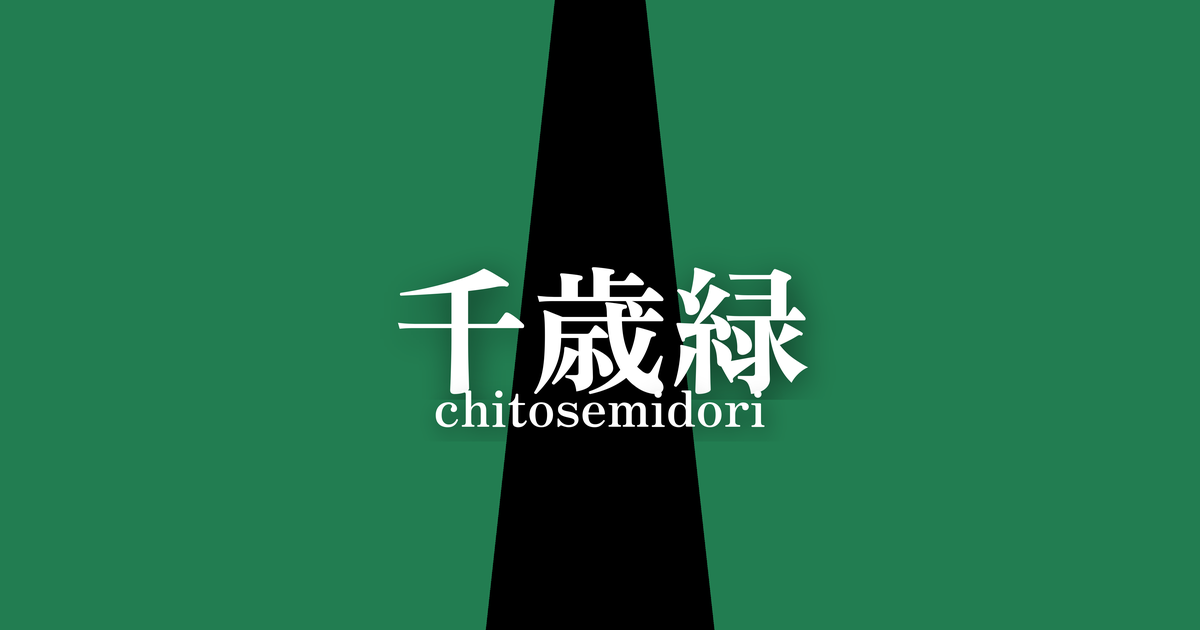
| Japanese color name | Chitose Midori |
|---|---|
| reading | chitosemidori |
| season | Miscellaneous (year-round/celebratory) |
| Color of the table | Green (midori) |
| Back color | Black (kuro) |
- What is Chitose Midori? Origin and etymology
- Historical background of Chitose Midori
- Related literature, waka poetry, and seasonal words
- Chitose Green Season and Scenery
- Chitose Midori color scheme proposal
- Practical Scenes
- FAQ
- Color combinations for the same season (miscellaneous (year-round/celebratory))
What is Chitose Midori? Origin and etymology
"Chitose Midori" is a color combination derived from the green of the pine tree, which is said to "live for a thousand years," as its name suggests. "Chitose" means longevity, and "midori" represents the deep, rich color of the needles of the evergreen pine tree. Since ancient times, the pine tree has been considered a tree inhabited by gods and has been revered as a symbol of eternal youth, longevity, and prosperity. For this reason, Chitose Midori was named as an auspicious color that expresses a wish for eternal vitality and unchanging prosperity.
The combination of green on the front and black on the back is said to represent the strength of the pine tree that withstands wind and snow, and the solemn scene it casts.
Historical background of Chitose Midori
The layered color schemes of Heian period aristocratic society were a reflection of refined aesthetic sensibilities, with specific color combinations for clothing determined by the season and occasion. "Chitose-midori" (a type of green) is classified as a "miscellaneous" color that can be worn year-round, not limited to a specific season. It is thought to have been particularly favored for auspicious occasions such as ceremonies celebrating longevity and New Year's celebrations. Heian aristocrats incorporated such auspicious colors into their clothing to pray for their own prosperity and the safety of their families.
It is said that its powerful colors were also favored in later samurai society.
Related literature, waka poetry, and seasonal words
Pine trees are a frequently appearing subject in classical literature, and numerous waka poems about them are included in the Manyoshu and Kokin Wakashu anthologies. Their evergreen appearance has been depicted as a symbol of unchanging spirit and longevity. The word "tokiwa" refers to the permanence of the pine tree and is used in the world of waka poetry as a metaphor for pledging eternal love and loyalty. Although there are few instances where "Chitose-midori" (meaning "thousand-year green") appears directly as a color name, the aesthetic appreciation for pine trees that underlies it is deeply rooted in the world of classical literature.
As seasonal words, "pine tree" and "evergreen tree" are used, and they are mainly treated as seasonal words for the New Year.
Even the pine trees, though green at any given time, become even more vibrant in color when spring arrives.
Chitose Green Season and Scenery
"Chitose Midori" is a color that represents the deep, powerful green of evergreen trees, especially pine trees, whose leaves do not change color throughout the year. For this reason, it is classified as a "miscellaneous" color that can be worn year-round, without being tied to a specific season. However, due to its auspicious meaning, it was particularly favored for celebratory occasions such as New Year's celebrations, longevity ceremonies, and weddings.
The pine tree, which withstands wind and snow and always maintains its lush green leaves, is a symbol of unchanging vitality and prosperity. Incorporating its colors into clothing symbolizes a wish for the wearer's longevity and the continuation of the family lineage.
Chitose Midori color scheme proposal
Golden (#E6B422)
Pine and gold are frequently combined in traditional Japanese auspicious motifs. The deep green of the pine tree, combined with the gleam of gold, creates a dignified and luxurious impression, making it a color scheme suitable for celebratory occasions. This is a traditional combination that can also be seen in folding screen paintings.
White (#FFFFFF)
Combining the deep green of Chitose Midori with white creates a pure and sacred atmosphere. It evokes the image of snow-capped pine trees, expressing the solemn beauty and purity of winter. This sophisticated combination is easily incorporated into modern designs.
Suou (#9E3D3F)
Suou is a deep red color, almost its complementary color to green. When combined with Chitose Midori, the two colors enhance each other, creating a powerful and striking color scheme. This traditional combination, often seen in Noh costumes, creates a sense of gravitas and splendor.
Practical Scenes
In Heian period attire, Chitose-midori was used for formal wear on celebratory occasions. The deep green on the outside and the black on the inside create a dignified and calm yet vibrant feel. In samurai society, its powerful color was also favored for use in armor and battle surcoats. The color of the pine tree, a symbol of unchangingness, also carried the meaning of a samurai's loyalty and a wish for the continuation of the family line.
In modern Japanese attire, the color Chitose-midori (a type of greenish-brown) is used for formal kimonos such as tomesode, houmongi, and obi sashes. In particular, when combined with pine tree patterns, its auspicious meaning is emphasized, and it is often worn at formal occasions such as weddings and celebrations. It is also sometimes chosen as the second most dignified color after black for men's crested hakama.
In interior design, incorporating Chitose Midori (a type of green) into accent walls or fabrics can give a space a sense of calm and gravitas. It is well-suited to Japanese modern spaces and designs themed around harmony with nature. In web design, it is an effective brand color for companies that want to express reliability, tradition, and sustainability.