
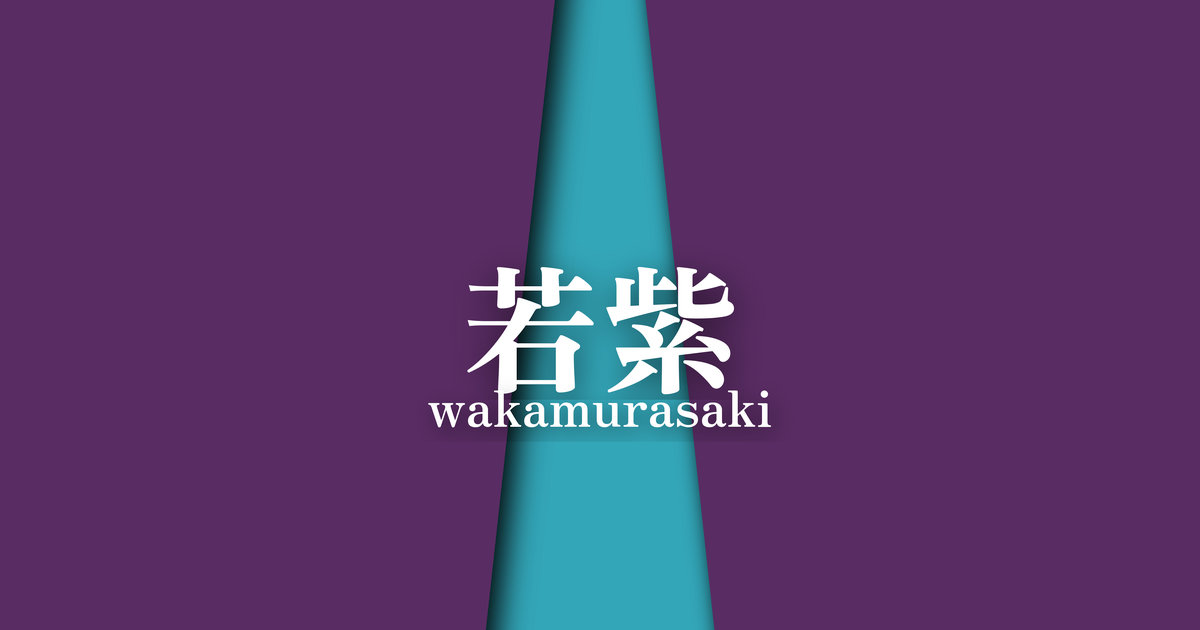
| Japanese color name | Wakamurasaki |
|---|---|
| reading | wakamurasaki |
| season | 夏 |
| Color of the table | Purple (murasaki) |
| Back color | Asagi |
What is Wakamurasaki? Origin and etymology
The name "Wakamurasaki" (young purple) is said to derive from the youthful purple hue reminiscent of the first blooms of gromwell and bellflower. The purple on the outside is revered as a noble color, while the light blue lining is named after the light green leaves of the leek, adding a refreshing summer feel. This combination of two colors skillfully expresses the vitality of the fresh summer flowers and the cool atmosphere felt amidst the heat.
Although no historical documents have been found to directly link this color to the character "Wakamurasaki" from "The Tale of Genji," the noble and lovely image associated with her name has greatly influenced the interpretation of this color. It is possible that, in conjunction with the theme of "purple association" in the story, it was passed down through generations as a color symbolizing the ideal woman.
Historical background of Wakamurasaki
In the aristocratic society of the Heian period, the "kasane no irome," which delicately expressed the changing seasons through the color scheme of clothing, was considered an important aspect of refinement. "Wakamurasaki" (young purple) was one such example, and it is thought to have been mainly used for summer attire. Purple has long been a symbol of noble status, as it was the highest-ranking color in Prince Shōtoku's Twelve Levels of Court Rank, and its use was sometimes restricted.
In court ladies' attire, this elegant color scheme reflected the wearer's refined aesthetic sense. In particular, when layering uchiki (outer robes), the light blue lining peeking out from the cuffs and hem tightened the overall impression and created a beautiful interplay of colors that changed with movement. It is said to have been a favored color for summer events and private banquets, conveying coolness and dignity.
Related literature, waka poetry, and seasonal words
The name "Wakamurasaki" strongly evokes the "Wakamurasaki" chapter of "The Tale of Genji" and the young girl (later known as Murasaki no Ue) who is taken in by Hikaru Genji and raised to be his ideal woman. Although there is no direct description in the story that she wore clothing of this color, it is deeply associated with the image of "purple gromwell," which symbolizes her beauty, nobility, and her connection to Hikaru Genji.
While this particular color scheme doesn't appear frequently in classical literature, "purple" and "light blue" played an important role in depicting summer scenes in the world of waka poetry. For example, many poems about irises and bellflowers that bloom in summer evoke the color scheme of this "young purple." The literary imagery associated with this color scheme further enhances its beauty.
On the way to Murasakino, the way to Shimeno, the field guardian does not see you waving your sleeve.
The season and scenery of young purple
"Wakamurasaki" is a color combination used in summer. The deep purple of the outer layer evokes the colors of bellflowers and irises that are in full bloom in summer, while the vibrant light blue of the inner layer is reminiscent of clear water and lush summer grass. This color scheme beautifully expresses the coolness felt in the strong summer sunlight and the vibrant scenes of nature.
The most appropriate time to wear this color is from May to June in the old lunar calendar, which in modern times is considered to be the height of summer from June to August. Accurately understanding the seasons and reflecting them in one's attire was a virtue of the Heian aristocracy, and "Wakamurasaki" (young purple) delighted people's eyes as a refined color that heralded the arrival of summer.
A color scheme proposal for Wakamurasaki
Shironeri (#FFFFFF)
The nobility and refreshing feel of Wakamurasaki, combined with the purity of Shironeri, creates an extremely pure and elegant impression. In Heian period attire, white was frequently used as a sacred color, and its combination with purple is suitable for dignified occasions.
Light green (#A9D159)
Moegi is the color of young leaves from spring to early summer, and it resonates with the image of "youth" associated with Wakamurasaki. The bluish tint of Asagi and the yellowish-green of Moegi are close to complementary colors, vividly enhancing each other's colors and creating a lively and vibrant color scheme.
Gold (#E6B422)
Purple and gold have long been considered a noble combination. Adding gold as an accent to the deep purple of Wakamurasaki (young purple) adds elegance and a sense of gravitas. Even in modern designs, this combination is effective in conveying a sense of luxury and exclusivity.
Practical Scenes
During the Heian period, this color was primarily used in women's clothing such as uchiki (a type of kimono). The way the light blue lining peeked out from the cuffs and hems of the layers of clothing with each step created an extremely elegant and refined beauty. In the aristocratic society, which valued the changing seasons, it was one of the representative color combinations that heralded the arrival of summer.
In modern times, incorporating this color scheme into traditional Japanese clothing such as kimonos, yukatas, and obi sashes allows for a classic yet refreshing look. In interior design, using it on cushion covers or noren curtains creates a calm, modern Japanese atmosphere. It's also an effective color scheme for websites and product packaging designs when aiming for both intelligence and a sense of freshness.