
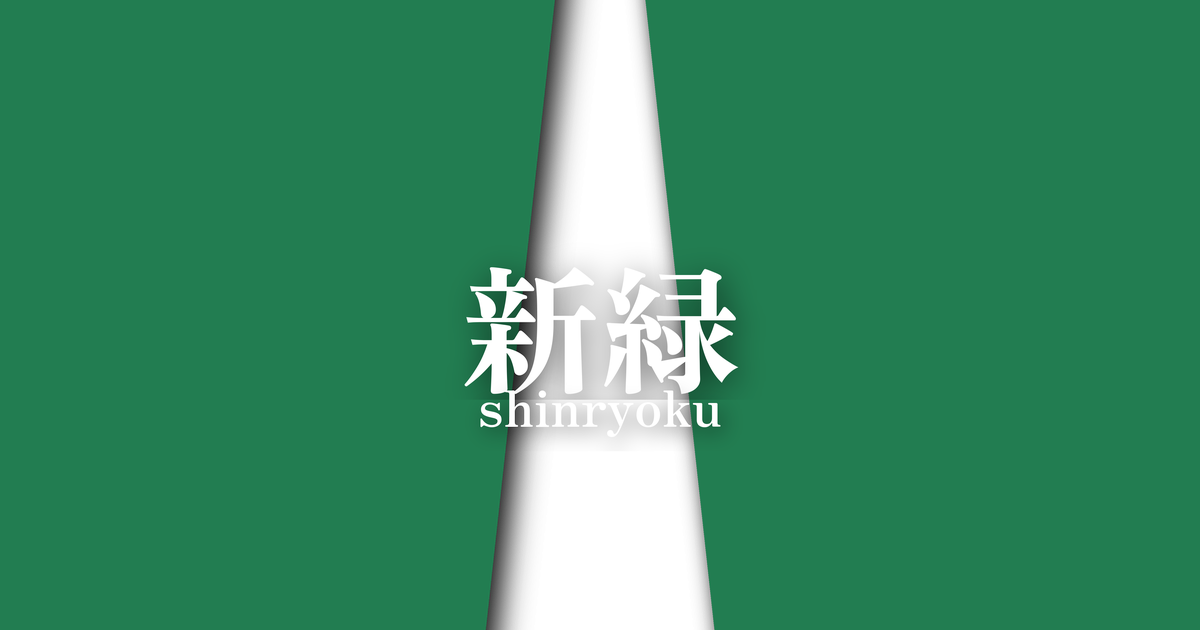
| Japanese color name | Fresh green leaves |
|---|---|
| reading | Shinryoku |
| season | 夏 |
| Color of the table | Green (midori) |
| Back color | White (shiro) |
- What is "Shinryoku" (fresh greenery)? Origin and etymology.
- The historical background of the fresh green leaves
- Related literature, waka poetry, and seasonal words
- The season of fresh greenery and scenery
- Color scheme proposal for fresh greenery
- Practical Scenes
- FAQ
- Color combinations of the same season (summer)
What is "Shinryoku" (fresh greenery)? Origin and etymology.
The layered color combination "Shinryoku" (fresh greenery), as its name suggests, is a color scheme that expresses the vibrant young leaves of trees full of life in early summer. The vivid green on the outside reflects the color of leaves growing vigorously in the sunlight, while the white on the inside is said to symbolize the pale hues on the underside of the leaves, the sparkle of morning dew, or the cool summer breeze. The aristocrats of the Heian period were keenly aware of the changing seasons and expressed the beauty of nature through the color combinations of their clothing.
Fresh greenery is one of the colors that originated from such traditional Japanese aesthetics.
The historical background of the fresh green leaves
In the Heian period court, expressing a sense of the seasons through clothing was considered an important aspect of refinement. "Kasane no Irome" (layered color schemes) developed as a set of color rules for clothing worn according to the season and occasion, reflecting the aesthetic sensibilities of the nobility. "Shinryoku" (fresh green) was one of the colors that represented summer, and it is said to have been mainly used from April to May in the old lunar calendar. This color scheme was used in the uchiki (outer robe) of court ladies' attire, giving viewers an impression of the freshness and coolness of early summer.
Related literature, waka poetry, and seasonal words
"Fresh greenery" has long been a familiar seasonal word in the world of waka and haiku poetry, representing summer. In Heian period literature such as The Tale of Genji and The Pillow Book, the characters wear clothing in colors appropriate to the season, and green-toned garments frequently appear in summer scenes. Although the term "layers of fresh greenery" is not directly mentioned in any particular scene, the color of the clothing described alongside descriptions of the season of lush young leaves is deeply linked to the fresh image that this color evokes.
Through literary works, we can catch a glimpse of the sense of the seasons that people of that time imbued with this color scheme.
Green leaves in sight, a cuckoo's song, and the first bonito of the season.
The season of fresh greenery and scenery
The layered color combination "Shinryoku" (fresh greenery) expresses the vibrant scene of early summer through color. It was worn during the period from April to May in the old lunar calendar, which corresponds to around May to June in the modern calendar, the season when the young leaves of the trees are at their most beautiful. The vivid green on the outside represents the sprouting young leaves themselves, while the white on the inside evokes not only the color of the underside of the leaves, but also the refreshing breeze of early summer and the sparkle of a clear stream.
Wearing this color scheme was an expression of the refined aesthetic sense of the Heian aristocracy, who incorporated the breath of nature into their attire and appreciated the changing seasons.
Color scheme proposal for fresh greenery
Yamabuki (#FFBF00)
The vibrant green of new leaves and the yellow of the Japanese kerria flower create a harmonious color combination found in nature. It evokes the image of Japanese kerria flowers blooming in the fields and mountains in early summer, giving a lively and cheerful impression. This combination was also favored in traditional Japanese clothing.
Light blue (#00A4AC)
The fresh green of new leaves and the light blue-green of pale green, while being similar colors, create a deep gradation. This refreshing color scheme, reminiscent of the clear skies and streams of early summer, gives a cool and sophisticated impression. It's also easily applicable to modern designs.
White tea (#B59775)
The vibrant new green is combined with a calming off-white tea reminiscent of tree trunks and the earth, creating a color scheme that expresses the entirety of a natural landscape. The combination of earth tones provides a sense of security and elegance, making it suitable not only for traditional Japanese clothing but also for interior design.
Practical Scenes
The "fresh green" color scheme can be used in a variety of situations even today. Incorporating this color combination into kimonos, yukatas, and Japanese accessories such as obiage (sash ties) creates a stylish look that expresses the feeling of early summer. In interior design, using it in wallpaper or fabrics can create a space that evokes the refreshing feeling of nature even while indoors.
Furthermore, in graphic design for websites and advertisements, this color scheme is effective when you want to convey a natural and clean image, and it gives viewers a sense of security and vitality.