
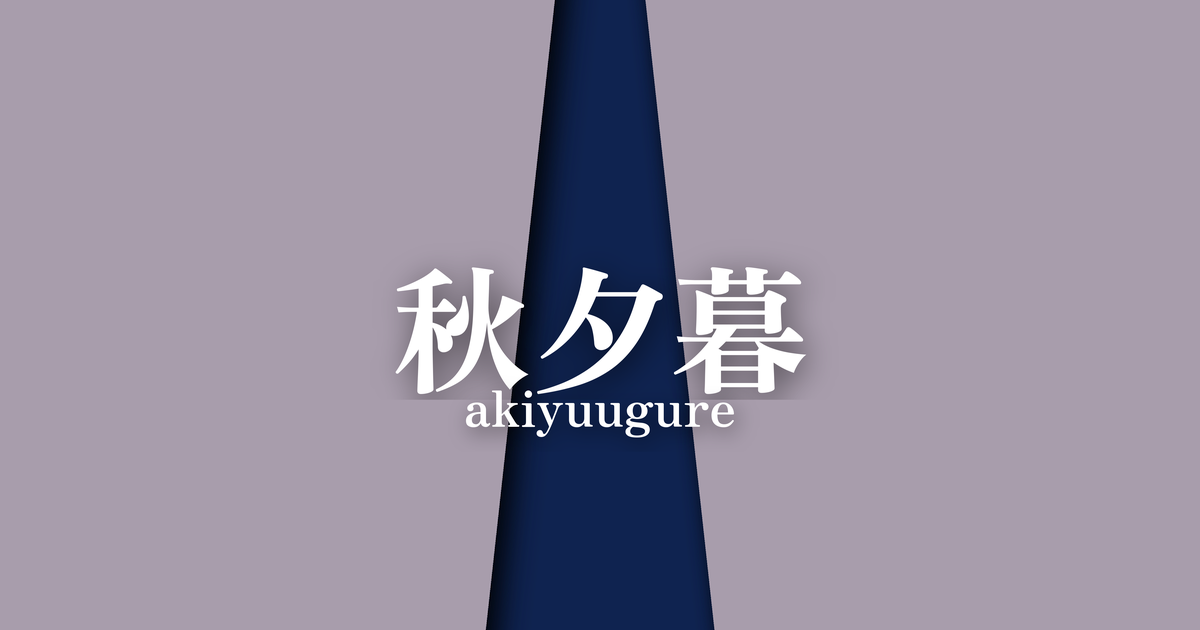
| Japanese color name | Autumn twilight |
|---|---|
| reading | akiyuugure |
| season | 秋 |
| Color of the table | Light purple (usumurasaki) |
| Back color | Navy (kon) |
What is "Autumn Twilight"? Origin and Etymology
Akiyūgure (Autumn Twilight), as its name suggests, is a color combination that reflects the scenery of the autumn twilight sky. It is said to express the beautiful gradation of that brief moment when the sun sets, the last light remaining in the sky is tinged with pale purple, and soon it is enveloped in the deep navy blue darkness of night. The pale purple on the outside symbolizes the lingering light of the sunset, and the navy blue on the inside symbolizes the coming darkness of night, and the contrast between the two colors skillfully depicts the melancholic yet beautiful scene of autumn's fading.
This color scheme strongly reflects the aesthetic sensibilities of the Heian aristocracy, who were highly sensitive to the changing seasons.
Historical background of autumn twilight
The culture of layered color combinations flourished in the aristocratic society of the Heian period. They were keenly aware of the changing seasons and found aesthetic sensibility in expressing them through the color schemes of their clothing. "Autumn Twilight" is thought to be one such color combination that arose from this, and it is presumed to have been worn when appreciating the scenery of autumn, especially at twilight. Although there are not many specific records of its use, it is likely that this color combination, embodying the aesthetics of the Heian aristocracy who valued a sense of the seasons, was used in various situations at court.
Related literature, waka poetry, and seasonal words
In Heian period literature, autumn twilight was particularly favored as a scene symbolizing "mono no aware" (a sense of pathos or poignant beauty). As Sei Shōnagon declared in "The Pillow Book" that "autumn is best at twilight," the beauty of this time of day was a common understanding among the aristocracy of the time. In "The Tale of Genji," there are many scenes in which the characters' feelings of loneliness and introspection are depicted by associating them with the autumn twilight.
The layered color scheme of "Autumn Twilight" is thought to have been an intellectual attire, reflecting this literary aesthetic and demonstrating the wearer's deep understanding of the world of waka poetry and stories.
Loneliness is not even a color; it is the autumn twilight on the mountain where cypress trees stand.
Autumn twilight season and scenery
This color scheme is believed to have been worn during the deepening of autumn, specifically from around August to September in the old lunar calendar. It is fitting for a season when the days get shorter in the crisp air, and the changing colors of the evening sky are particularly striking. The combination of light purple and navy blue expresses the tranquility and somewhat melancholic mood unique to autumn evenings. This color scheme, which values a calm atmosphere over splendor, is thought to have been worn on occasions where people quietly enjoyed the beauty of nature, such as moon viewing or autumn leaf viewing.
Color scheme suggestions for autumn twilight
Joro Hanairo (#F2DDA4)
Adding the color of the Patrinia scabiosifolia, one of the seven autumn flowers, enriches the scene of an autumn field. The quiet color scheme of light purple and navy is accented by a bright yellow, giving it a sense of vitality.
Tsukihaku (#EAF4FC)
By combining it with a moon-white color reminiscent of the moonlight floating in the autumn night sky, a scene transitioning from dusk to night is completed. The resulting color scheme gives a serene and intellectual impression, and evokes a sense of narrative.
Deep scarlet (#7D2626)
By combining the colors of the twilight sky with the fiery red of autumn leaves, the dramatic aspects of the autumn scenery are emphasized. The addition of deep crimson to the subdued color scheme creates an impression of strength and passion.
Practical Scenes
During the Heian period, this color was used in the layering of the uchiki (a type of kimono worn by court ladies) and in the color scheme of the clothing of male aristocrats. It is presumed to have been worn especially at occasions that valued refinement, such as autumn moon-viewing parties and poetry gatherings. Wearing this color was also a sign of a deep understanding of seasonal scenery and literary refinement. The subdued hues were also suitable for expressing the inner maturity and thoughtfulness of the wearer.
In modern times, incorporating this color scheme into traditional Japanese clothing accessories such as kimonos, obi sashes, and obi ties creates an elegant, autumnal look. In interior design, it is effective in creating a quiet and calming atmosphere in bedrooms and studies. In website and graphic design, its traditional and intellectual feel contributes to building a sophisticated brand image.