
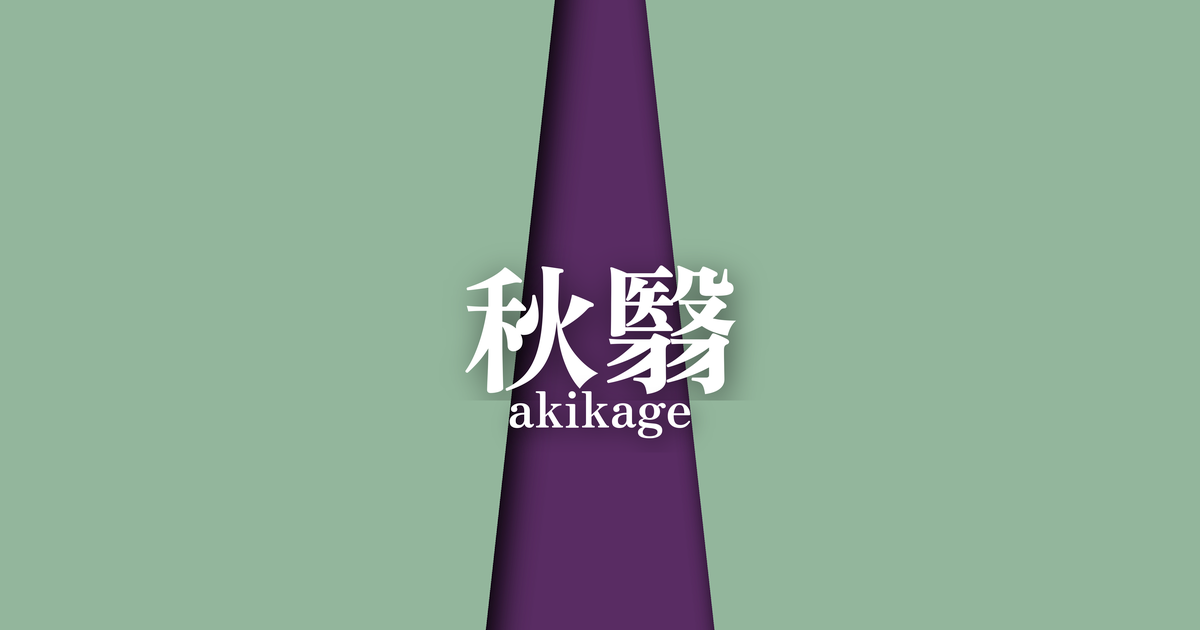
| Japanese color name | Autumn shadow |
|---|---|
| reading | akikage |
| season | 秋 |
| Color of the table | light blue (usuao) |
| Back color | Purple (murasaki) |
What is "Shūkage"? Origin and etymology
Akikage is a combination of colors used in kimono layering that expresses the scenery of autumn, especially the melancholic atmosphere created when sunlight weakens and shadows fall on the mountains and fields. The character "kage" means a shadow created when light is blocked, or the state of light weakening. The light blue on the outside is said to symbolize the clear autumn sky and the colors of plants that have lost their summer vitality and begun to fade. The purple on the inside represents the color of the twilight sky and the color of the deep shadows, and the combination of these two colors beautifully depicts the quiet and profound scenery of autumn.
While there are few clear documents that directly record the etymology or origin of this color scheme, its color combination is based on Japanese aesthetics that have continued since the Heian period. It reflects the sensibilities of the aristocracy who sought to express the delicate beauty of natural landscapes and the changing seasons through the colors of their clothing. It is thought that the color "Shūkage" (秋影) has been passed down through generations as a color that symbolizes the autumn season, which values a more introspective beauty such as tranquility and "mono no aware" (a sense of pathos or melancholy) rather than splendor.
Historical background of autumn shadows
The name "Shūkage" (秋翳) does not appear directly in specific Heian period documents such as the "Shōzoku Zatsuji Shō" or the "Masasuke Shōzoku Shō." Therefore, it has been suggested that it may have been systematized and named by later scholars of court etiquette. However, the aesthetic sense underlying this color scheme undoubtedly has its roots in the culture of the Heian aristocracy. They were keenly aware of the subtle changes of the seasons and enjoyed incorporating them into the color combinations of their clothing.
In the Heian period court, wearing seasonal attire was considered an important aspect of refinement. While vibrant colors inspired by autumn leaves and chrysanthemums were favored in autumn, it is believed that colors expressing the sense of loneliness and tranquility felt as autumn deepened were also used. The combination of pale blue and purple in "Autumn Shadows" perfectly reflects this melancholic autumn scene and conveys to us the refined sense of color of the Heian aristocracy.
Related literature, waka poetry, and seasonal words
The color name "Autumn Shadow" does not directly appear in Heian period literature such as "The Tale of Genji" or "The Pillow Book." However, these works contain many descriptions of autumn twilight and melancholic scenery. For example, the section "Autumn Twilight" in "The Pillow Book" depicts the setting sun, crows returning to their roosts, a flock of geese, and the sounds of the wind and insects, expressing the unique charm of autumn twilight.
The colors of autumn shadows can be said to be a color expression of the aesthetic sensibilities depicted in such literature.
Even a heartless person can sense pathos in the autumn twilight over the marsh where snipe take flight.
Autumn twilight season and scenery
As its name suggests, "Shūkage" (秋翳) is a color scheme worn in autumn. It is particularly appropriate during the period from mid-autumn to late autumn, when the summer heat subsides, the days shorten, and a sense of melancholy begins to set in. The period from August to September in the old lunar calendar (late September to early November in the modern calendar) is considered the most suitable time for wearing this color. In contrast to the vibrant colors of autumn foliage, this color scheme expresses the quiet and introspective side of autumn. It reflects the delicate scenery created by the interplay of light and shadow at dusk, creating a calm and mature atmosphere.
This color scheme is more suitable for private gatherings or short trips to appreciate nature than for formal ceremonies. For example, wearing this color scheme at a moon-viewing party or while strolling through the fields and mountains and admiring autumn flowers would harmonize with the surrounding scenery and express a deep sense of the season. Even in modern kimono fashion, this color combination is favored for occasions where one can enjoy an intellectual atmosphere, such as attending an autumn theater performance or art appreciation.
Autumn Shadows Color Scheme Proposal
Withered leaf color (#915E33)
By incorporating a withered leaf color reminiscent of fallen autumn leaves, the image of late autumn evoked by the autumnal hedge can be further enhanced. The contrast between the coolness of the light blue and the warmth of the withered leaf color creates a narrative-like color scheme. It is particularly effective when incorporated into kimono sashes and accessories.
White (#FFFFFF)
Adding pure white enhances the tranquility of autumn's shadows, evoking the crisp autumn air, morning mist, and the first hints of frost. It brings brightness and cleanliness to the overall color scheme, creating a sophisticated impression. This combination is easily applicable to modern designs.
Silver-gray (#AFB1B4)
Silver-gray is a neutral color that evokes the cloudy skies and cold rain of autumn. When combined with the pale blues and purples of autumn twilight, it creates a sophisticated and modern impression. Because the colors are understated, they complement each other, resulting in a chic and calm harmony.
Practical Scenes
In Heian period attire, it is believed that Akikage (秋影) was used as a layering fabric for the uchiki (a type of kimono). The purple lining showed through the light blue outer fabric, creating a complex and profound color that could not be expressed with a single color. This color scheme likely also served to convey the wearer's intelligence and refined sensibilities to those around them. It is especially thought to have been used in the attire of court ladies who preferred a calm and composed atmosphere.
In modern times, this traditional color scheme is used in a variety of fields. It's used in kimonos, obi sashes, and Japanese accessories, of course, but in interior design, it can be incorporated into wallpaper and curtains to create a quiet and calming atmosphere in a room. In web and graphic design, it can be used as a background or accent color to create an elegant and sophisticated impression.