
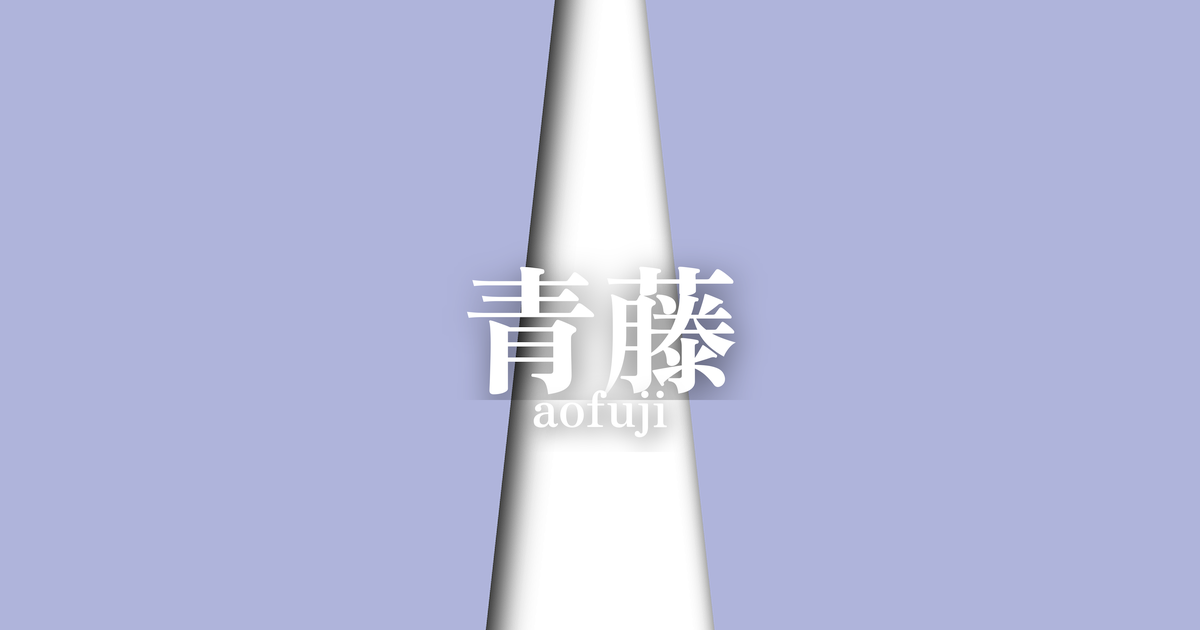
| Japanese color name | Blue wisteria |
|---|---|
| reading | aofuji |
| season | 夏 |
| Color of the table | Blue mauve (fujiiro) |
| Back color | White (shiro) |
What is Aofuji? Origin and etymology
"Aofuji" is a color combination inspired by wisteria flowers that bloom in early summer. Its name comes from the bluish-purple color of the wisteria flower. The "Aofuji" on the outside represents the full bloom of wisteria blossoms, while the "white" on the inside is said to represent the whiteness of the base of the flower spikes, the sunlight filtering through the wisteria trellis, or the way the flowers sway in the wind. This cool and elegant color scheme was favored by Heian aristocrats as it brought a sense of visual coolness and elegance as the hot and humid season approached.
Wisteria has been cherished in Japan since ancient times, and its elegant appearance has served as the subject of much art and literature. The combination of "blue wisteria" as a layered color scheme is more than just a simple color combination; it can be said to be an expression of the refined aesthetic sense of the Heian period, attempting to capture the nobility, modesty, and refreshing atmosphere of early summer that wisteria flowers possess in a single garment.
Historical background of Aofuji
The layered color scheme is a unique aesthetic of color that developed among the aristocracy during the Heian period as Japanese culture matured. "Aofuji" (blue wisteria) is one of the colors used for summer attire, and was especially worn around the fourth month of the lunar calendar when wisteria flowers were in full bloom. This period corresponds to May to early June in the modern calendar, and it aligns with the custom of the time, where it was considered stylish to be slightly ahead of the season.
Court ladies enjoyed this color scheme in their "itsutsuginu" attire, which consisted of multiple layers of uchiki (outer robes). Being sensitive to the changing seasons and incorporating the beauty of nature into one's attire was an important aspect of Heian-era culture. The "blue wisteria" attire is said to have been particularly favored at occasions where people enjoyed the seasonal atmosphere, such as banquets for admiring wisteria blossoms.
Related literature, waka poetry, and seasonal words
Wisteria flowers frequently appear in Heian period literature, including "The Tale of Genji" and "The Pillow Book," as a symbol of nobility, elegance, and sometimes even fleeting love. In "The Tale of Genji," the name of "Fujitsubo no Miya," the woman whom Hikaru Genji pursued as his ideal, also uses the word "wisteria," indicating that the plant plays an important role throughout the story. Furthermore, in the chapter "Fuji no Uraha," a wisteria flower banquet is depicted as a crucial scene.
For people of that time, the image of a woman clad in a "blue wisteria" kimono walking beneath a wisteria trellis, as depicted in literary works, must have been an ideal scene of beauty. This color scheme is deeply connected to the elegant worldview portrayed in literary works and enriched the culture of expressing seasonal beauty through clothing. As a seasonal word, "wisteria" and "wisteria waves" represent late spring to early summer, which aligns with the seasonal feeling of this color.
The wisteria by the pond in my garden has bloomed; when will the mountain cuckoo sing?
The season and scenery of blue wisteria
"Aofuji" is a color combination used in traditional Japanese clothing to express the feeling of summer, especially early summer. The best time to wear it is in the fourth month of the lunar calendar, when wisteria flowers are in full bloom, which corresponds to May to June in the modern calendar. The bluish-purple of the outer color evokes the wisteria blossoms swaying in the cool breeze, while the white of the inner color is reminiscent of the sky and refreshing sunlight visible through the blossoms.
This color scheme evokes both the refreshing feeling of the beginning of summer and the damp, humid atmosphere of the period before the rainy season. Heian-era aristocrats enjoyed a sense of unity with nature and celebrated the changing seasons by wearing such attire. It was worn at wisteria viewing parties and annual court ceremonies, giving viewers a cool and elegant impression.
A color scheme proposal for blue wisteria
Willow color (#A7C496)
The scene of wisteria entwined around willow branches is a design that has been favored since ancient times, known as "Wisteria and Willow." The vibrant green of the young willow and the purple of the wisteria create a classic and harmonious color scheme that expresses the vibrant beauty of nature in early summer.
Golden (#E6B422)
The combination of the subdued blue-violet hue and the vibrant golden hue creates a noble and elegant impression. This color scheme, also seen in the clothing and furnishings of the Heian period, is suitable for formal designs and as an accent for special occasions.
Black (#595857)
The cool, bluish-purple color is contrasted with a deep ink black, creating a modern and sophisticated impression. This color scheme evokes images of wisteria trellises at night or wisteria wet with rain, effectively creating a quiet, calm, and intellectual atmosphere.
Practical Scenes
In traditional Japanese clothing, incorporating the "blue wisteria" color scheme into summer kimonos, obi sashes, and accessories such as obiage and obijime can create a cool and refreshing look that evokes a sense of the season. It is particularly suitable for unlined kimonos (hitoe) and gives an elegant impression.
In modern fashion, using this color scheme in blouses, skirts, and scarves can create an elegant and sophisticated atmosphere. It's especially effective when added to light-toned outfits, adding a refined accent.
In interior design, using this color in curtains, cushion covers, and wallpaper brings a Japanese aesthetic and a sense of freshness to the space. When paired with rooms based on white or light gray, the beauty of the color stands out, creating a calm and relaxing atmosphere.