
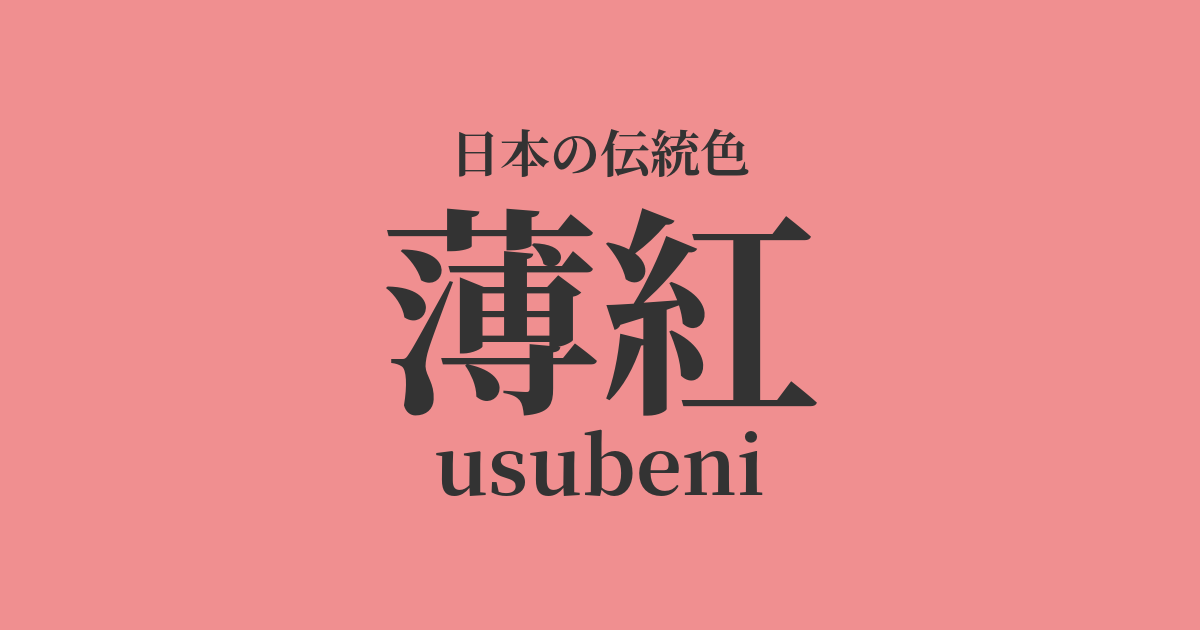
| Japanese color name | light red |
|---|---|
| reading | usubeni |
| HEX | #F08F90 |
| RGB | 240, 143, 144 |
What is "pale pink"? Origin and etymology
Usukurenai, as the name suggests, means "pale crimson," a light and gentle shade of red. The dye for this color is extracted from the petals of the safflower, a plant belonging to the daisy family. The red pigment obtained from safflower is very precious, and the shade of the color varies greatly depending on the number of times it is dyed and the type of mordant used. Usukurenai refers to a particularly pale shade of this safflower dye, and in the past it was also called "usukurenai."
Its delicate hues are reminiscent of cherry blossoms in spring, and it has been one of the colors that Japanese people have loved since ancient times.
The historical background of pale pink
The technique of dyeing with safflower is believed to have been introduced from the continent during the Asuka period. Through the Nara period and into the Heian period, light pink became immensely popular among aristocratic women. This color, dyed with expensive safflower, was also a symbol of high social status. Descriptions of safflower can be found in official documents such as the "Engishiki," indicating its importance as a dye.
In particular, in the "kasane no irome" (layered color combinations) of clothing, light pink was frequently used as a color scheme to express spring, such as "sakura kasane" (cherry blossom layered color) and "koubai kasane" (red plum layered color), playing an important role in enriching court culture.
Related literature, waka poetry, and seasonal words
The color pale pink appears frequently in Heian period literature, adding vibrancy to stories. In works like "The Tale of Genji" and "The Pillow Book," it is depicted as the color of the characters' clothing and furnishings, used to express their social status, feelings, and the season. For example, it is often depicted as the color of young women's clothing, symbolizing youthfulness and loveliness.
Furthermore, the word "usukurenai" (pale crimson) was used in waka poetry to refer to the color of cherry blossoms, plum blossoms, and peach blossoms, and was used to describe the beautiful scenery that heralds the arrival of spring.
Looking around, willows and cherry blossoms intertwine, making the capital a tapestry of spring.
Color scheme preview
This is to check the readability of the text when this color is used as the background.
A light pink color scheme proposal
Light green (#A5C949)
This color scheme evokes the petals of cherry blossoms in spring and the newly sprouted leaves. It conveys vitality and youthfulness, giving a natural and refreshing impression. It is considered a suitable combination for expressing a sense of the season in Japanese clothing and Japanese-style designs.
White Rat (#BDC0BA)
Combining a pale pink with a light gray (shironezumi) creates an elegant and sophisticated impression. The colors are subdued, creating a refined yet understated atmosphere, making this color scheme easy to incorporate into modern interiors and fashion.
Dark purple (#4A2440)
The delicate beauty of pale pink and the dignified richness of deep purple, a color traditionally considered noble, create a striking contrast that enhances each other's beauty. This elegant and dignified color scheme is reminiscent of the attire of Heian-period aristocrats and is effective for special occasions or designs where a sense of luxury is desired.
Practical Scenes
In the world of traditional Japanese clothing, pale pink is a color frequently used in women's kimonos, such as furisode, houmongi, and komon. It is popular as a background color and pattern to express the feeling of spring, and is often depicted together with flowers such as cherry blossoms and plum blossoms. Its gentle and elegant hue is considered suitable for celebratory occasions and tea ceremonies.
In interior design, using light pink as an accent color for wallpaper, curtains, cushions, etc., brings warmth and a gentle atmosphere to a space. It pairs well with neutral colors such as white, beige, and light gray, as well as natural wood-grain furniture, creating a comfortable space.
In web and graphic design, this color is often used for products and services aimed at women, as well as for spring campaign websites. Using it for backgrounds, buttons, and headings creates a friendly and soft impression. However, because it's a light color, it's important to choose a darker color for the text to ensure readability.