
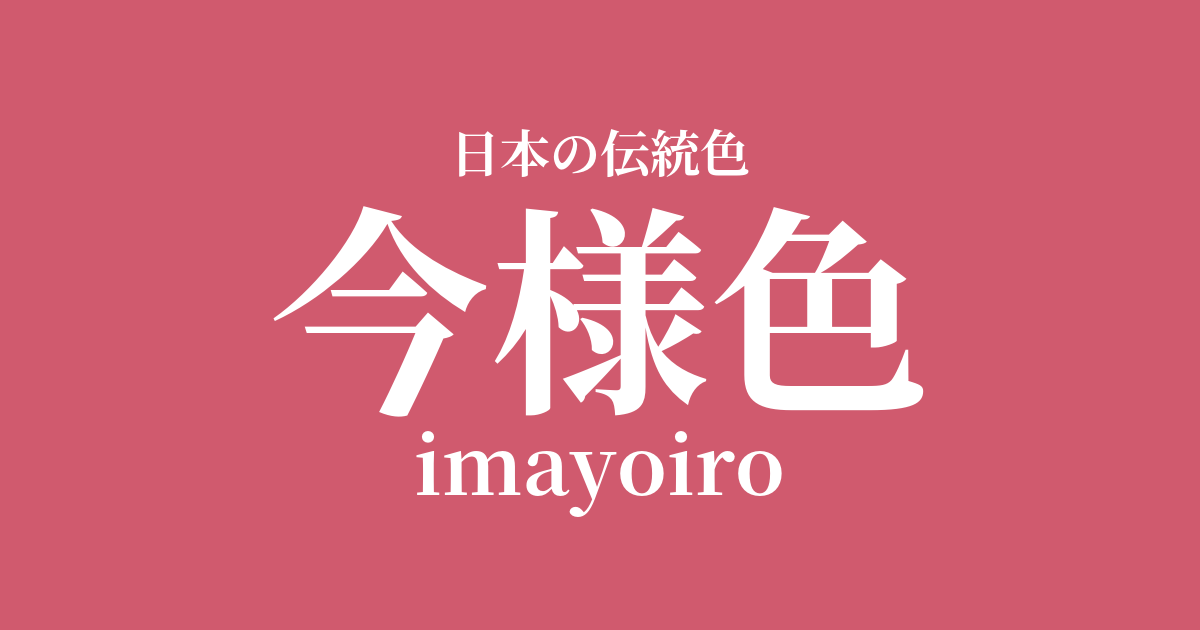
| Japanese color name | Modern Colors |
|---|---|
| reading | imayoiro |
| HEX | #D05A6E |
| RGB | 208, 90, 110 |
What is Imayo-iro? Origin and etymology
Imayo-iro refers to a vibrant reddish-purple color. "Imayo" means "modern" or "contemporary," and it is believed that this color was given because it was a new fashionable color that emerged in the mid-Heian period. The main dye used was safflower, and this deep yet vibrant hue was created by repeatedly dyeing the fabric in intense layers. As a color that symbolized the cutting edge of fashion at the time, it was extremely popular, especially among women in the imperial court, and its beauty has been recorded in literary works.
A historical background of contemporary colors
The popularity of the Imayo color is said to have reached its peak in the mid-Heian period, particularly during the reign of Emperor Ichijo (986-1011). Its frequent appearance in contemporary literary works such as "Eiga Monogatari" and "Makura no Soshi" suggests how much this color was loved in the aristocratic society of the time. Because it required the generous use of expensive safflower, only a select few wealthy people, such as upper-class nobles, could afford to wear this color.
Imayo colors are still used today as one of the colors that symbolize the splendor of Heian culture.
Related literature, waka poetry, and seasonal words
Imayo-iro (contemporary color) appears in numerous works as an important element that adorns Heian literature. In Sei Shonagon's "The Pillow Book," there is a description of "Imayo-iro thin paper," indicating that beautiful paper dyed in this color was used for letters and other purposes. In "The Tale of Genji," it is also described as the color of the characters' clothing, playing a role in expressing the atmosphere of the scene and the characters' feelings.
These descriptions reveal that Imayo colors were not merely fashionable colors, but were deeply rooted in the aesthetic sensibilities and lifestyles of the people at that time.
Color scheme preview
This is to check the readability of the text when this color is used as the background.
Color scheme proposals for modern colors
Pine green (#3A5340)
This color scheme features vibrant modern colors complemented by a deep pine-green hue. It's a classic and dignified combination, reminiscent of the "layered color combinations" found in Heian period attire, where each color stands out, creating an elegant and refined impression.
Blue gold (#FABE29)
Turmeric yellow is a vibrant yellow dyed with turmeric. Like Imayo colors, it is a plant-derived color, and when combined with other colors, it creates a cheerful and lively impression. It is a suitable color scheme for a festive atmosphere or a modern Japanese design.
White training (#FDFBF6)
The pure and elegant white of this white color brings out the vibrancy of modern colors to the fullest. The beautiful contrast and the combination of cleanliness and nobility make it easy to apply to kimonos, Japanese accessories, and contemporary graphic designs.
Practical Scenes
In the world of traditional Japanese clothing, modern colors are used in furisode (long-sleeved kimono), houmongi (formal visiting kimono), and accessories such as obiage (sash ties) and obijime (sash cords), adding splendor and classic elegance to the attire. Their beauty is particularly striking in celebratory occasions such as festivals and tea ceremonies. They are also popular as colors for young women's formal wear.
In interior design, incorporating this color into cushion covers, tapestries, and accent walls brings a sophisticated Japanese modern atmosphere to the space. When used as an accent color in rooms based on white, beige, or dark wood tones, the vibrancy of this contemporary color stands out.
In web and graphic design, using it as an accent color can attract attention and create a sense of luxury or traditional beauty. It is particularly suitable for branding products and services aimed at women, and for websites dealing with cultural content.