
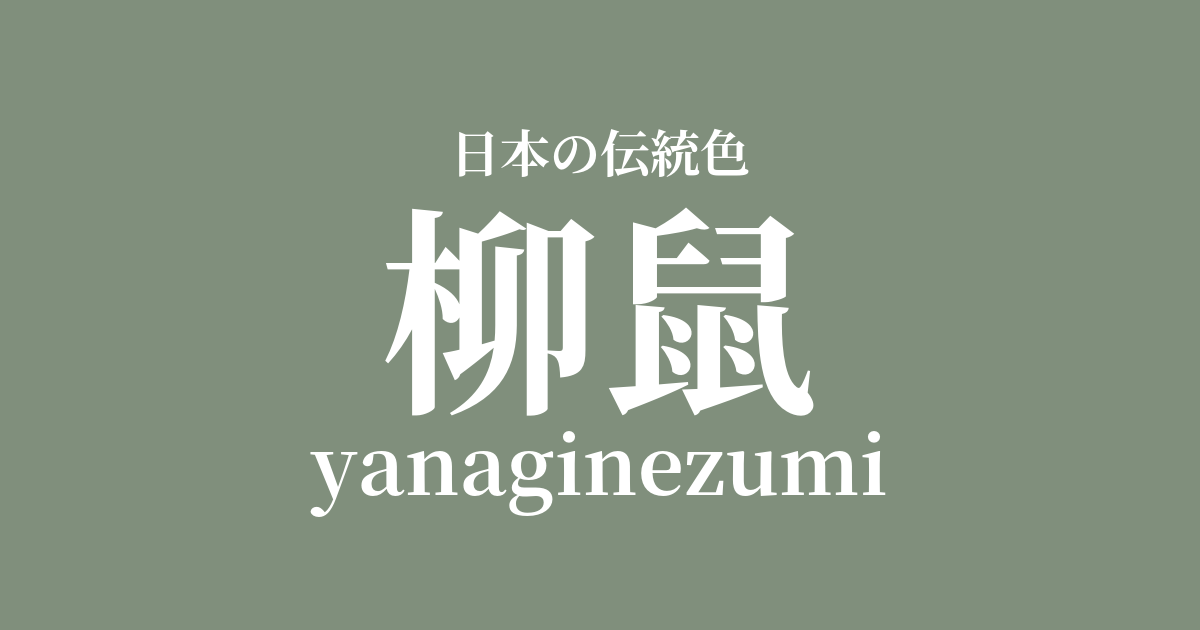
| Japanese color name | willow rat |
|---|---|
| reading | yanaginezumi |
| HEX | #808F7C |
| RGB | 128, 143, 124 |
What is a willow mouse? Origin and etymology
Yanagi-nezumi, as the name suggests, is a color name that combines "willow" and "mouse." It refers to a gray color with a whitish, dull green tint, like the gray seen on the underside of a willow leaf. From the mid-Edo period onward, due to the influence of sumptuary laws, subdued colors such as brown and gray became popular, and a wide variety of colors was created, so much so that it was called "forty-eight shades of brown and one hundred shades of gray." Yanagi-nezumi is one of them, and it can be said to be a color that symbolizes the delicate sense of color of people at that time, as it incorporated the hues of natural plants into the gray color.
Historical background of the willow rat
The willow gray color was popular during the mid-Edo period, particularly during the Bunka and Bunsei eras (1804-1830). During this time, repeated sumptuary laws restricted commoners from wearing brightly colored clothing. As a reaction to this, people began to appreciate subtle differences in shades of muted colors such as brown and gray, and a culture of enjoying this as "chic" flourished.
Intermediate colors like willow gray emerged as fashionable colors against this backdrop and are said to have been favored by Kabuki actors and cultural figures.
This color was particularly used to dye fabrics such as cotton and crepe, and was widely used for everyday wear, patterned kimonos, and haori jackets worn by common people. While understated, its subtle hint of green reflected a refined, urban aesthetic. Even today, its calm and understated charm is incorporated not only into traditional Japanese clothing but also into interior design and fashion.
Related literature, waka poetry, and seasonal words
While the color name "yanagi-nezumi" (willow gray) doesn't appear directly in many classical literary works, both "willow" and "gray gray" have been depicted in literature since ancient times. Willows were celebrated in waka poetry as plants that herald the arrival of spring, and their graceful, drooping branches were considered a symbol of elegance. On the other hand, gray gray frequently appeared in Edo-period humorous books and ukiyo-e prints, becoming established as a color that expressed the sophisticated aesthetic sense of Edoites. Yanagi-nezumi can be said to be a color that combines these two cultural backgrounds.
Color scheme preview
This is to check the readability of the text when this color is used as the background.
Willow Gray Color Scheme Proposal
White training (#F3F3F3)
The gentle green of willow gray is enhanced by the pure white of the base color. This color scheme creates a sense of cleanliness and elegance, giving a quiet and refined impression. It is suitable for pairing with kimono obi sashes and obiage (sash ties), as well as for modern interior design.
Coral color (#F88F79)
By combining a muted green-toned willow gray with a bright, soft reddish coral color, the two colors complement each other. This adds warmth and vibrancy, creating a sophisticated yet feminine and gentle look. It's particularly effective when used in accessories or as an accent color.
Dark brown (#654321)
Willow gray and deep dark brown are both earth tones derived from nature, making them a good match. They give a dignified and stable impression, creating a refined atmosphere. They are suitable for men's traditional Japanese clothing and for coordinating calm spaces such as studies.
Practical Scenes
Willow gray is a popular color in the world of traditional Japanese clothing due to its subdued hue. It is particularly suitable for everyday wear such as komon, tsumugi, and haori jackets, giving a stylish and refined impression. It can also be used in accessories such as obi, obi-jime, and han-eri to add depth to an outfit. As it is a color favored by both men and women, it can be seen in kimonos of a wide range of ages.
Willow gray remains a popular color in modern fashion and interior design. As an earth tone, it helps create a natural and relaxed atmosphere. It doesn't feel overwhelming when used in large areas such as wallpaper, curtains, and sofas, and it harmonizes well with other colors. In clothing, incorporating it into shirts, pants, and coats creates an elegant and sophisticated style.