
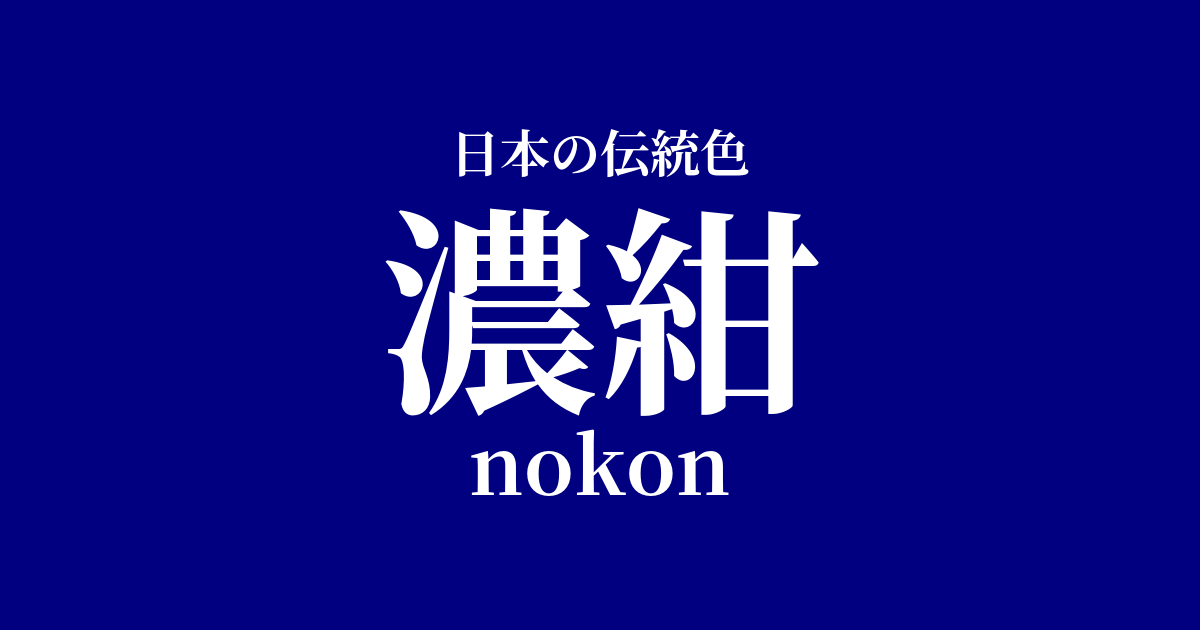
| Japanese color name | dark blue |
|---|---|
| reading | nokon |
| HEX | #000080 |
| RGB | 0, 0, 128 |
What is dark blue? Origin and etymology
Nokon, as the name suggests, means "deep navy blue," a dark blue color with a purplish tint. In the traditional Japanese dyeing technique of indigo dyeing, it refers to the deepest possible shade. Indigo dyeing uses a dye made from fermented leaves of the Polygonum cuspidatum plant, and the color is deepened by repeatedly dipping the fabric in the dye solution and exposing it to air for oxidation. Nokon is a deep shade achieved by repeating this process to its limit, and it was considered a very valuable color due to the time and effort required to produce it.
Its profound color symbolizes calmness, trustworthiness, and dignity.
The historical background of dark blue
The history of indigo dyeing is ancient, with evidence of its techniques found in the treasures of the Shōsōin Repository from the Nara period. During the Heian period, it was used in the clothing of the nobility and was revered as a noble color. In the Kamakura period, the samurai class called a deep indigo color "kachi-iro" (kachi-iro), and favored using it for armor and weapons as an auspicious color associated with "victory." This color is considered one of the origins of the later image of deep blue.
During the Edo period, indigo dyeing became deeply ingrained in the lives of ordinary people along with the spread of cotton. Dark blue, in particular, was also known as "Onando-iro" and was loved by townspeople as a symbol of sophistication. While sumptuary laws restricted extravagant colors, people expressed their individuality through shades of indigo, and dark blue, the deepest shade, was widely used as a color that indicated composure and dignity.
Related literature, waka poetry, and seasonal words
Dark blue, with its deep hue evoking images of the night sky or the deep sea, has long been used in literary works to depict scenes. In classical literature such as "The Tale of Genji," the color of characters' clothing is depicted as "kokihanada" (dark blue), which had the effect of hinting at the character's social status and feelings. Dark blue adds depth to stories by expressing silence, solemnity, or profound sadness.
Dark blue plays an important role in modern literature and haiku. In particular, when depicting summer scenes, dark blue yukata (summer kimono) and noren (curtains) appear as items that symbolize coolness and a common, down-to-earth atmosphere. For example, just as the summer night sky is described as a "deep blue sky," dark blue is a color deeply connected to the Japanese view of nature and the sense of the seasons, and it continues to be featured in many works of poetry.
The loofah flower, adorned with dark blue ikat fabric, has bloomed.
Color scheme preview
This is to check the readability of the text when this color is used as the background.
Dark blue color scheme proposal
White training (#FFFFFF)
This combination best showcases the deep, rich navy blue hue, resulting in a clean, dignified, and refined look. It exudes cleanliness and elegance, giving a formal impression, and is traditionally used in formal wear and designs where trustworthiness is required.
Golden (#E6B422)
The deep blue's gravitas, combined with the brilliance of gold, creates a luxurious and dignified impression. This color scheme has long been cherished as an expression of traditional Japanese aesthetics, appearing in the decoration of armor, folding screen paintings, and the packaging of luxury goods.
Vermilion (#EB6101)
This color scheme features a deep blue tranquility contrasted with a vibrant vermilion, creating a powerful accent. The colors complement each other, leaving a strong impression. It is effectively used in situations that attract people's attention, such as in the architecture of shrines or the decorations of festivals.
Practical Scenes
In the world of kimono and yukata, dark blue is a classic color loved by people of all genders and ages. Especially in men's kimono, its calm and dignified appearance makes it suitable for formal occasions. Pairing it with a white or silver obi creates a refined and formal look.
In interior design, dark blue is used to bring a sense of calm and depth to a space. When used over large areas such as wallpaper or sofas, it can create a dignified and luxurious atmosphere. Combining it with white or wood-grain furniture creates a modern and sophisticated space.
In web design and business, dark blue is frequently used as a color symbolizing reliability and integrity. Using it as a corporate color or the base color of a website can create a sense of security for users. Adding white or gold as accents results in a highly visible and sophisticated design.