
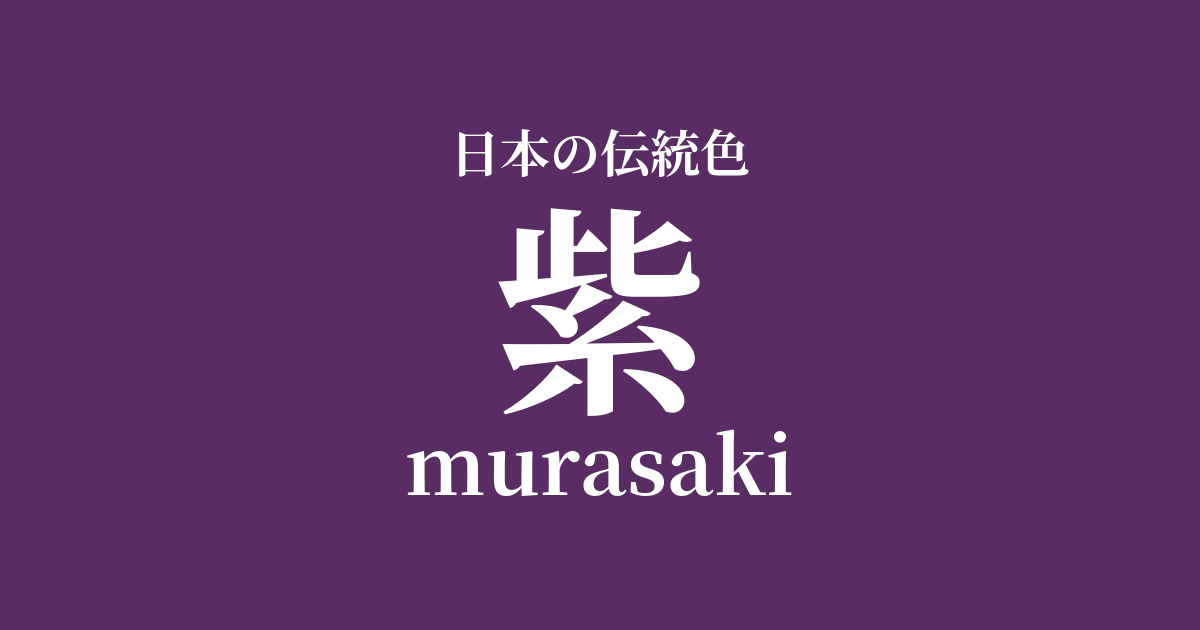
| Japanese color name | 紫 |
|---|---|
| reading | murasaki |
| HEX | #592C63 |
| RGB | 89, 44, 99 |
What is purple? Origin and etymology
The most widely accepted theory for the origin of the name "purple" is that it comes from the way the purple gromwell plant, a member of the Boraginaceae family used as a dye, blooms in clusters, hence the term "mura-zaki" (cluster blooming). The roots of this gromwell plant are called "shikon" and have been used as a purple dye since ancient times. The dyeing method using shikon is very complex and time-consuming, and requires many roots, so purple was considered extremely precious. This rarity was a major factor in making purple a special color.
The pigment extracted from the gromwell root is called "shikonin," and when combined with an alkaline mordant (such as lye), it produces a beautiful purple color. However, this pigment is sensitive to light and acid, and obtaining a stable color required advanced techniques. As a result, only a limited number of artisans were able to dye fabrics a beautiful purple, and cloth dyed purple was treated as extremely expensive. Against this backdrop, purple came to be seen as a symbol of authority and wealth.
The historical background of purple
The history of purple in Japan is long, dating back to 603 when Prince Shōtoku established the "Twelve Levels of Court Rank," designating it as the color representing the highest rank, "Daitoku" (Great Virtue). As a result, purple became a "forbidden color," permitted only to the emperor, the imperial family, and a select few high-ranking nobles, solidifying its status as a noble color. This system, which clearly indicated social status through color, symbolized the social order of the time.
During the Heian period, purple became more refined and beloved within aristocratic culture. As seen in the names of Murasaki Shikibu, the author of "The Tale of Genji," and "Lady Murasaki," a character in the story, purple was a symbol of elegant culture. Sei Shonagon also praised its beauty in "The Pillow Book," writing, "Everything, absolutely everything, that is purple is wonderful."
During the Edo period, due to sumptuary laws imposed by the shogunate and the difficulty of cultivating gromwell root, genuine purple became unaffordable for ordinary people. Instead, "fake purple" dyed using cheaper sappanwood or indigo became popular. The "Edo purple" used by Kabuki actor Ichikawa Danjuro is considered one of these, and it gained popularity among commoners as a stylish color. However, "genuine purple" dyed with real gromwell root continued to hold special value.
Related literature, waka poetry, and seasonal words
Purple frequently appears in Japanese literature as a color symbolizing nobility, mystery, or deep affection. A prime example is "The Tale of Genji." The existence of "Lady Murasaki," whom the protagonist Hikaru Genji loved throughout his life as his ideal woman, is a recurring theme throughout the story, and can be said to be a literary sublimation of the profound allure of the color purple.
In the world of Japanese poetry, purple is an important theme, and purple gromwell and wisteria flowers are often featured in poems. The poem by Nukata no Ōkimi included in the Manyōshū, "Going to the crimson-dyed purple fields, going to the marked fields, does the field guard not see you waving your sleeves?" is extremely famous as a passionate love poem set in Murasakino, an imperial estate where purple gromwell was cultivated. This poem suggests that the color purple was deeply associated with romantic feelings.
Examples of seasonal words associated with purple include "murasakisou" (purple gromwell), which is used to make purple dye, and "fuji" (wisteria), an elegant spring flower. Scenes of these plants in full bloom have been celebrated in many haiku and waka poems, and are indispensable elements in expressing the changing seasons and the beauty of nature. Purple has also played a role in connecting Japan's rich four seasons with literary sensibilities.
On the way to Murasakino, the way to Shimeno, the field guardian does not see you waving your sleeve.
Color scheme preview
This is to check the readability of the text when this color is used as the background.
Purple color scheme proposal
Golden (#E6B422)
The combination of noble purple and vibrant gold has long been considered a symbol of authority and wealth. This traditional color scheme, often seen in Buddhist art and folding screen paintings, creates a majestic and dignified impression. The two colors complement each other, creating a magnificent and opulent world.
White (#FFFFFF)
The combination of pure white and noble purple evokes a strong sense of sacredness and purity. It is used in Shinto rituals and ceremonies, expressing a high level of spirituality. The clear contrast highlights the depth and elegance of purple, creating a sophisticated impression.
Light green (#A9D159)
Purple and light green are a classic combination, also seen in the layered color schemes of the Heian period. The calm elegance of purple harmonizes with the vitality of light green, reminiscent of young leaves, creating a refined and intellectual impression. It is a natural and graceful color scheme that evokes the arrival of spring.
Practical Scenes
In traditional Japanese clothing, purple is considered a very prestigious color. It is used in formal kimonos such as visiting kimonos, formal kimonos, and solid-colored kimonos, and when worn by older women in particular, it creates an impression of composure and dignity. Furthermore, incorporating purple into accessories such as obi sashes, obi ties, and collars can tighten the overall look and give a refined impression.
In interior design, purple is effectively used as an accent color. Using it on a wall, curtains, or cushions brings depth and a sense of luxury to a space. Light purple, similar to lavender, is said to have a relaxing effect and is suitable for bedrooms, while darker purple is believed to enhance concentration in studies and other rooms.
In web and graphic design, purple is used to express creativity, mystery, and luxury. It is particularly favored by luxury brands, art-related sites, and those with spiritual themes. Combining it with achromatic colors like white, black, and gray can create a modern and stylish design.