
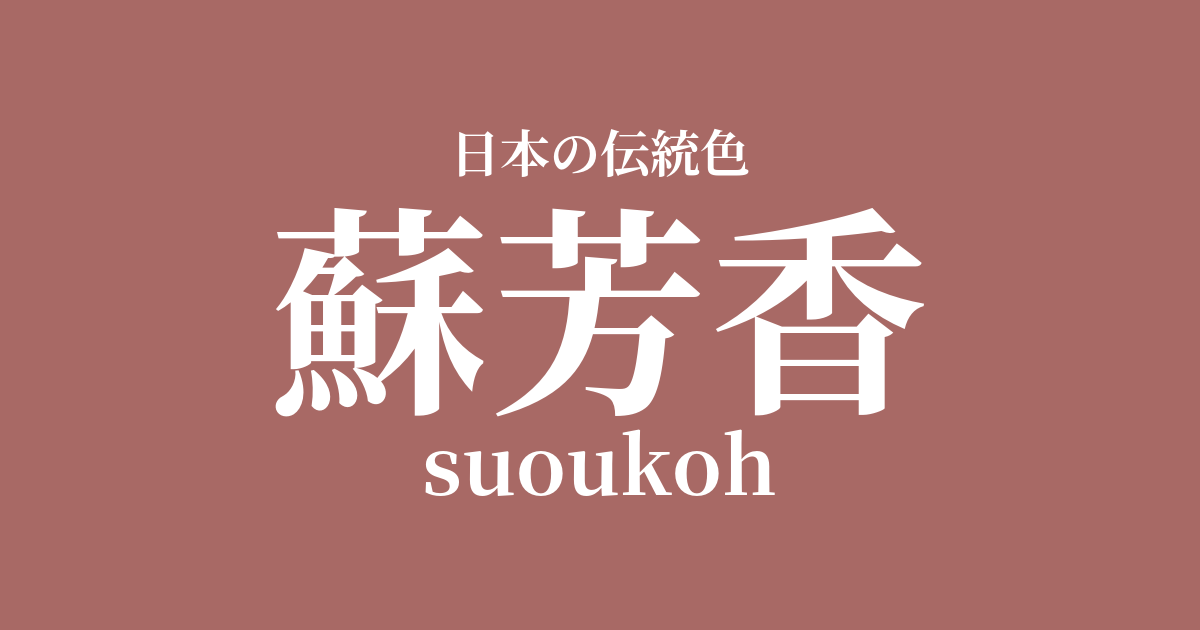
| Japanese color name | Suoka |
|---|---|
| reading | suoukoh |
| HEX | #A86965 |
| RGB | 168, 105, 101 |
What is Suōkō? Origin and etymology
Suōkō is a color whose name is a combination of "suō," a dye, and "kō," a fragrance. Suō is a leguminous plant native to India and the Malay Peninsula, and a red dye is extracted from its heartwood. It was a valuable dye that had been imported since ancient times and was treated as a noble color. On the other hand, "kō" refers to fragrances such as cloves and sandalwood.
It is believed that this name originated from the fact that these fragrances were mixed in when dyeing with sappanwood, or that incense was burned onto the dyed cloth.
The resulting color is a slightly muted reddish-brown, created by the addition of brown pigments derived from spices such as cloves to the reddish hue of sappanwood. Distinguishing itself from simple sappanwood dyeing, this color name reflects the elegant aesthetic sensibilities of the Heian aristocracy, who appreciated not only the color but also the fragrance. This color, appealing to both sight and smell, symbolized the sophistication of the culture of that era.
Historical background of sappanwood
Although dyeing with sappanwood had been practiced since the Nara period, the color name "sappanwood" and the dyeing method were established during the Heian period. The Engishiki, a collection of laws compiled in the mid-Heian period, specifically describes the dyeing method for "sappanwood," which involves adding cloves and betel nut to sappanwood, as a regulation of the Nuidono-tsukasa, the Imperial Household Agency responsible for dyeing and weaving in the palace. This indicates that sappanwood was an officially designated color.
In the aristocratic society of the Heian period, the culture of "incense infusion," where clothing was infused with fragrance, was highly valued. Suo-ko (a type of sappanwood) embodied this refined custom, as it combined color and fragrance. Therefore, it was particularly favored among high-ranking nobles and became established as a dignified color used in their attire and furnishings.
Related literature, waka poetry, and seasonal words
The sappanwood color also appears in "The Tale of Genji," a masterpiece of Heian literature. For example, in the chapter "The Autumn Leaves," the color of the clothing worn by Hikaru Genji is described as "sappanwood," and it is effectively used as a color that enhances the elegance and beauty of the protagonist. This description suggests that sappanwood was an object of admiration for people at that time.
Furthermore, in Sei Shōnagon's "The Pillow Book," "sappanwood fabric" is listed as an example of "elegant things" (things of high quality or nobility). Although it doesn't directly mention "sappanwood incense," considering the aesthetic sense of the Heian aristocracy, which placed great importance on fragrance, it is highly probable that this description also refers to sappanwood incense. Through these literary works, it can be seen that sappanwood incense was an important color symbolizing Heian culture.
Color scheme preview
This is to check the readability of the text when this color is used as the background.
Color scheme proposal for Suou-ko
Clove color (#B4866B)
This color combination, named after cloves (which were also used as a dye for sappanwood), is a muted, warm color scheme that shares a historical background, resulting in an elegant and calm color combination that evokes a sense of narrative. It has a sense of unity and gives a gentle and intellectual impression.
White training (#FFFFFF)
When paired with pure white, the depth and redness of the sappanwood color stand out, creating a dignified impression. This classic and elegant color scheme is reminiscent of the "layered colors" seen in Heian period attire. The contrast is beautiful, and each color enhances the others.
Light green (#A9D159)
The reddish-brown sappanwood and the vibrant, fresh green of young leaves are almost complementary colors, enhancing the vibrancy of each other. This color scheme evokes both vitality and tranquility, creating a classic yet fresh and elegant impression. It's a combination reminiscent of the colors of nature.
Practical Scenes
In traditional Japanese clothing, when used in formal kimonos, solid-colored kimonos, and obi sashes, sappanwood (suzōkō) creates an elegant impression that is both subdued and splendid. It is particularly well-suited to the autumn season and pairs exceptionally well with classic patterns. Its deep hue enhances the wearer's dignity and creates a refined look.
In interior design, incorporating sappanwood as an accent color brings warmth and a sense of depth to a space. Using it in cushions, rugs, or parts of wallpaper can create a calm, modern Japanese atmosphere. It harmonizes particularly well with wooden furniture and off-white fabrics.
In the fields of web design and graphic design, sappanwood is suitable for expressing a sense of luxury, tradition, and reliability. It can be used as a key color to effectively convey the worldview of websites dealing with traditional crafts, websites of long-established brands, and content with historical themes.