
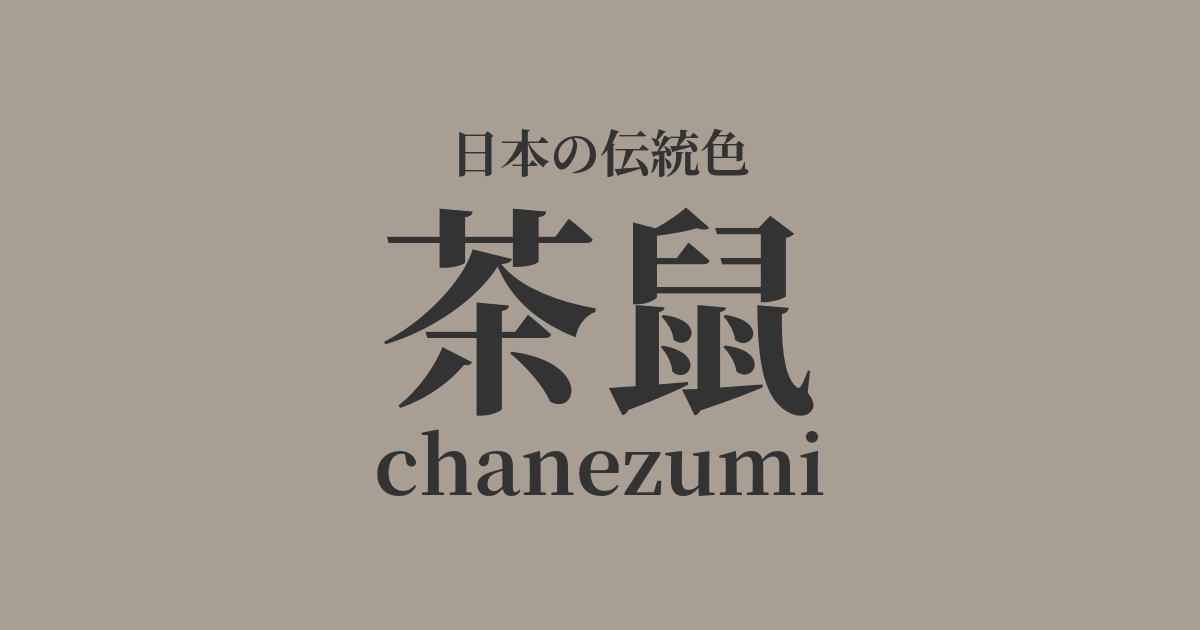
| Japanese color name | brown rat |
|---|---|
| reading | chanezumi |
| HEX | #A99E93 |
| RGB | 169, 158, 147 |
What is a "Cha-nezumi" (tea mouse)? Origin and etymology.
Cha-nezumi, as the name suggests, is a brownish-gray color, and was one of the popular colors known as "Shijūhachichahyakunezumi" (48 browns and 100 grays) that were fashionable in the mid-Edo period. Due to the sumptuary laws issued by the shogunate at the time, commoners were restricted from wearing brightly colored clothing. In defiance of this, people found beauty in the subtle differences in shades of brown and gray, which were not subject to the restrictions, and created a wide variety of colors.
The brown-gray color, created by adding a small amount of brown dye to a gray base, was widely favored by the townspeople of Edo as embodying the spirit of "chic" and refined elegance.
Historical background of the brown-gray color
The brown-gray color was particularly popular during the Hōreki and Meiwa periods (1751-1772) in the mid-Edo period. During this time, repeated sumptuary laws severely restricted the use of silk fabrics, gold and silver threads, and bright dyes such as purple, crimson, and scarlet for commoners. Within these constraints, Edo townspeople's culture moved in the direction of pursuing inner richness and refinement.
As a result, a unique aesthetic sense developed that found an infinite range of colors within seemingly plain browns and grays, and intermediate colors such as brown-gray came to be widely used in kimonos and accessories.
Related literature, waka poetry, and seasonal words
While no famous waka or haiku directly mention the color "cha-nezumi" (a shade of brownish-gray), its presence can be glimpsed in literary works and ukiyo-e prints depicting the customs of the Edo period, when this color was popular. For example, the portraits of beautiful women by Suzuki Harunobu and Kitagawa Utamaro depict women wearing kimonos in subdued, cha-nezumi shades. These works visually convey how people at the time perceived this color as stylish and fashionable.
Brownish-gray was a color that was deeply ingrained in Edo culture, symbolizing the aesthetic sensibilities that valued subtlety and depth rather than ostentation.
Color scheme preview
This is to check the readability of the text when this color is used as the background.
Brownish-gray color scheme proposal
Aphrodisiac tea (#715C49)
This combination with "kobuchi," a brownish color that was popular during the Edo period, is similar to "cha-nezumi" (brownish gray). By using varying shades of the same color, a sense of unity is created, giving a very calm and elegant impression. This color scheme is suitable for emphasizing a Japanese aesthetic and creating a refined atmosphere.
Generated color (#FBF9F4)
By combining it with the natural, undyed off-white color, the gentleness and warmth of the brown-gray hue are highlighted. This creates a natural and gentle atmosphere, giving viewers a sense of reassurance. It's an effective combination for creating minimalist and comfortable spaces and designs.
Indigo iron color (#393E4F)
Adding a dark, greenish-blue color as an accent tightens the overall look, creating an intelligent and modern impression. The subdued tone of the brown-gray and the depth of the indigo color complement each other, resulting in a color scheme that is both calm and dignified.
Practical Scenes
In the world of traditional Japanese clothing, brown-gray is a beloved color regardless of gender or age. It is especially often used in everyday kimonos such as komon and tsumugi, as well as in accessories such as haori jackets, obi sashes, and obiage sashes. It harmonizes well with other colors and can create a refined and stylish look that is understated yet sophisticated.
In interior design, incorporating it into wallpaper, curtains, and sofa upholstery creates a calm and peaceful space. It pairs exceptionally well with natural materials such as wood, Japanese paper, and ceramics, and harmonizes with Japanese modern styles and Scandinavian-style natural interiors.
In web and graphic design, using this color as a background or text color can create an elegant and trustworthy impression. When combined with highly saturated colors, it effectively highlights accent colors and contributes to a sophisticated overall design.