
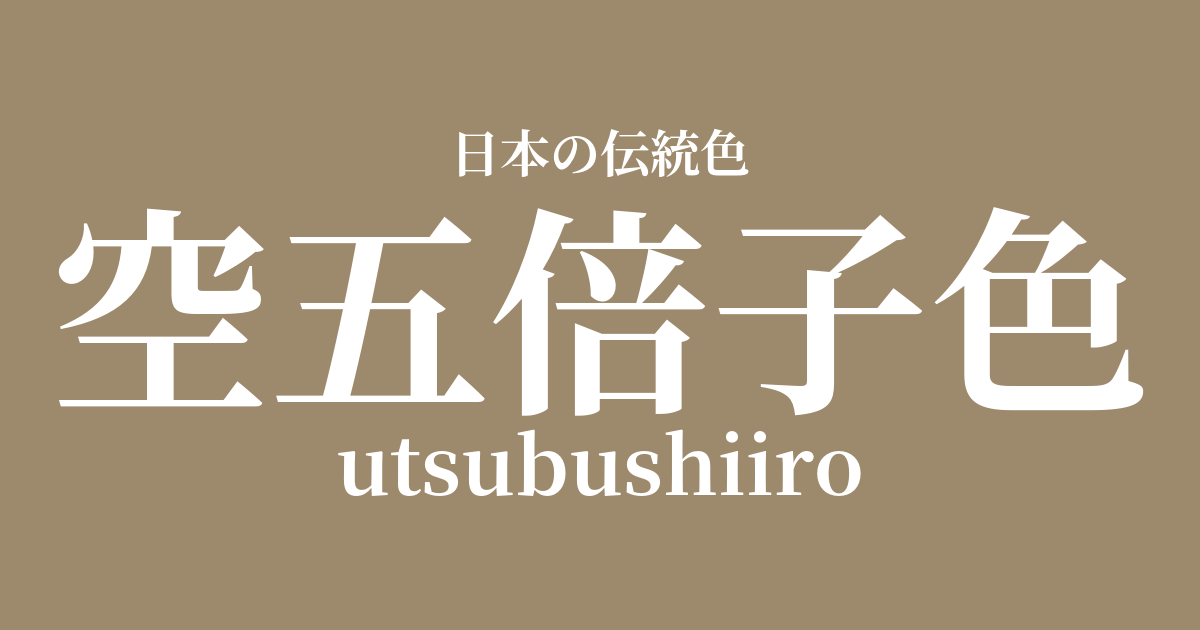
| Japanese color name | sky fivefold color |
|---|---|
| reading | utsubushiiro |
| HEX | #9D896C |
| RGB | 157, 137, 108 |
What is "Sora-gobaishi-iro"? Origin and etymology.
The color "gobaishi-iro" is a dye derived from galls (also read as "fushi"), which are insect galls formed on the leaves and young shoots of the sumac plant (Rhus javanica), a member of the Anacardiaceae family, when a type of aphid infests them. Galls are very rich in tannins and have been used since ancient times as a black or brown dye, as well as a folk medicine and an ingredient in teeth blackening.
The "utsu" in "kugobaishi" refers to a gall that is hollow inside. By powdering these kugobaishi and reacting them with an iron-containing mordant, a unique grayish-brown color is produced.
The historical background of the color gallnut
Dyeing with gallnuts is believed to have been practiced as early as the Heian period, and descriptions of its use as a dye can be found in the Engishiki, a compilation of court ceremonies and regulations. Initially, it was mainly valued as an underdye for dyeing black, or as a raw material for black dye itself. In the Edo period, due to its subdued color and the durability of the dye, it came to be used in a wider range of social classes, including samurai formal attire and everyday clothes for commoners.
Given the historical context of restrictions on extravagant colors, these subdued shades were likely favored.
Related literature, waka poetry, and seasonal words
While the color name "Kuwabushi-iro" (空五五子色) doesn't appear directly in many literary works, its raw material, "gobabushi" (五五子), has been known since ancient times. For example, "The Pillow Book" mentions the use of gobabushi as an incense (fragrance) under the heading "Fushi no Takimono" (火子の火物). This suggests that gobabushi was a familiar part of the lives of Heian-period aristocrats.
Its subdued and calming colors resonate with the later aesthetic of wabi-sabi, and can be said to evoke the withered landscapes and quiet scenes depicted in literary works. As a seasonal word, "gallnut" indicates autumn.
Color scheme preview
This is to check the readability of the text when this color is used as the background.
Suggested color scheme in sky gallnut color
Indigo (#274A78)
This color combination was commonly seen in the clothing of common people during the Edo period. The deep blue of indigo and the calm brown of sky gallnut complement each other, creating a simple, practical, yet tasteful impression. It is a color scheme that evokes a traditional Japanese atmosphere.
Withering color (#836A4A)
This combination of calming, plant-derived colors is another example. The gallnut yellow and withered yellow colors share similar hues and brightness levels, creating a unified and gentle gradation. The color scheme evokes the tranquil and profound impression of autumn nature.
Color produced (#FBFBF4)
By combining it with a soft, natural white, the earthy warmth and subtlety of the gallnut color stand out. It avoids strong contrasts while achieving both brightness and tranquility. This color scheme gives a natural and elegant impression.
Practical Scenes
In the world of traditional Japanese clothing, the color "kurogobai" (sky gallnut yellow) is often used for everyday, unpretentious attire such as tsumugi silk, komon (small patterned silk), and cotton kimonos. Its subdued hue harmonizes well with other colors and is particularly suitable for expressing the feeling of autumn. Incorporating it as the color of a obi (sash) or obi-jime (sash cord) creates a stylish and refined look.
In interior design, using it in wallpaper, curtains, and furniture upholstery brings warmth and tranquility to a space. It pairs well not only with Japanese modern spaces but also with natural and vintage-style interiors. Its appeal is further enhanced when combined with natural materials such as wood and diatomaceous earth.
In web and graphic design, using white as a background or accent color can convey images of trustworthiness, tradition, and nature. It is particularly suitable for websites dealing with historical brands, organic products, and traditional crafts. To ensure readability, it is generally combined with light colors such as white or off-white.