
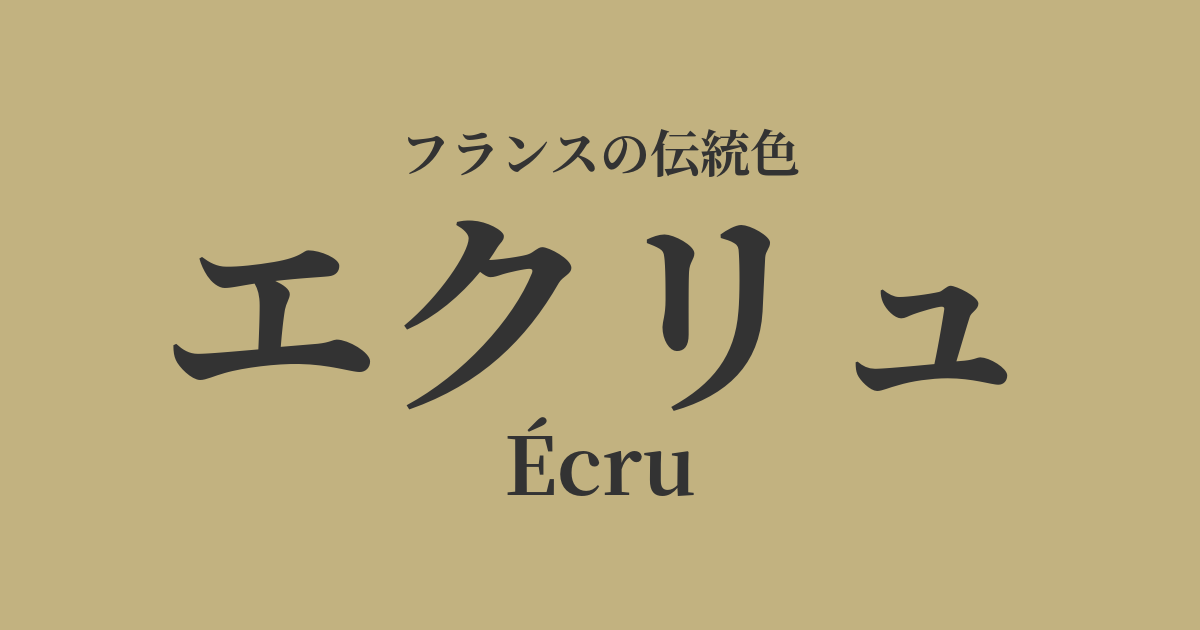
| French | Écru |
|---|---|
| Katakana | Ecru |
| HEX | #C2B280 |
| RGB | 194, 178, 128 |
What is Ecru? Origin and Etymology
Ecru is derived from the French word meaning "raw" or "unbleached." As the name suggests, it refers to the natural color of natural fibers such as linen, cotton, and silk before any processing such as bleaching or dyeing.
Often translated as "kinari-iro" (natural off-white) in Japanese, this color has long been cherished as a symbol of natural, unadorned, and simple beauty. This slightly yellowish, warm off-white gives viewers a sense of reassurance and a calm impression.
Historical background of Ecru
Ecru is not a color strongly associated with any particular royal family or historical event, but it is deeply rooted in the cultural history and life of the French people.
In the 18th century, Marie Antoinette, who escaped the stifling court life of Versailles and enjoyed country life at the Petit Trianon, favored simple muslin dresses called "chemise à la reine," in contrast to the extravagant gowns she wore. The natural color of these dresses was closer to ecru than pure white, and is said to have brought a natural aesthetic to the aristocratic society of the time.
Even after the Industrial Revolution made textile production more efficient in the 19th century, ecru remained a beloved color, especially among the upper class, for lingerie, loungewear, and interior fabrics, symbolizing the warmth of handcrafted work and the superior quality of natural materials. It represented a modest and essential expression of richness, distinct from ostentatious ornamentation.
Ecru in the world of art and fashion
In the world of fashion, it was the 20th-century designer Coco Chanel who redefined the value of ecru. She incorporated jersey fabric, which had previously only been used for men's clothing and underwear, into women's everyday wear, establishing a functional and sophisticated style. At that time, ecru, the natural hue of jersey, became an important part of Chanel's color palette, alongside black, white, and beige, symbolizing her style.
In the art world, ecru is the color of the canvas itself before the painter begins to paint, and can be considered the starting point of creation. Many painters began their work using this color as a base. In particular, for modern painters who used techniques that deliberately revealed the color of the base, the simple texture and hue of ecru were important elements that gave depth and nuance to their works.
Even today, ecru is associated with values such as sustainability and organic practices, and is widely loved in the fields of fashion, art, and design as a color that expresses natural beauty.
Simplicity is the foundation of all true elegance.
Color scheme preview
This is to check the readability of the text when this color is used as the background.
Ecru color scheme proposal
Gris de Lignant (#B7A89B)
This color combination also originates from linen (flax). It is very natural and unified, giving a calm and sophisticated impression. It is ideal for creating a comfortable space that makes the most of the material's texture.
Blue Lapis Lazuli (#26436E)
The warm ecru is paired with a deep, sophisticated blue-lapis lazuli, creating an elegant and classic contrast. This color scheme possesses a timeless appeal, conveying a sense of trust and tranquility.
Rose Pompadour (#ED87A3)
The simple ecru is complemented by the vibrant and lovely Rose Pompadour, creating a feminine and gentle atmosphere. It's a combination that's not overly sweet, expressing the charm of a mature woman.
Practical Scenes
In interior design, ecru, when used on large areas such as walls, curtains, and sofas, envelops the entire space in a bright, calm, and relaxing atmosphere. It pairs exceptionally well with natural materials such as wood, stone, and plants, and harmonizes beautifully with natural, Scandinavian, and Japanese styles.
In fashion, ecru is an easy color to incorporate into timeless classics such as linen shirts, cotton knits, and trench coats. A monochrome outfit using ecru tones creates a very sophisticated impression. Furthermore, because it blends well with any color, it also plays a vital supporting role in highlighting brighter colors.
In web and graphic design, using this color as a background color is easy on the eyes and improves content readability. It's an ideal color for brands that handle organic products or lifestyle media that promote a mindful lifestyle, where you want to convey a natural and honest image.