
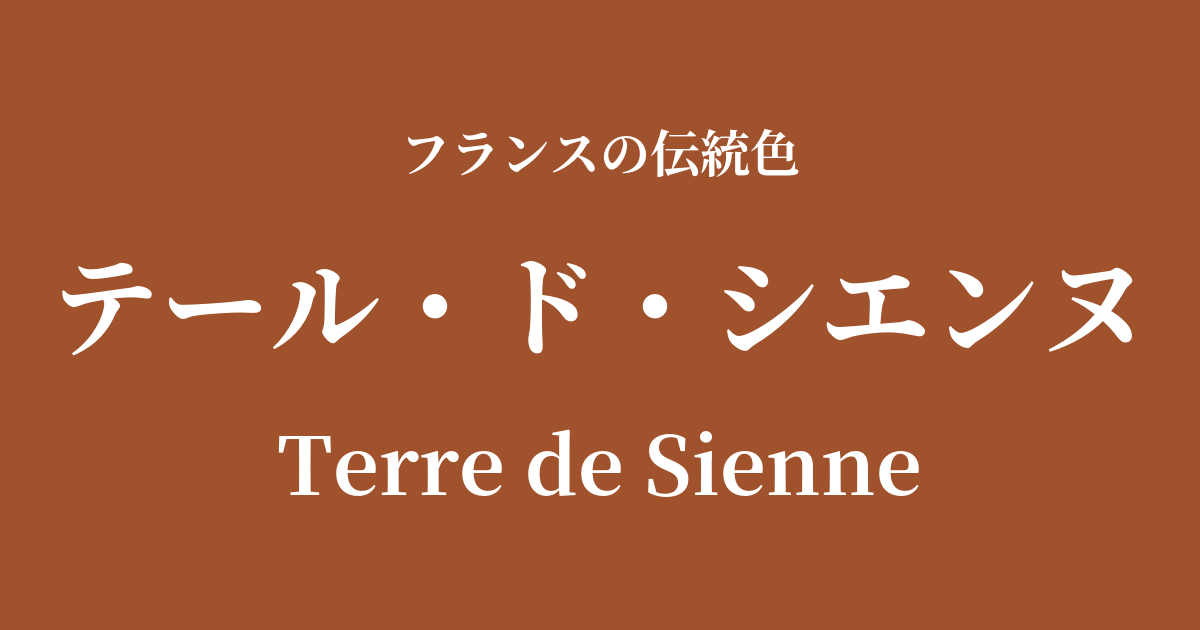
| French | Terre de Siu |
|---|---|
| Katakana | Terre de Sienne |
| HEX | #A0522D |
| RGB | 160, 82, 45 |
What is Terre de Sienne? Origin and Etymology
Terre de Sienne means "soil of Siena" in French. As the name suggests, this beautiful brown color comes from soil quarried near Siena, a city in the Tuscany region of Italy.
This clay is rich in iron hydroxide and, in its natural state, has a yellowish-brown hue known as "low sienna." When fired, it produces a deeper, reddish color called "burnt sienna." The color name "terre de sienna" often specifically refers to this warm reddish-brown color after firing, and it has been cherished by artists since ancient times.
Historical background of Terre de Sienne
This pigment has a long history, and it is said to have been used since ancient Roman times. However, it was during the Renaissance that its fame spread throughout Europe. Italian painters discovered its excellent coloring power and transparency, and used it extensively to depict shadows and skin tones.
In France, too, this Italian-derived pigment was highly valued. From the 17th to the 18th centuries, painters belonging to the Royal Academy of Painting and Sculpture of France are said to have incorporated this color to give depth and realism to their works. This color, derived from the earth itself, was indispensable for depicting nature and was later passed down to the painters of the Barbizon School.
Terre de Sienne in the world of art and fashion
Throughout the history of art, terre de sienne has adorned the palettes of numerous masters, including Leonardo da Vinci, Caravaggio, and Rembrandt. They used this pigment to give lifelike, rosy skin to their figures and skillfully express the dramatic contrast of light and shadow (chiaroscuro).
In French painting, we can find this earthy hue in the soft light and shadow of the landscapes painted by Jean-Baptiste Camille Corot. For painters who sought to depict nature as it truly is, the earthy color of terre de sienne was an important color for giving authenticity to their landscapes.
In the fields of fashion and textiles, this color is a quintessential earth tone, conveying a sense of calm and sophistication. It is particularly frequently used in autumn collections, harmonizing beautifully with warm materials such as wool, tweed, and leather.
Color scheme preview
This is to check the readability of the text when this color is used as the background.
Color scheme proposals for Terre de Sienne
Blue Nuit (#0F2540)
The combination of Bleu Nuit, reminiscent of a deep night sky, and Terre de Sienne, evoking the warmth of the earth, complements each other's colors, creating a very chic and intellectual impression. It is recommended for study interiors and formal fashion.
Veil Olive (#808000)
Paired with Vert Olive, reminiscent of olive trees, it creates a calm and natural atmosphere like the Tuscan countryside. This color scheme is perfect as an accent color in the living room or to add warmth to casual attire.
Blanc d'Argent (#EAEAEA)
The silvery-white Blanc d'Argent softens the earthy richness of Terre de Sienne, creating a bright and refined space. This combination is ideal for modern interiors and web designs where you want to achieve both warmth and a sense of cleanliness.
Practical Scenes
In interior design, incorporating terre de sienne (a type of wood grain pattern) into a wall, furniture, or textiles brings warmth and tranquility to a space. It pairs particularly well with wooden furniture and houseplants, creating a natural and comfortable atmosphere. It's ideal for spaces where you want to relax, such as a study or living room.
In the world of fashion, this color is a versatile earth tone that works well in any season. Especially in autumn outfits, incorporating it into coats, knitwear, or leather jackets creates a sophisticated, seasonally appropriate style. It also pairs exceptionally well with basic colors such as navy, gray, and off-white.
In web and graphic design, using it as a background or accent color can give the entire site a trustworthy and warm impression. It is particularly effective for sites dealing with organic products, traditional crafts, or historical themes.