
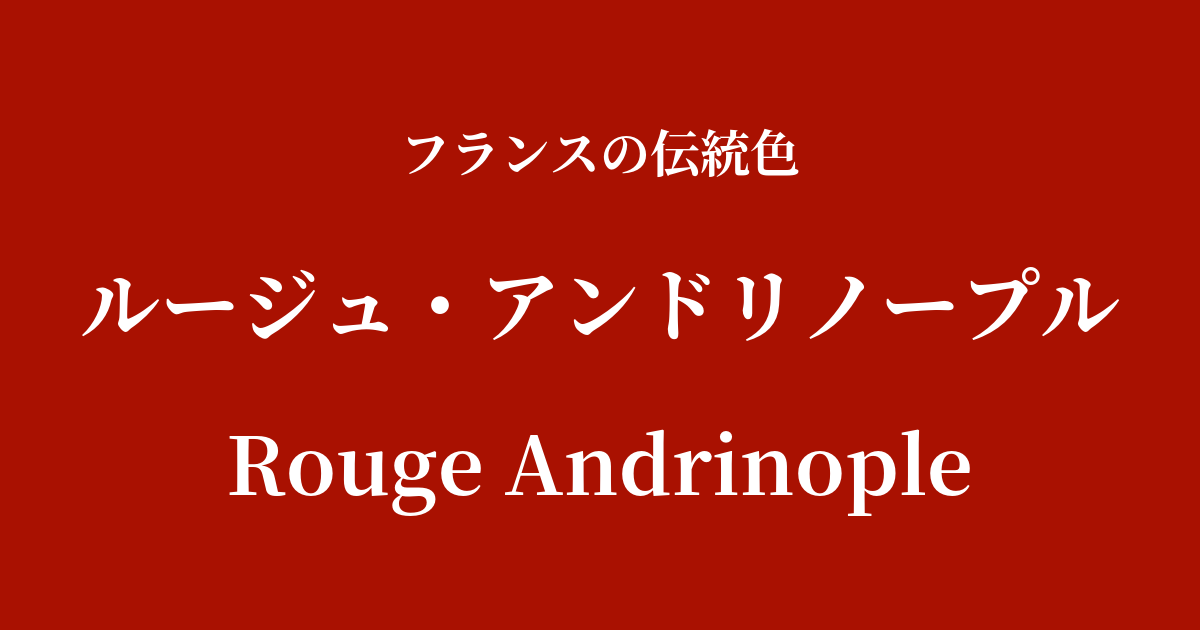
| French | Rouge Andrinople |
|---|---|
| Katakana | Rouge et Rinople |
| HEX | #A91101 |
| RGB | 169, 17, 1 |
What is Rouge Andrinople? Origin and Etymology
"Rouge Andrinople" is a color name that means "Adrianople red" in French. Adrianople is the old French name for Edirne, a city in present-day Turkey.
This region has long been known worldwide for its vibrant and durable red dyeing technique using the roots of the European madder plant. This color, in particular, known as "Turkey Red" and highly prized in Europe, was extremely valuable due to its complex and closely guarded dyeing process.
When this excellent dyeing technique was introduced to France in the 18th century, it came to be known as "Rouge Andrinople," named after the city from which it originated, and it became deeply rooted in French color culture.
Historical background of Rouge Andrinople
18th-century France, under the reign of Louis XV, saw the flourishing of Rococo culture, a time when vibrant colors were sought after in fashion and interior design. Among these, the vivid, fade-resistant red was a coveted color that captivated many, from royalty and nobility to the newly emerging bourgeoisie.
At the time, European dyeing techniques made it difficult to achieve both the vibrancy and durability of a color like turquoise. However, around the 1740s, Armenian and Greek dyers brought these secret techniques to centers of the French dyeing industry, such as Marseille and Rouen.
This technological innovation greatly contributed to the development of the French textile industry, particularly to Toile de Jouy, a type of printed fabric using woodblocks and copperplates. Fabrics dyed with Rouge Andrinople became extremely popular throughout France due to their beauty, and became one of the colors that symbolized 18th-century France.
Rouge Andrinople in the world of art and fashion
Rouge Andrinople has a particularly close connection to textile culture. The most famous example is the aforementioned "Toile de Jouy." In this fabric, which features intricate monochrome prints of pastoral landscapes, myths, and exotic motifs on white or off-white cotton, Rouge Andrinople was one of the most representative colors, alongside indigo blue. Its vibrant red gives life and splendor to the idyllic designs.
Furthermore, this color played an important role in 18th-century Rococo art and fashion. The lavish dresses seen in portraits of elegant ladies painted by François Boucher and Jean-Honoré Fragonard perfectly reflected the fashion of the time. Vibrant reds like Rouge Andrinople adorned court culture as symbols of wealth and refined taste.
Color scheme preview
This is to check the readability of the text when this color is used as the background.
Rouge and Rinople color scheme suggestions
Gris de Ran (#d2c9c0)
The gentle, calming gray of flaxen elegantly complements the vibrancy of Rouge Andrinople. This color scheme gives a classic yet modern and sophisticated impression.
Jaune d'Or (#f4c23f)
The combination of vibrant red and shimmering gold creates a festive and opulent impression. It evokes a dramatic and glamorous atmosphere reminiscent of French court culture.
Veil Olive (#74783a)
By combining it with a deep olive green, the intensity of the red is nicely neutralized, creating a natural and vibrant impression. It's a warm color scheme reminiscent of the landscapes of Provence in southern France.
Practical Scenes
In the field of interior design, Rouge Andrinople is an ideal accent color that brings vibrancy and warmth to a space. Simply incorporating it into fabrics such as cushions, curtains, and rugs will give the entire room a lively feel. In particular, when used as wallpaper or fabric with a Toile de Jouy pattern, it symbolically expresses French country or classical styles.
In fashion, this color conveys a passionate and elegant impression. It works well not only as a main piece in dresses and coats, but also as an accent color in accessories such as scarves, bags, and lip color, tightening up the overall look and creating a sophisticated atmosphere.
In website and graphic design, it's effective when used for buttons and headlines that you want to attract attention. Using it as a key color for brands themed around history, tradition, or luxury can deeply impress that brand's world.